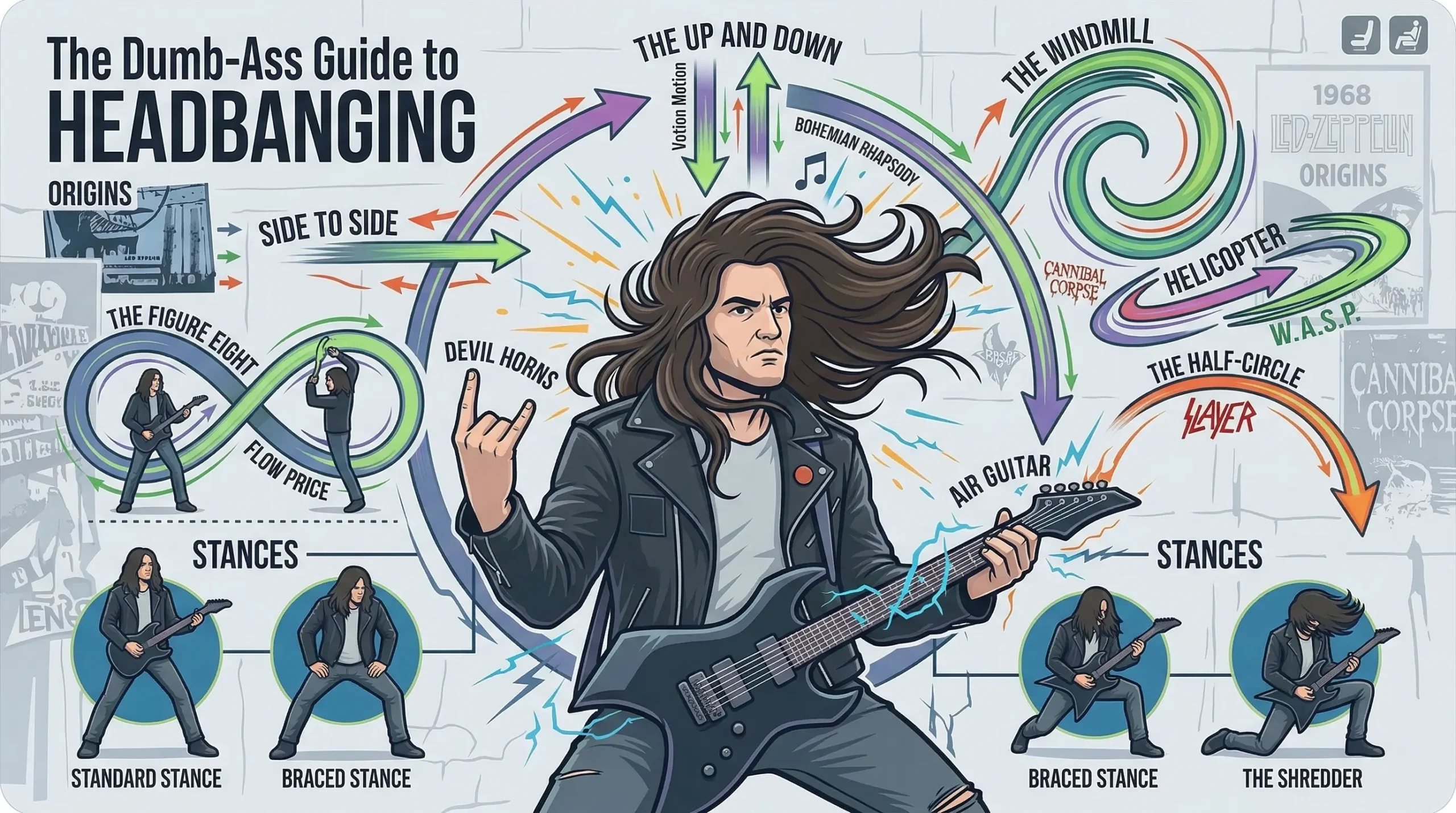
Revisiting the article I had published in 2006
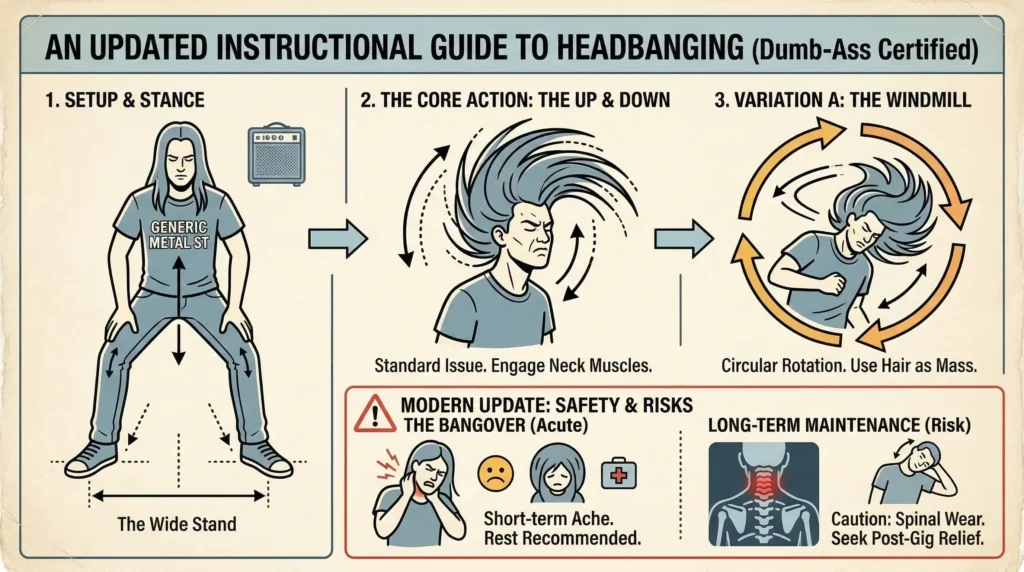
The term ‘headbanger‘ was coined on Led Zeppelin‘s first US tour in 1968. During a show at the Boston Tea Party, audience members in the first row were banging their heads against the stage in rhythm with the music.
Today, headbanging is a legendary type of dance that involves violently shaking the head in time with music, most commonly heavy metal. It remains most visually effective when the person headbanging has long hair.
The Styles of Headbanging
Various styles are often mixed together according to taste, tempo, and the sheer aggression of the music. In practice, they can be performed with eyes closed or in combination with hand gestures (like the classic devil horns), yelling, or lip-syncing.
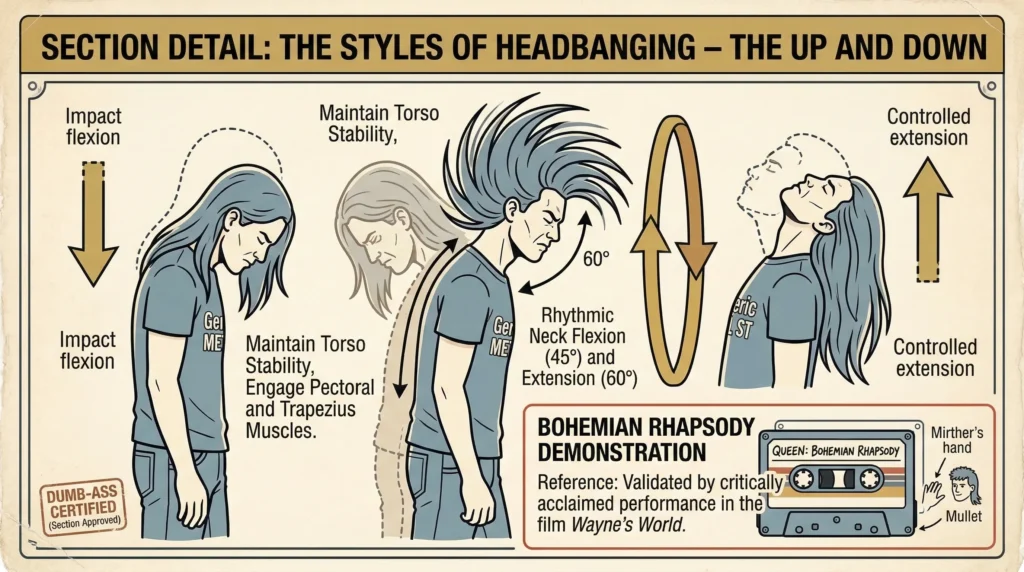
The Up and Down
Involves shaking the head vertically. This style is famously demonstrated at the climax of the ‘Bohemian Rhapsody’ scene in the classic movie Wayne’s World.
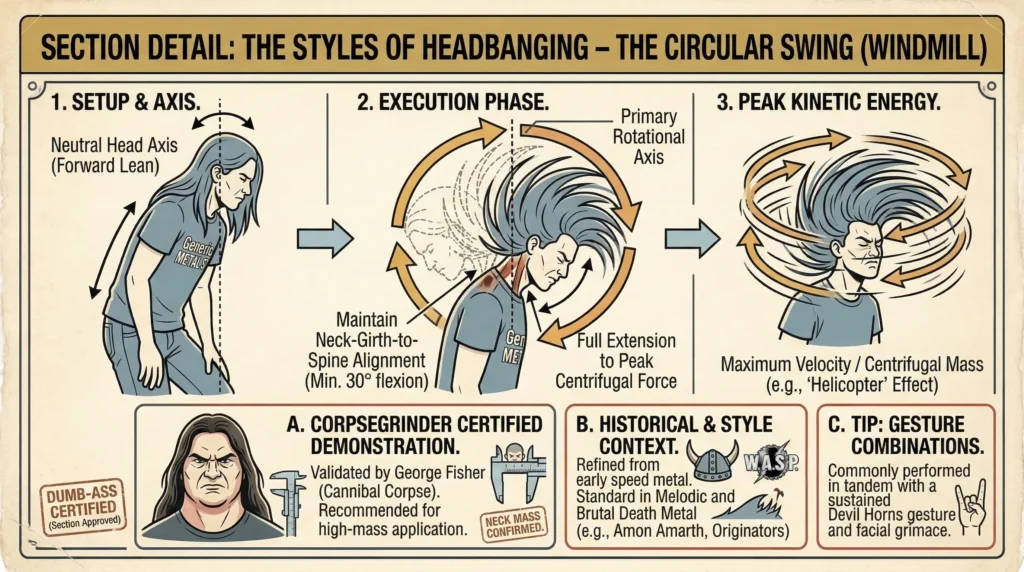
The Circular Swing (Windmill)
Swinging the head in a massive circular motion. Popularized by Blackie Lawless of W.A.S.P., it is now utterly dominated by George ‘Corpsegrinder’ Fisher of Cannibal Corpse, and frequently used by bands like Amon Amarth.
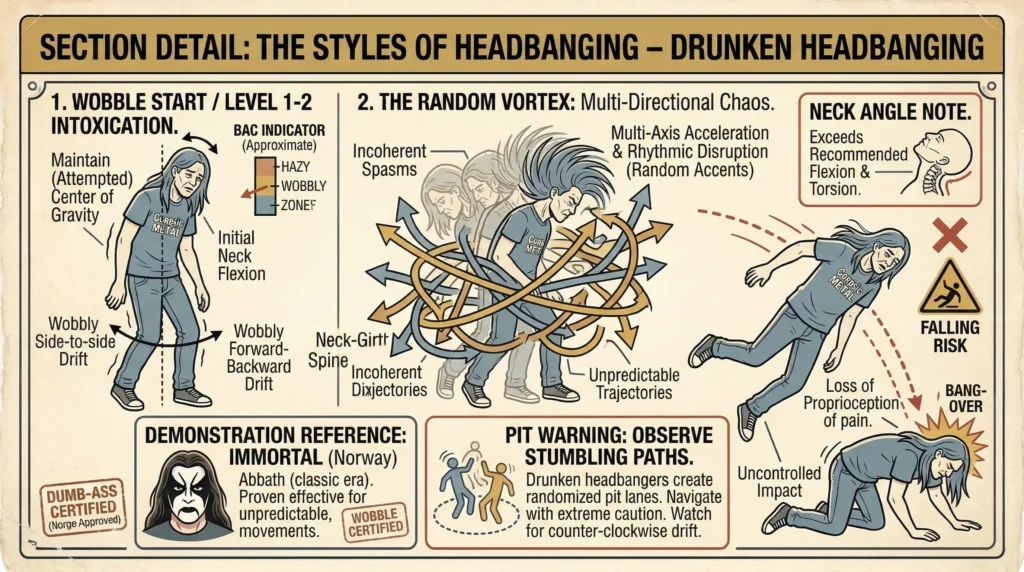
Drunken Headbanging
Banging in random directions as if intoxicated. People often lose their balance and fall over. Black metal legends Immortal remain a premier example of this chaotic style.
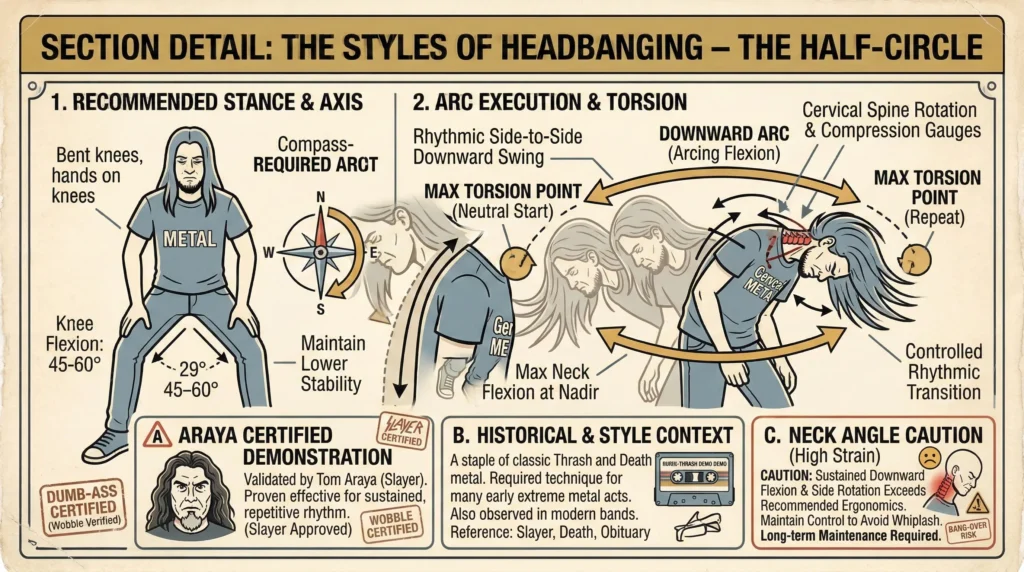
The Half-Circle
Swinging the head repeatedly from side to side in a downward arc. This was the signature move of Slayer’s Tom Araya (before neck surgery forced him into retirement).
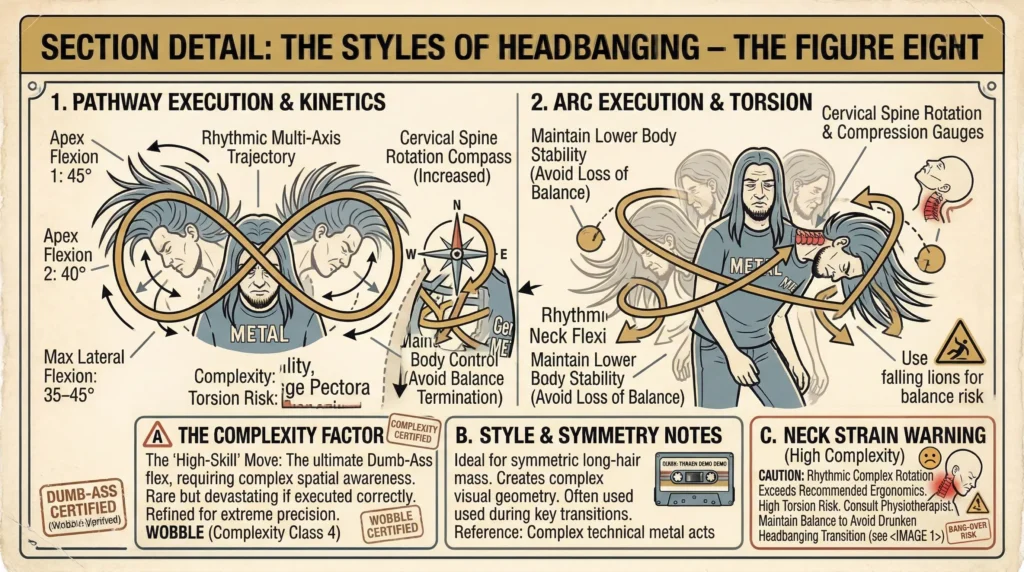
The Figure Eight
Exactly what it sounds like, shaking the head to trace a continuous figure eight.
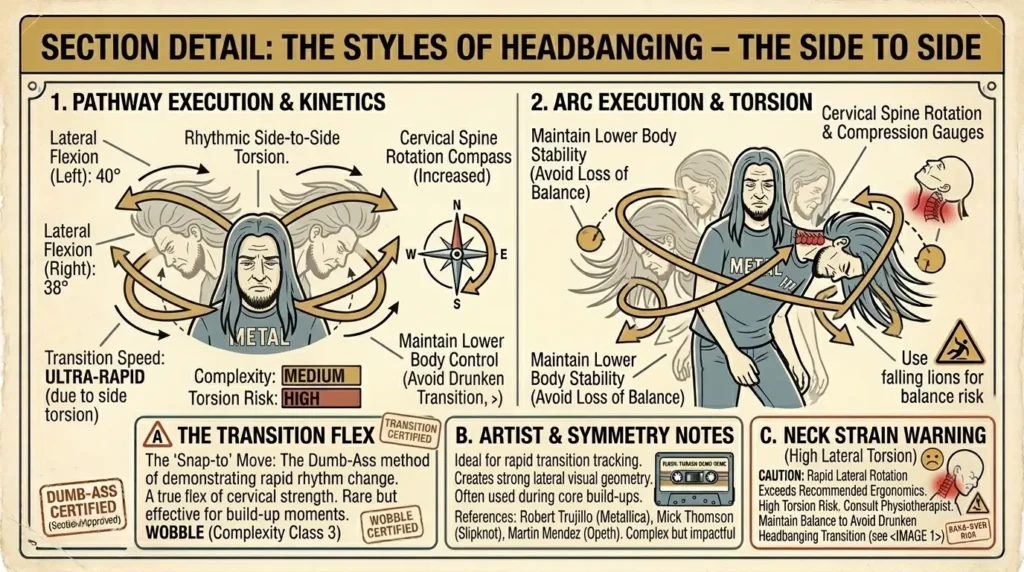
The Side to Side
Shaking the head from shoulder to shoulder, whipping the hair on each transition. Used brilliantly by Metallica bassist Robert Trujillo, Opeth’s Martin Mendez, Slipknot’s Mick Thomson, and the late Alexi Laiho of Children of Bodom.
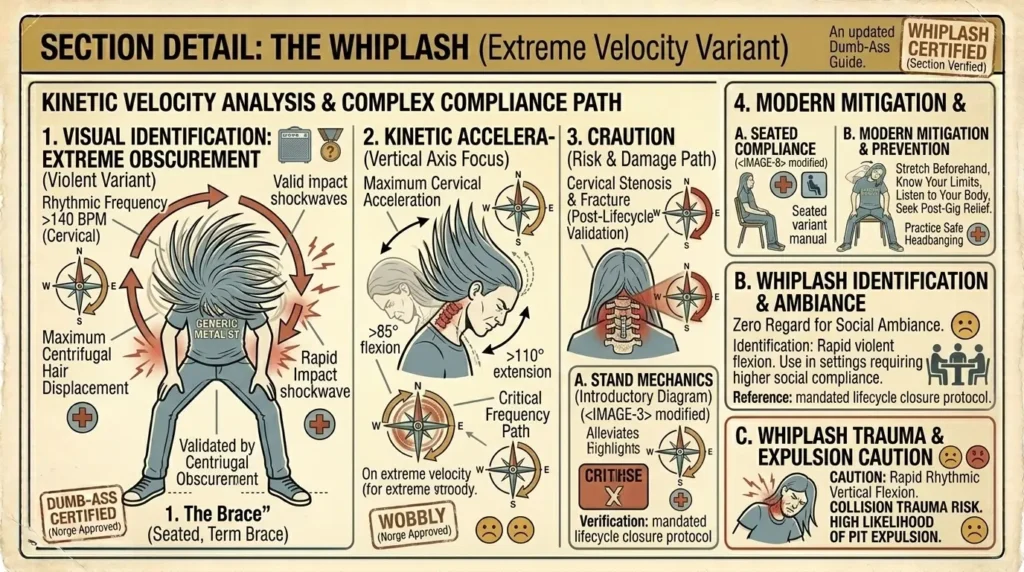
The Whiplash
An especially violent form of the traditional ‘up and down’, where the hair moves so rapidly it obscures the face. Pioneered by AC/DC’s Angus Young and famously utilized by the late Metallica bassist Cliff Burton.
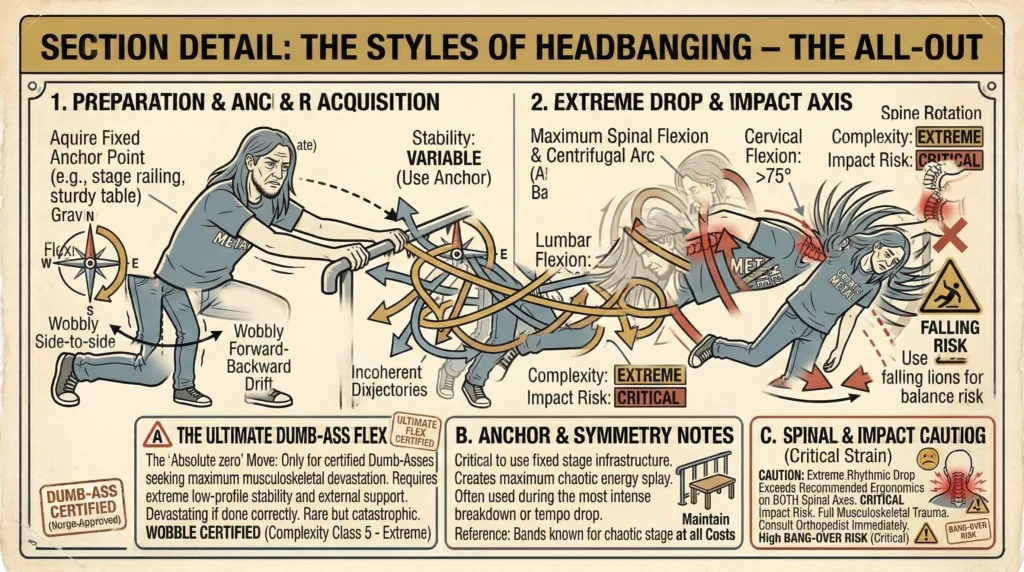
The All-Out
The most insane form of all. It involves dropping to the ground, holding oneself up with the arms, and violently swinging the head between them. Sometimes this requires grabbing onto fixed objects, as the movements completely destroy a person’s balance.
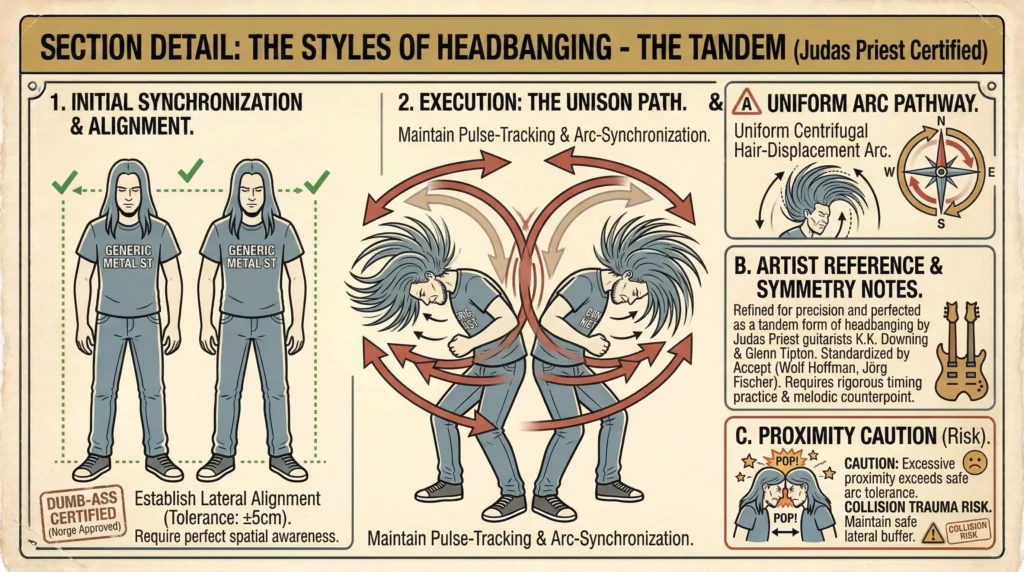
The Tandem
Standing side-by-side to bang in unison. Judas Priest guitarists K.K. Downing and Glenn Tipton pioneered and perfected this, a torch later carried by Priest’s modern lineup and classic bands like Accept.
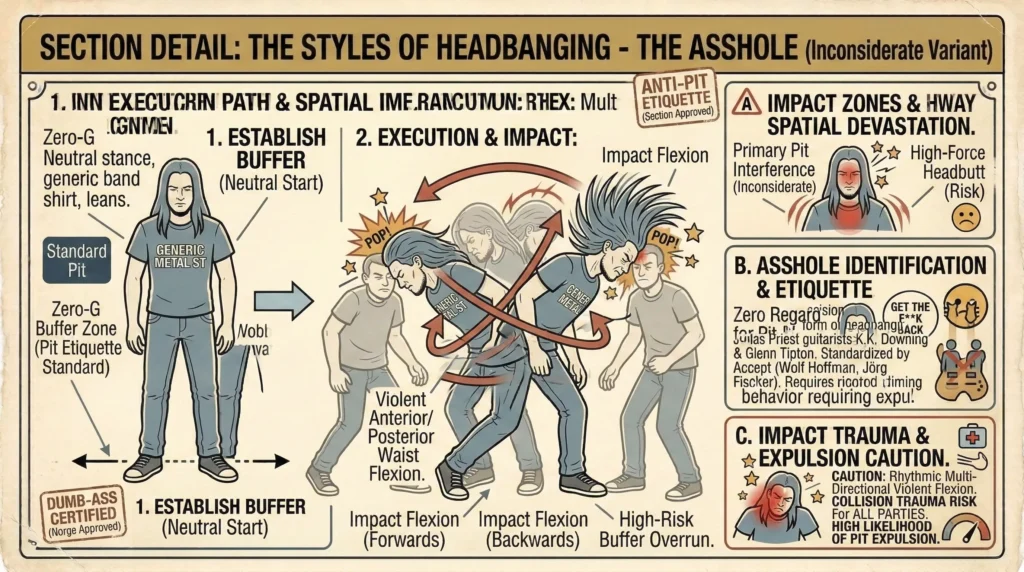
The Asshole
A rather inconsiderate form where the person violently swings forwards and backwards from the waist, often headbutting people in front of them (or behind them).
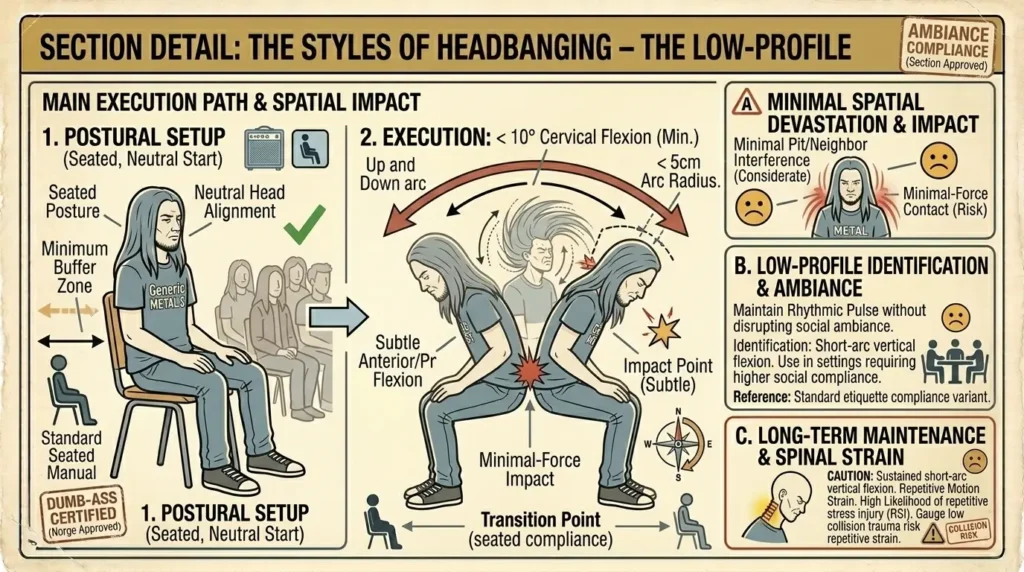
The Low-Profile
A subtle variation of ‘The Up and Down’ where the movements are short but still noticeable, perfect for public transit or your office cubicle.
The Stances
Headbangers’ bodies usually bang with the head, reducing the strain on the neck and making the body move in a serpentine fashion to the music. To keep from falling on your face, you need a good stance:
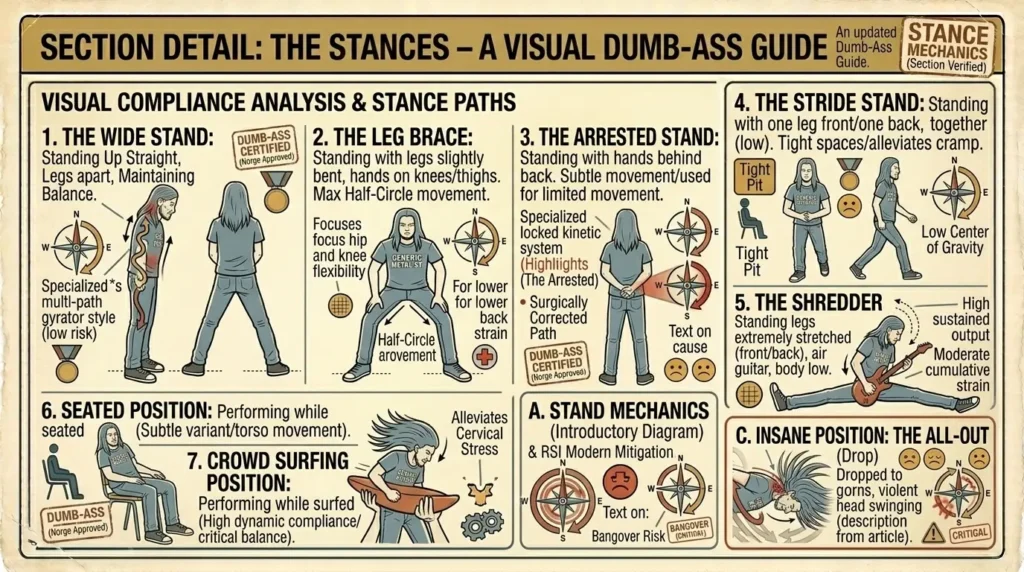
- The Wide Stand: Standing up straight with legs slightly apart to maintain balance.
- The Brace: Legs slightly bent with hands on the knees or thighs. This is perfect for ‘The Half-Circle’, allowing maximum movement.
- The Arrested: Standing with hands clasped behind the back.
- The Stride: One leg in front, one behind, hands held together near the lower body. Great for tight spaces in the pit.
- The Shredder: Legs extremely stretched to the front and back, lowering the body as much as possible while shredding an air guitar.
Honorable Headbangers Hall of Fame
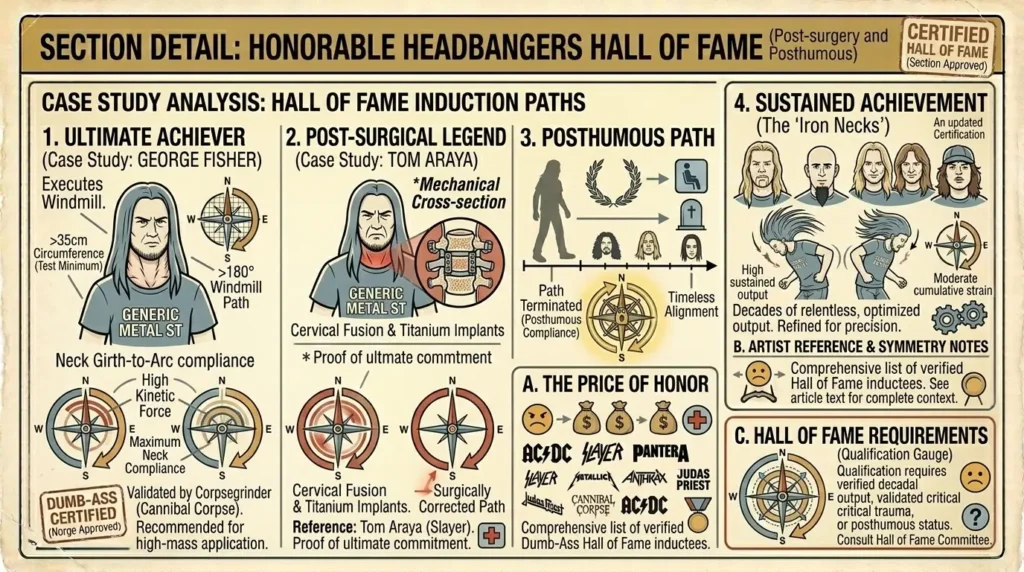
- Tom Araya (Slayer)
- George ‘Corpsegrinder’ Fisher (Cannibal Corpse)
- James Hetfield (Metallica)
- Kerry King (Slayer)
- Scott Ian (Anthrax)
- Glenn Tipton & K.K. Downing (Judas Priest)
- Mick Thomson (Slipknot)
- Angus Young (AC/DC)
- The late Cliff Burton (Metallica)
- The late Dimebag Darrell (Pantera)
- The late Jeff Hanneman (Slayer)
- The late Alexi Laiho (Children of Bodom)
- Mark G. (Local legend)
Be Warned: The Modern Reality of the ‘Bangover’
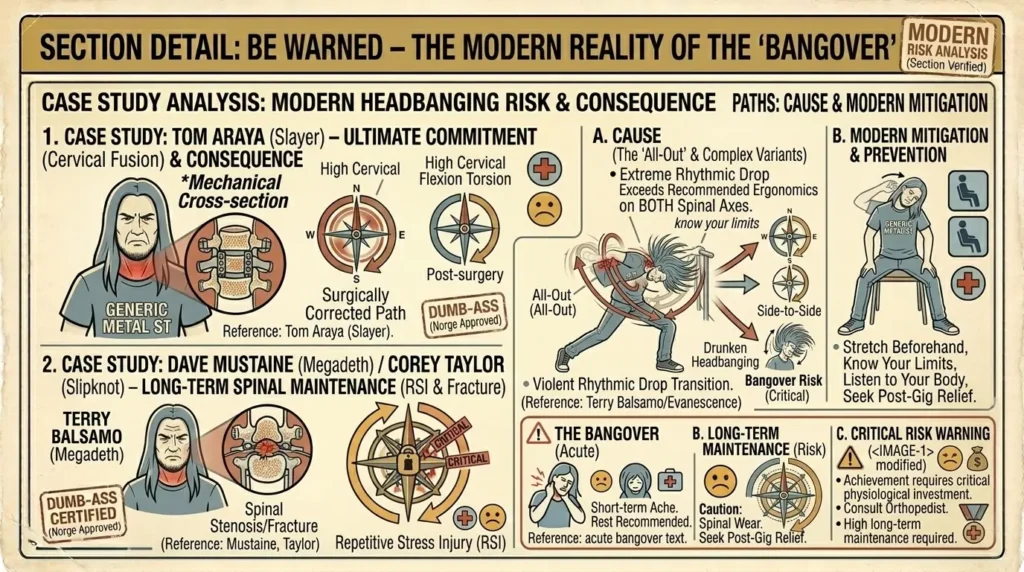
Twenty years ago, it was widely believed that headbanging was totally safe, with Jason Newsted’s departure from Metallica (partly due to neck cartilage wear) serving as a rare warning. We now know this ‘headbanging-is-safe’ belief to be false. Decades of heavy metal have proven that headbanging takes a massive long-term physical toll on the human spine.
The ‘bangover’ is no joke. Over the years, countless metal legends have had to undergo major spinal surgeries due to decades of violent headbanging. Tom Araya of Slayer had to have titanium plates put in his neck and permanently retire his headbanging. Slipknot’s Corey Taylor broke his neck without realizing it, and Megadeth’s Dave Mustaine developed severe stenosis. Even Terry Balsamo of Evanescence suffered a stroke directly linked to a torn neck artery from headbanging.
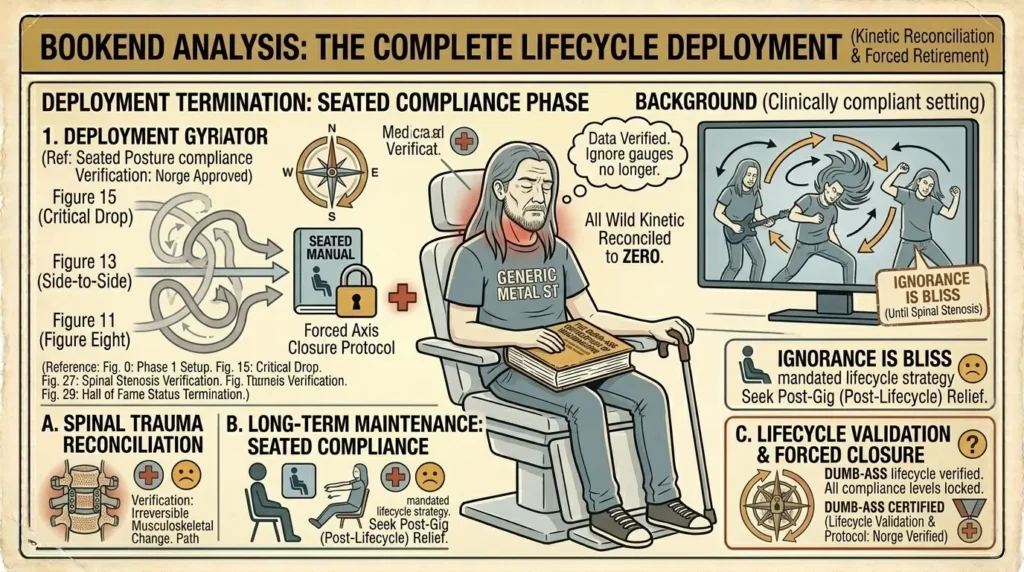
Stretch beforehand, know your limits, don’t do it blindly while intoxicated, and listen to your body. Practice safe headbanging!