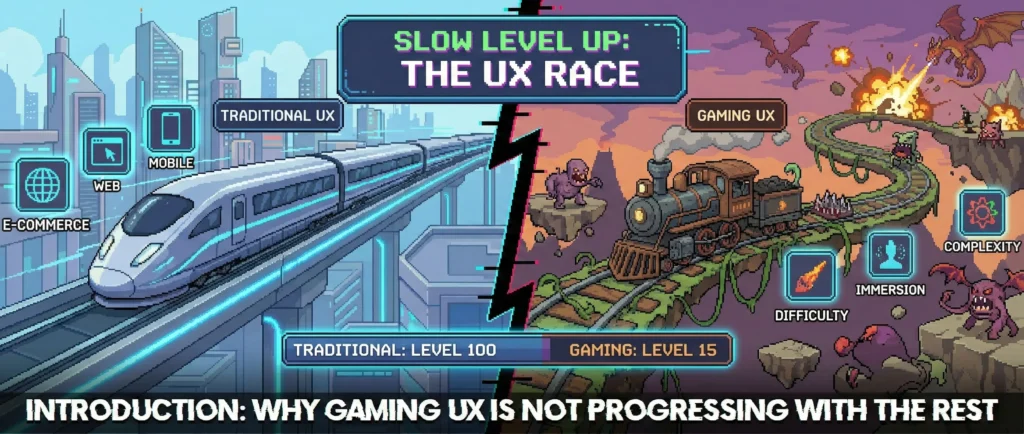
Why Gaming UX is Not Progressing with the Rest
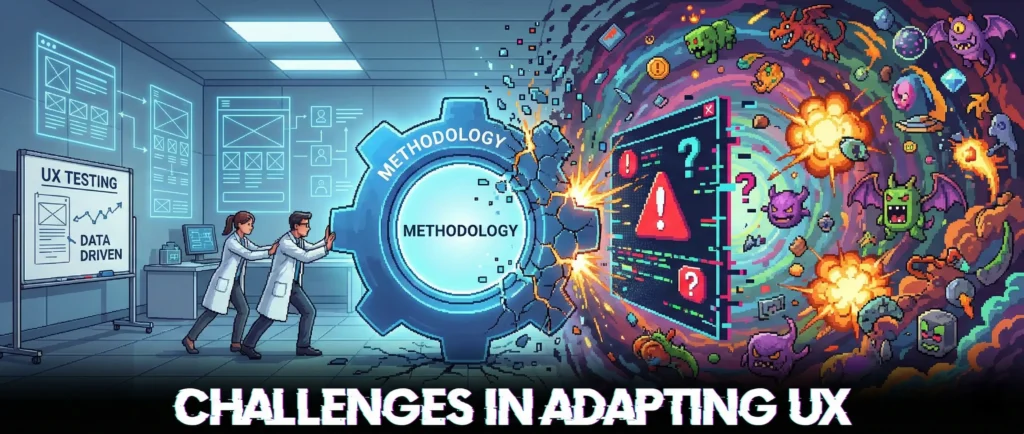
Challenges in Adapting UX Methodologies to the Gaming Industry
The gaming industry is one of the most dynamic and rapidly growing sectors of entertainment and technology. However, despite its continuous growth and the integration of cutting-edge technologies like virtual reality (VR) and artificial intelligence (AI), the progression of user experience (UX) design in gaming has not kept pace with advancements in other industries.
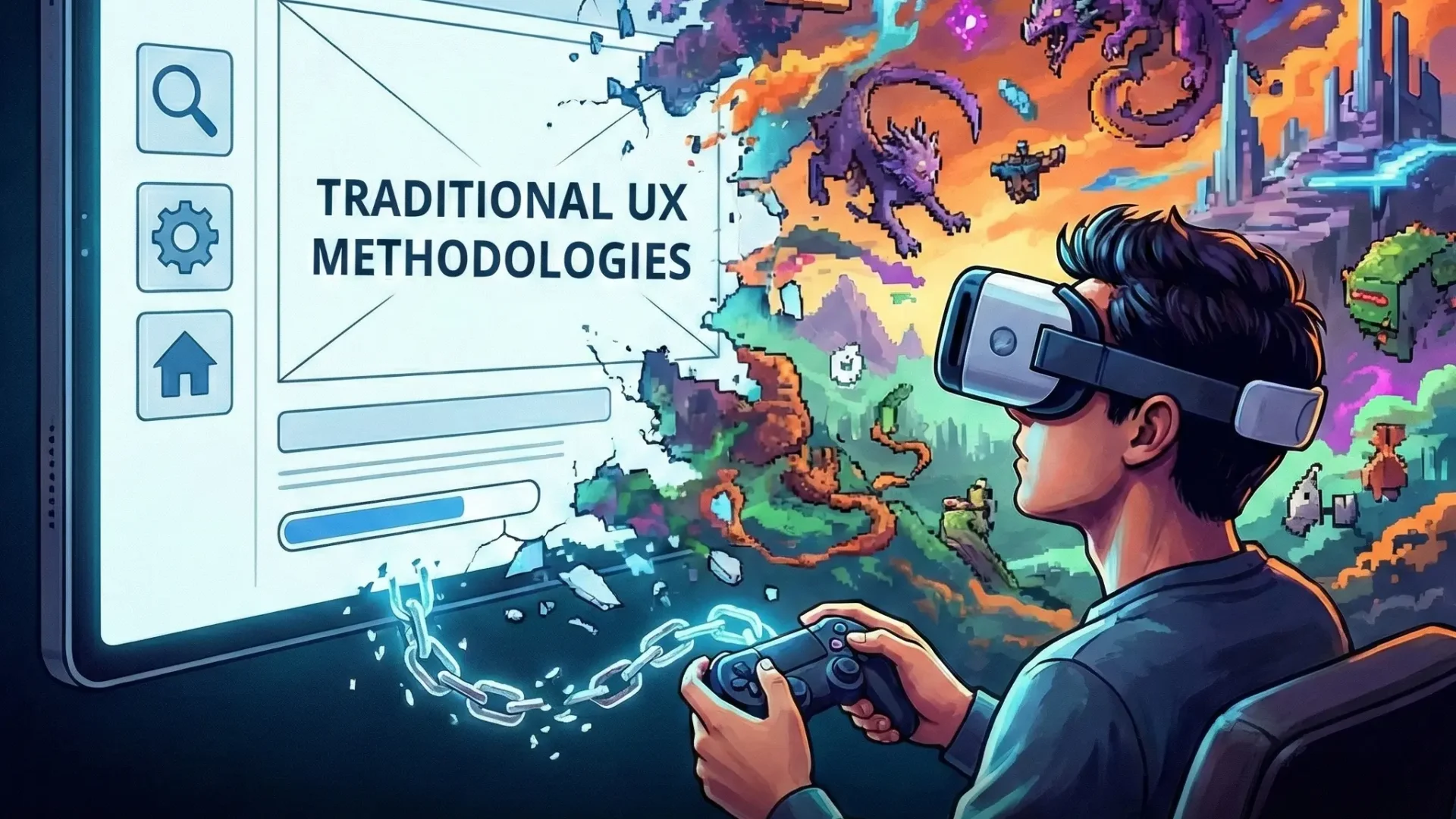
While UX methodologies have transformed sectors such as web design, mobile apps, and e-commerce, they are not as straightforward to apply in gaming. This is due to the unique challenges posed by the medium, its immersive nature, and the diverse expectations of its audience.
This article explores the reasons behind the slower progression of gaming UX, the barriers to the adoption of conventional UX methodologies, and potential paths forward.
The Complex Nature of Gaming UX
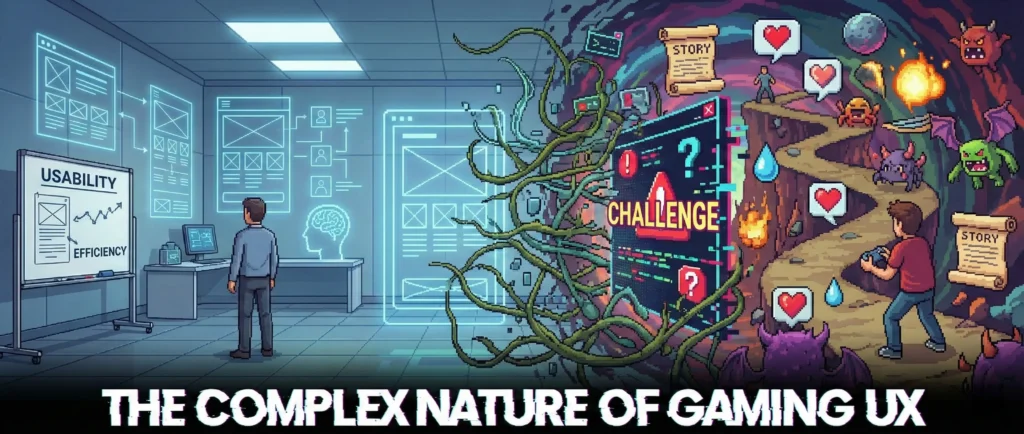
The central challenge in designing UX for games is the complexity of the gaming medium itself. Unlike web or mobile interfaces, where the primary goal is often task completion, gaming is an experiential medium, designed to engage, entertain, and evoke emotions.
In this context, UX is not just about making interfaces more efficient or intuitive but also about crafting engaging experiences that balance difficulty, narrative, and interactivity.
In traditional digital products, the primary focus of UX is functionality and ease of use. For example, a banking app’s goal is to enable users to complete transactions as efficiently and painlessly as possible. However, in gaming, the goal can vary significantly from one game to another, with experiences ranging from challenge-based gameplay (like Dark Souls), to narrative-driven experiences (like The Last of Us), to social or sandbox games (like Minecraft). The role of UX in these different experiences is complex because gaming doesn’t just aim for usability but also intentionally introduces difficulty, friction, and cognitive challenge as part of the player’s experience.
Why UX in Gaming is Not Progressing
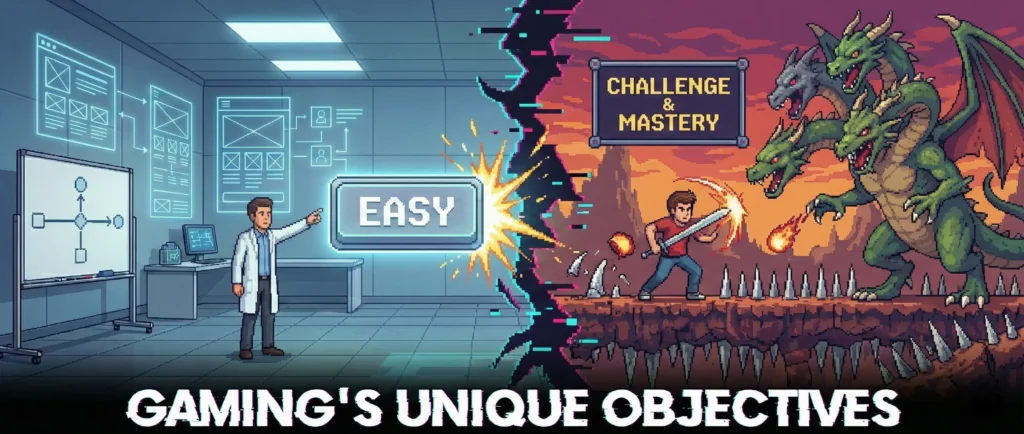
1. Gaming’s Unique Objectives
One of the primary reasons UX in gaming is not progressing with the rest of the industry is that gaming has different objectives compared to other software. UX methodologies in other industries are focused on usability, accessibility, and efficiency.
However, in gaming, the goal isn’t just about making things easier; it’s about maintaining a balance between ease and challenge, creating moments of tension, and offering complex, interactive narratives. This means that traditional UX techniques, which often focus on streamlining and simplifying, don’t always translate well to gaming.
For instance, consider games like Celeste or Hollow Knight, where difficulty is a crucial part of the experience. A standard UX approach might focus on making the game easier or reducing friction in the user interface.
However, removing too much friction could eliminate the sense of accomplishment that comes from overcoming obstacles, which is central to the gaming experience.
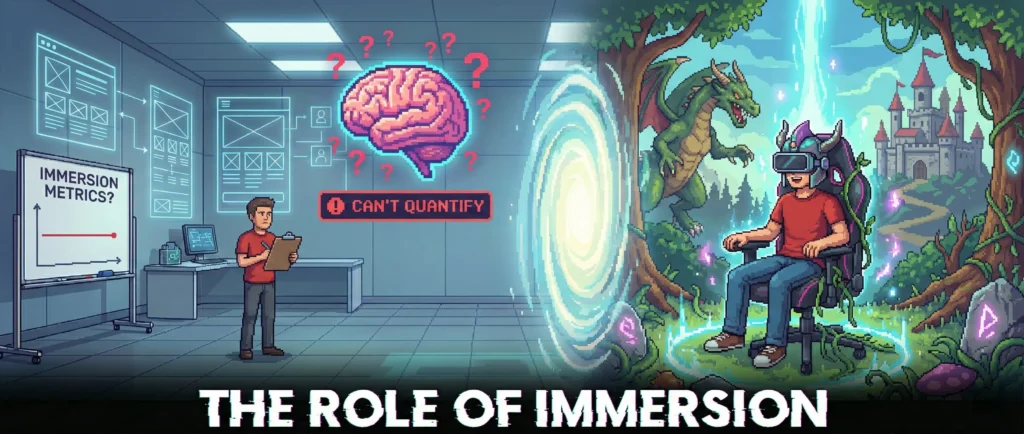
2. The Role of Immersion
In gaming, immersion is a key factor. Designers must ensure that players remain engrossed in the game’s world, often to the point where they forget they are interacting with a screen. This level of immersion involves more than just interface design—it requires carefully crafted mechanics, engaging storytelling, and responsive gameplay.
The challenge here is that immersion can be subjective and difficult to measure. UX design typically relies on user feedback, data analysis, and testing to improve products. However, immersion is not something that can be easily captured through conventional UX metrics like ease of use or task completion.
Game designers must focus on qualitative factors like emotional engagement, pacing, and environmental design, all of which complicate the traditional UX design process.
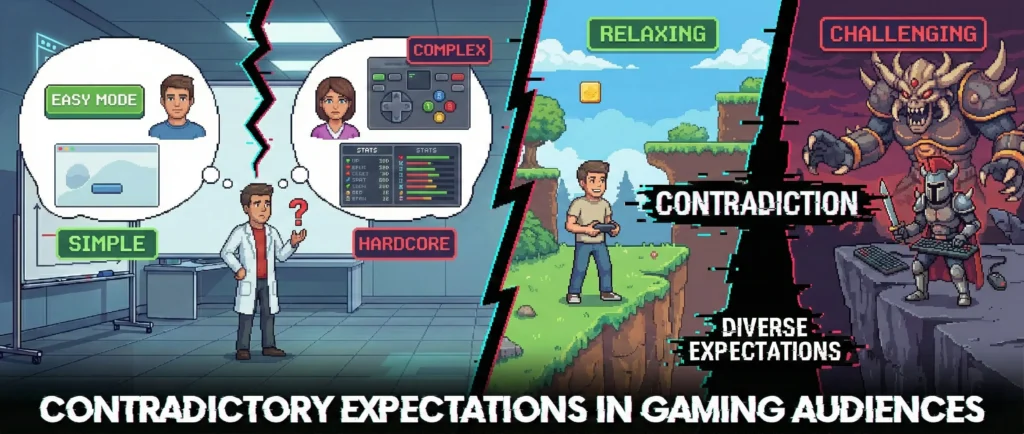
3. Contradictory Expectations in Gaming Audiences
The gaming audience is incredibly diverse, with different players seeking out different experiences. Some players may value intuitive controls and smooth interfaces, while others may prioritize deep, intricate mechanics that require time and effort to master. The wide variety of player types means that there is no one-size-fits-all solution for gaming UX.
Catering to one type of player may alienate another, making it difficult for designers to apply uniform UX principles across different games.
Moreover, players often have contradictory expectations. A large subset of gamers seeks out complex, challenging games with steep learning curves, such as Dark Souls or EVE Online, where part of the appeal is mastering an unforgiving system.
These players might view conventional UX principles, which aim to make interactions easier and more intuitive, as detracting from the core experience.
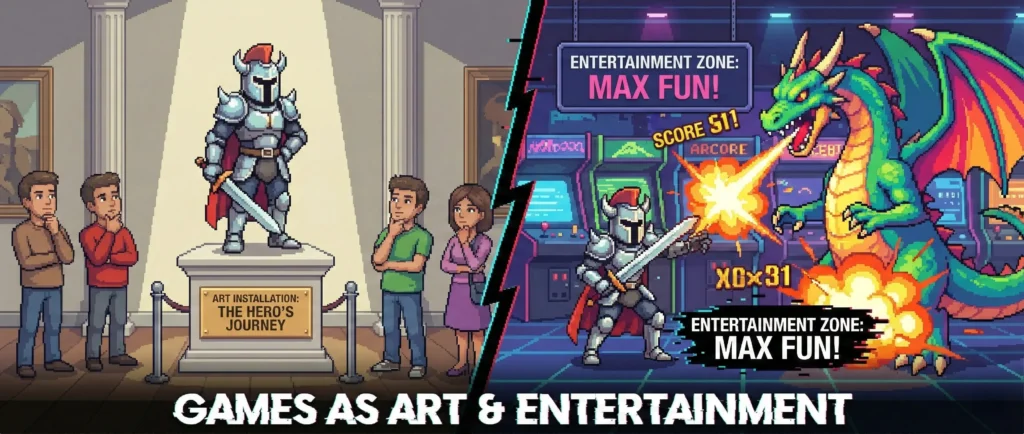
4. Games as Art and Entertainment
Games are increasingly being seen not just as products but as works of art and entertainment. As a result, designers often take creative liberties that conflict with established UX best practices.
In artistic and narrative-driven games, the designers might intentionally introduce confusion or discomfort to serve the story or create emotional impact.
For example, in Spec Ops: The Line, a shooter game with a narrative twist, the UX design deliberately makes players feel disoriented and uncomfortable as the story progresses, mirroring the protagonist’s descent into madness.
This kind of design goes against the grain of conventional UX practices, which would normally seek to minimize confusion and discomfort, but in the context of the game, it serves a higher artistic purpose.
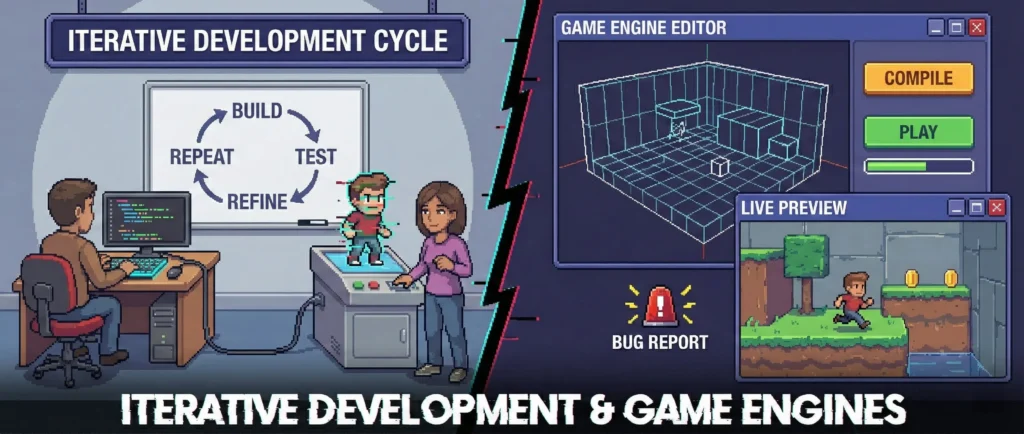
5. Iterative Development and Game Engines
The game development process is often highly iterative, with developers making constant adjustments to mechanics, controls, and story elements. This iterative nature can make it difficult to implement a cohesive UX design strategy from the beginning.
Many game studios use proprietary game engines or platforms like Unity and Unreal Engine, which can present limitations in terms of design flexibility.
Furthermore, due to tight production timelines, especially in large-scale productions, UX testing may not get as much attention as it does in other industries. In games, bugs and performance issues often take priority over UX refinements, as developers focus on delivering a polished final product that functions without crashing. This contrasts with other industries where UX testing is a central part of the development process.
Why UX Methodologies Aren’t Straightforward to Adopt in Gaming
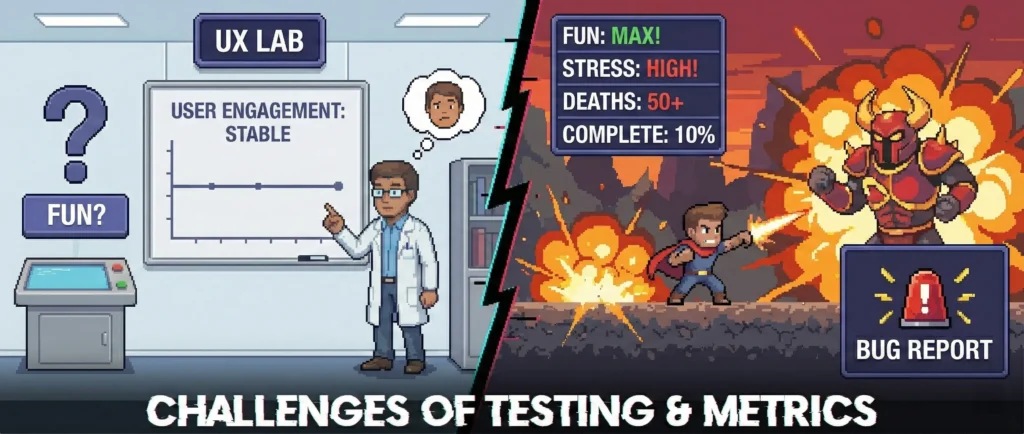
1. Challenges of Testing and Metrics
In most industries, UX design is heavily reliant on user testing and data-driven decisions. Metrics like task completion rates, time spent on tasks, and user satisfaction scores are central to refining the user experience.
In gaming, however, traditional usability metrics can be misleading. A game that is too easy or too intuitive may lose its appeal to core players. The challenge is to find the right balance, and this often requires more subjective, creative judgment than data-driven analysis.
While playtesting is a crucial part of game development, it’s different from traditional UX testing. Playtesting focuses on how enjoyable or engaging a game is, while UX testing in other industries focuses more on usability.
The subjective nature of enjoyment is hard to quantify, which complicates the application of UX methodologies.
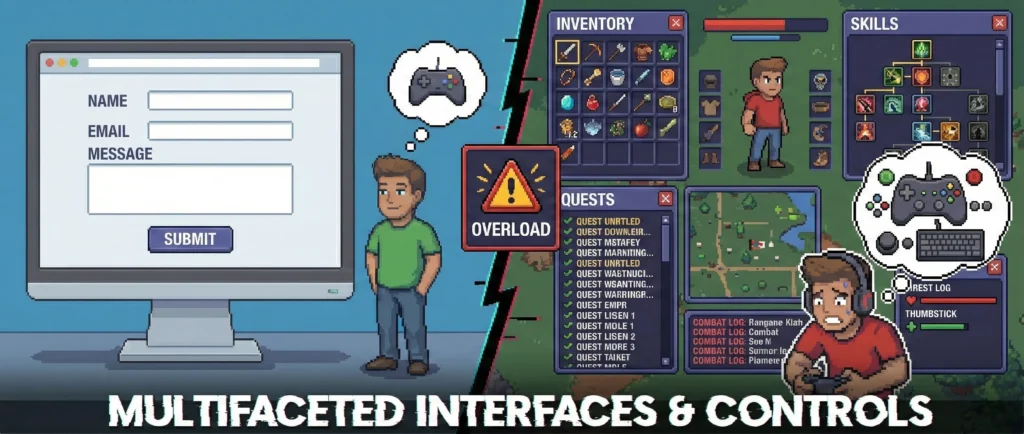
2. Multifaceted Interfaces and Controls
Games often feature multifaceted user interfaces (UI) that go beyond what is found in typical software applications. Players may have to manage multiple systems simultaneously ‘combat, inventory, character progression, and real-time decisions’ often while under pressure.
Balancing the complexity of these systems with the need for intuitive UX design is a significant challenge.
Conventional UX principles such as minimalism and clarity can often conflict with the need for information-dense interfaces in strategy games, role-playing games (RPGs), or simulation games. In these genres, overwhelming the player with information is sometimes necessary for the depth of the gameplay.
Simplifying the interface too much could strip away the game’s strategic or tactical complexity.
Moving Forward: Evolving Gaming UX
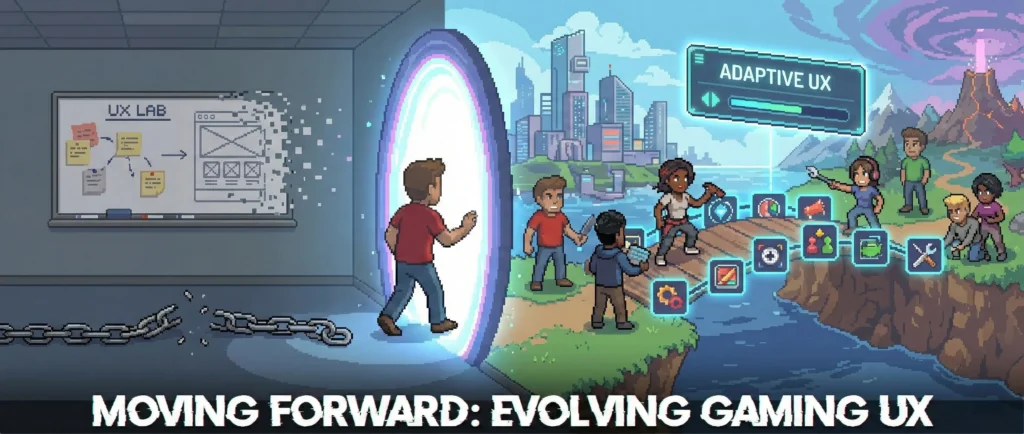
Despite these challenges, there is potential for gaming UX to evolve. One possible path forward is better integration of UX practices early in the design process, ensuring that player feedback is incorporated from the start. Games like Fortnite have successfully iterated on their UX based on player feedback, showing that player-focused design can lead to long-term success.
Additionally, adaptive UX systems, which change based on the player’s skill level or preferences, could be a promising avenue.
By using AI and machine learning to adapt the interface and difficulty in real-time, developers could cater to both casual and hardcore players without sacrificing complexity or depth.
Conclusion
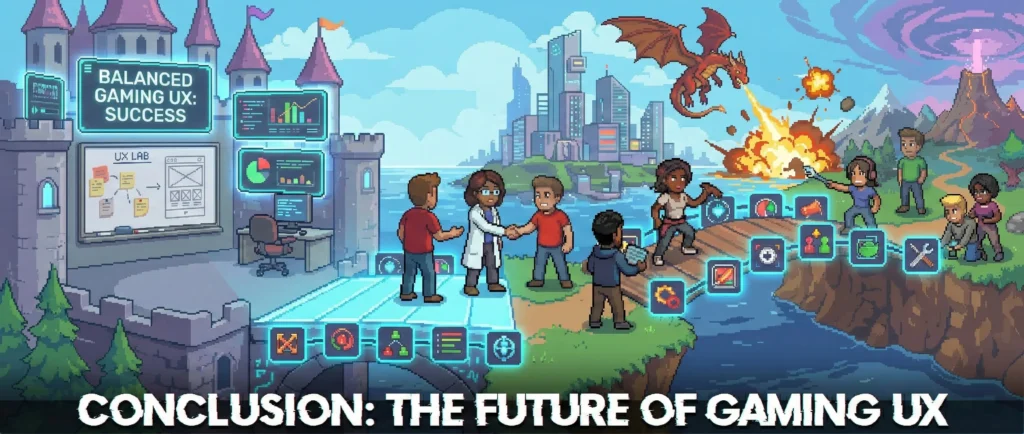
Gaming UX is a multifaceted field that poses unique challenges due to the medium’s complexity, diversity of audiences, and the artistic goals of games.
While traditional UX methodologies have advanced in other industries, they are not always straightforward to apply in gaming due to its immersive nature and experiential focus. The key to evolving gaming UX lies in understanding the balance between usability and challenge, immersion, and narrative depth.
As the gaming industry continues to grow, UX in gaming will likely find new ways to adapt, but the path forward requires an approach that respects the unique nature of the medium.