
Crafting Effective Designs Through Understanding User Behavior
In the world of UX design, understanding user behavior is pivotal to creating interfaces that are intuitive, engaging, and effective. Mental models play a crucial role in this understanding. They are internal representations of how users perceive, interpret, and interact with systems. By aligning design with these mental models, UX designers can craft experiences that resonate with users and meet their expectations.
This article explores a few key mental models that UX designers should consider to make informed design decisions based on user behavior.
1. The Concept of Mental Models

A mental model is a cognitive representation of how users believe a system works based on their experiences and expectations. These models influence how users approach tasks, solve problems, and interact with interfaces.
When designing a product, it’s essential to understand these models to ensure that the interface aligns with users’ expectations and facilitates a seamless experience.
2. Familiarity and Consistency

Users bring with them a set of expectations based on their previous experiences with similar systems. This principle emphasizes the importance of leveraging familiar design patterns and conventions.
For example, placing navigation menus at the top or side of a page is a convention that users are accustomed to.
By adhering to these familiar patterns, designers reduce the learning curve and enhance usability.
3. Consistency Principle

Consistency in design helps users build accurate mental models by reinforcing their expectations throughout the interface. This includes consistent use of colors, fonts, button styles, and interactions.
For instance, if a ‘submit’ button is styled in blue on one form, it should be blue across all forms to prevent confusion and ensure a cohesive user experience.
4. Immediate Feedback

Users rely on feedback to confirm that their actions have been understood and processed by the system. Feedback can be visual, auditory, or tactile.
For example, when a user submits a form, an immediate confirmation message or visual cue (like a spinning icon) reassures them that the submission is being processed.
This feedback aligns with users’ mental models of cause-and-effect relationships and helps in building trust and reducing uncertainty.
5. Progressive Disclosure

This model involves presenting information gradually, based on user actions and needs. It prevents overwhelming users with too much information at once and helps them focus on the task at hand.
For instance, a multi-step form that reveals fields progressively as users complete each step aligns with the mental model of incremental progress and keeps users engaged without causing cognitive overload.
6. The Fitt’s Law Principle

Fitt’s Law: This principle posits that the time required to reach a target area (like a button or link) is a function of the distance to and size of the target.
In practical terms, it means that larger buttons placed in easy-to-reach areas are easier and faster for users to interact with.
Designing buttons that are large enough and positioned within easy reach aligns with users’ mental models of efficient and effective interaction, minimizing frustration and improving overall usability.
7. The Theory of Affordances

Affordances: Affordances refer to the properties of an object that suggest how it should be used. For example, a button that looks like it can be pressed, or a slider that looks like it can be dragged. Effective design leverages affordances to guide users intuitively through interactions.
For instance, using shadows and 3D effects on buttons can imply that they are clickable, aligning with users’ mental models of how interactive elements should behave.
8. The Hick-Hyman Law

This principle states that the time it takes to make a decision increases with the number and complexity of choices. In UX design, simplifying choices and reducing cognitive load can improve user decision-making and satisfaction.
For example, a well-organized menu with clearly defined categories is easier for users to navigate than a cluttered menu with too many options.
By minimizing complexity and focusing on clarity, designers can align with users’ mental models of decision-making processes.
9. The Zeigarnik Effect

This psychological phenomenon suggests that people remember uncompleted tasks better than completed ones. In UX design, this principle can be applied to encourage user engagement and completion of tasks.
For example, progress indicators in forms or task flows can help users keep track of their progress and motivate them to complete the process. This aligns with users’ mental models of task management and helps reduce abandonment rates.
10. The Peak-End Rule

This cognitive bias indicates that people judge experiences based on the most intense moments and the final outcome rather than the overall experience. In UX design, focusing on creating positive peak experiences and ensuring a smooth ending can significantly impact user satisfaction.
For example, a user-friendly checkout process that concludes with a clear confirmation message and a sense of accomplishment can leave a lasting positive impression.
11. The Law of Least Effort

This principle asserts that users prefer to take the path of least resistance when interacting with a system. Designing interfaces that minimize the number of steps required to complete a task and reduce the cognitive load can enhance usability.
For instance, implementing auto-fill features in forms or providing context-sensitive help aligns with users’ mental models of efficiency and ease of use.
12. User-Centered Design
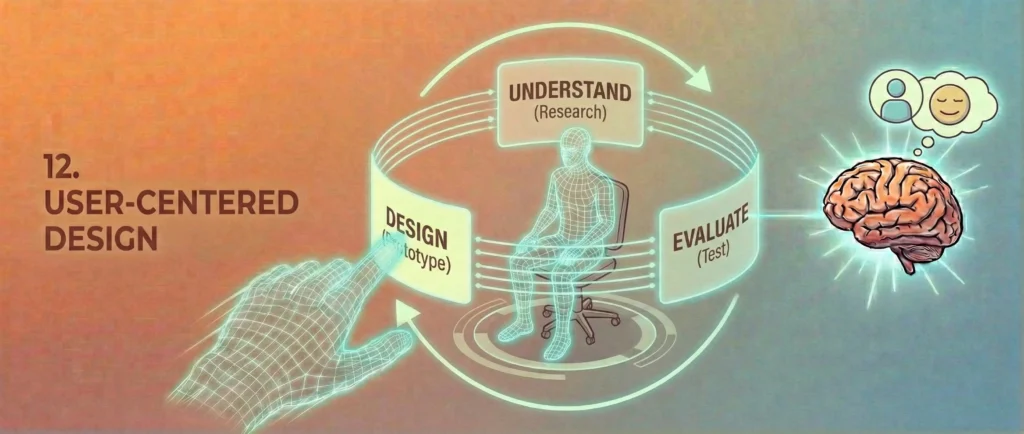
User-Centered Design (UCD) or Human-Centred Design: At its core, UCD involves designing with a deep understanding of users’ needs, preferences, and mental models. This approach emphasizes iterative testing and feedback to ensure that the design aligns with users’ expectations and behaviors.
By incorporating user feedback and conducting usability testing, designers can refine their understanding of users’ mental models and create more effective and satisfying user experiences.

Conclusion
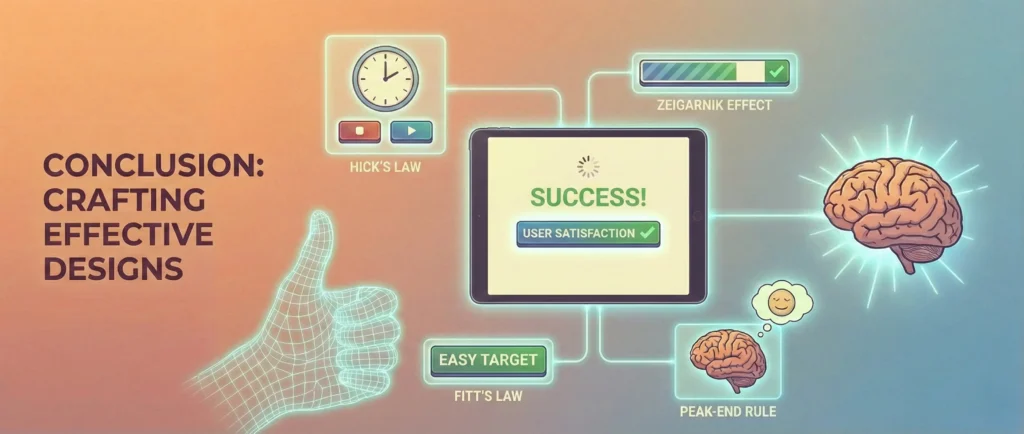
Understanding and applying mental models is crucial for UX designers aiming to create interfaces that are intuitive, engaging, and effective. By considering principles such as familiarity, feedback, affordances, and cognitive load, designers can align their designs with users’ expectations and behaviors.
The goal is to craft experiences that resonate with users, facilitate their interactions, and ultimately lead to greater satisfaction and success.
As UX design continues to evolve, staying attuned to users’ mental models and leveraging psychological principles will remain essential for creating impactful and user-centric designs.
By integrating these insights into the design process, UX professionals can enhance their ability to make informed design decisions and deliver exceptional user experiences.