
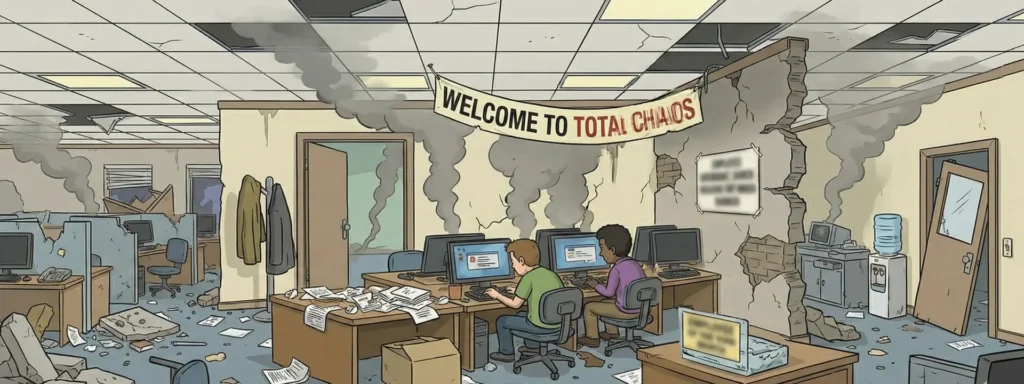
Congratulations! You’ve been tasked with building a thriving design culture within your organization. But who needs creativity, collaboration, or innovation when you can, with minimal effort, totally ruin everything? Why bother fostering a vibrant, healthy design environment when you can just sabotage it from within? You don’t need thoughtful strategies to build something great, simply follow these foolproof steps to ensure your design culture implodes spectacularly.
Step 1: Create as Many Layers of Bureaucracy as Possible

Let’s start with the foundation: layers of approval processes. No design decision should be made without the blessing of a minimum of seven managers, three project managers, and an executive who doesn’t really know what design is but ‘“’has a good eye’. Approval workflows should be so slow that by the time a design is approved, it’s already outdated.
Want to update a button color? Hold a two-hour meeting to discuss it. Need to launch a redesign? Form a committee and schedule bi-weekly syncs for the next six months. Bonus points if you get HR involved to ensure there’s a strict dress code for all design meetings. Dress shirts for everyone!
Step 2: Isolate Designers from the Rest of the Team
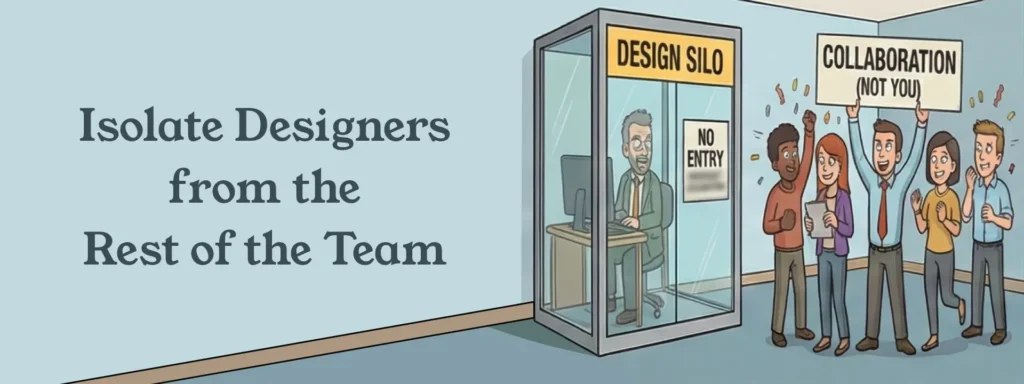
A great way to ensure your design culture goes downhill fast is to silo your designers. Keep them in their own little bubble, far away from developers, marketers, and product managers. Collaboration is overrated anyway. Why should designers understand the constraints of development or the needs of the user?
Instead, enforce a system where designers throw their mockups over the wall and pray that they come out the other side looking like the polished visions they dreamed up. Who needs cross-functional teams when you can have total confusion? Communication is for the weak.
Step 3: Mandate Pixel Perfection (and Then Change Your Mind Constantly)
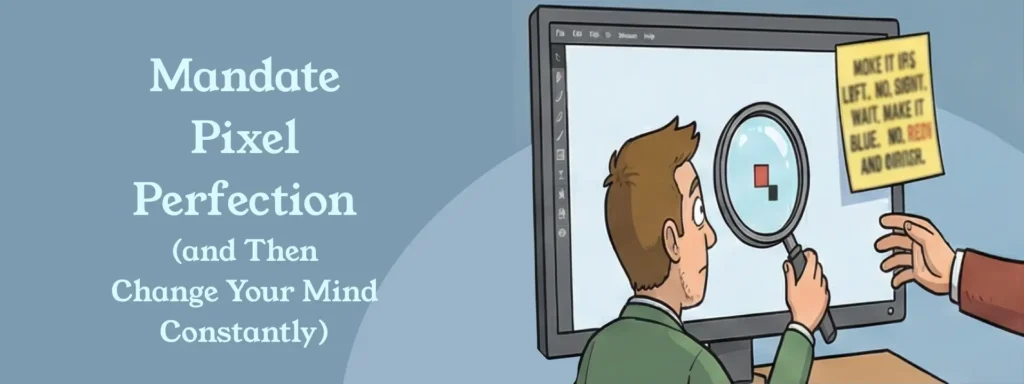
Real designers only care about one thing: pixel perfection. Nothing says ‘great design culture’ like demanding that every design be absolutely flawless in every imaginable way, until, of course, you decide to change the requirements last minute. After all, nothing motivates creativity like knowing everything you worked on will be completely irrelevant tomorrow.
Insist that your designers agonize over every single detail for days, then swoop in at the eleventh hour with a whimsical idea about how the entire interface should be reworked because your spouse thought the color scheme ‘felt a little sad’. Who cares if the deadlines are looming? Deadlines are just suggestions, right?
Step 4: Always Focus on What’s Trending
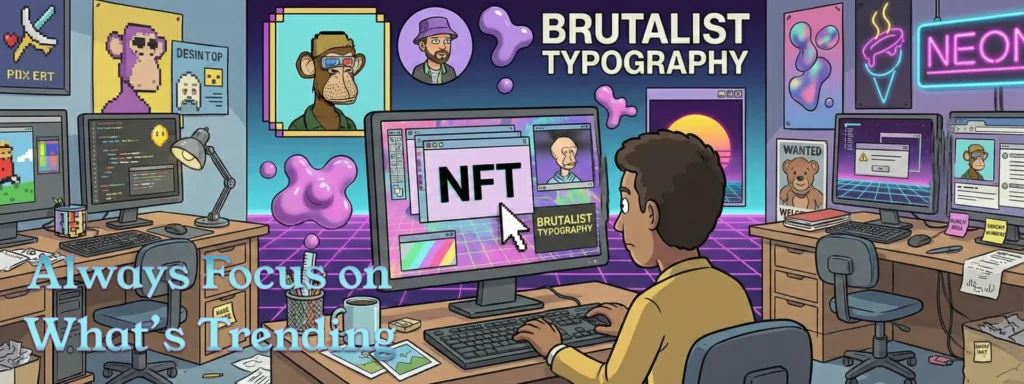
Why focus on designing products that are tailored to your users when you could simply chase the latest trends? Nothing says ‘thought leadership’ like adopting every hot new design fad you see on Dribbble without any regard for whether it actually improves the user experience.
Flat design? Go all in, even if it makes your buttons impossible to find. Brutalism? Slap it on everything because nothing says ‘user-friendly’ like deliberately ugly interfaces. Dark mode? Turn everything black, even if half your users can’t see a thing. The goal here is to be trendy, not useful.
Step 5: Dismiss User Research as a Waste of Time

What do users know about what they want? In fact, why waste time doing any user research at all? Instead, base all of your design decisions on gut feelings, personal preferences, or, best of all, what the highest-paid person in the room thinks.
You don’t need research when you can just trust your instinct. Sure, users might have feedback about your product being confusing or hard to navigate, but those are just opinions, right? If it’s good enough for you (or your CEO’s cousin), it’s good enough for everyone else.
Step 6: Use Design as a Decoration, Not a Problem-Solving Tool
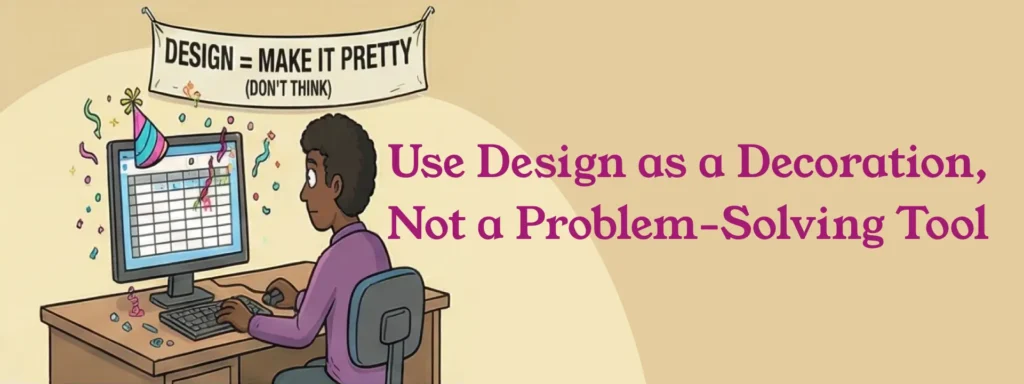
To truly ruin your design culture, make sure everyone in the company sees design as nothing more than window dressing. It’s not about solving problems or making the product better, it’s about making things look pretty!
Designers should focus all their energy on picking the perfect shade of blue for the homepage header, not on pesky things like usability or functionality. And while you’re at it, ensure that design is always treated as an afterthought. Wait until the last minute to bring designers in on projects so they have just enough time to make things ‘look good’, rather than actually participating in strategy or planning. Remember, aesthetics > everything else.
Step 7: Kill Any Sense of Ownership or Autonomy
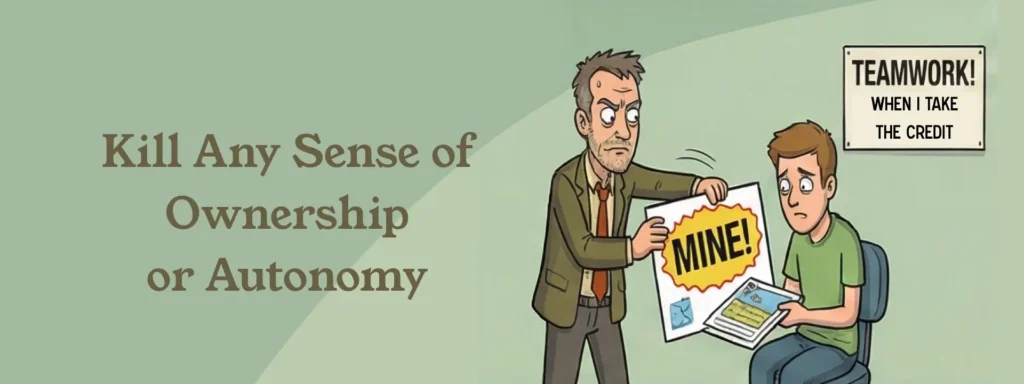
A key aspect of any healthy design culture is giving designers ownership over their work. So, naturally, to ruin that culture, you need to strip them of any decision-making power. Turn them into pixel-pushers who execute other people’s ideas.
Make sure that every idea needs to come from someone higher up in the hierarchy, and keep designers in a state of constant confusion about what they’re supposed to be doing. They should never feel like they have any say in the direction of the product, they’re just there to make things look nice.
Step 8: Prioritize Quantity Over Quality
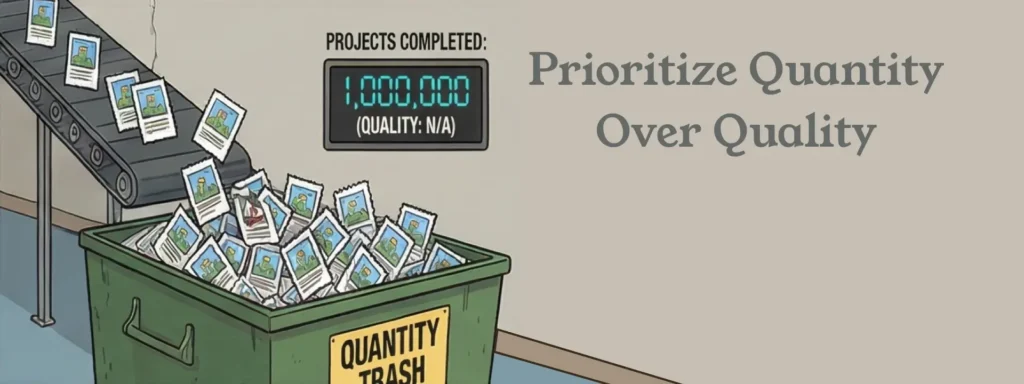
Who needs quality work when you can crank out designs at breakneck speed? If you really want to torpedo your design culture, focus on the sheer volume of output rather than the quality of the work. Forget deep thinking or thoughtful iteration.
Designers should be working on ten projects at once, each with a deadline tighter than the last. Burnout is just a sign that your team is ‘hustling hard’. Who cares if the work suffers or the final designs are riddled with usability issues? The important thing is that you’re pumping out designs fast enough to overwhelm everyone.
Step 9: Make Everything a Fire Drill

Nothing says ‘functional design culture’ like constantly working in a state of panic. Every project is a top priority, and every request is urgent. Design should feel like a constant firefight, with deadlines so tight you’re practically begging for a miracle to finish on time.
Don’t allow time for reflection, strategy, or iteration. Instead, push designers to rush through projects, so they’re always working under pressure. Because hey, diamonds are made under pressure, right? Or at least that’s what you’ll tell them while you toss another last-minute redesign their way.
Step 10: Provide No Recognition for Good Work

Finally, to ensure complete destruction of any hope for a positive design culture, never recognize or celebrate great design work. After all, why praise your team when they could be doing even more work?
Good design is expected, no need to acknowledge it. If anything, focus on what went wrong, and make sure the team knows they could have done better. Morale should be kept low, just like expectations for design in the organization.
Conclusion: The Ultimate Path to Design Dysfunction
After all, a ruined design culture is much easier to manage, especially when no one cares about design anymore!
Follow these ten easy steps, and you’ll have a demoralized design team working in a toxic culture in no time! Who needs a flourishing design environment where creativity, collaboration, and innovation thrive when you can create chaos, confusion, and frustration instead?