English Edition
Édition Française
How a Group of Critics Rewrote the Rules of Cinema
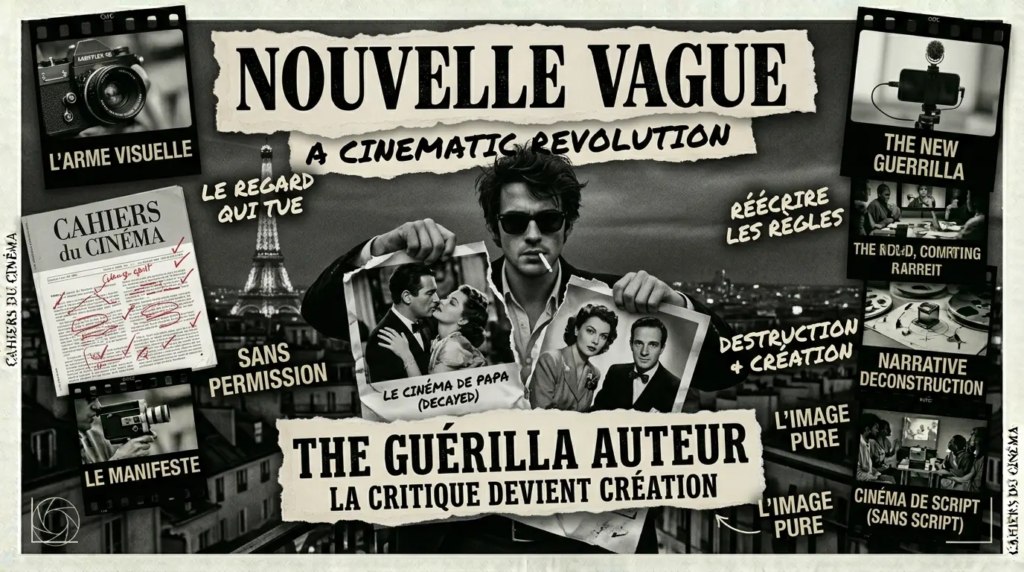
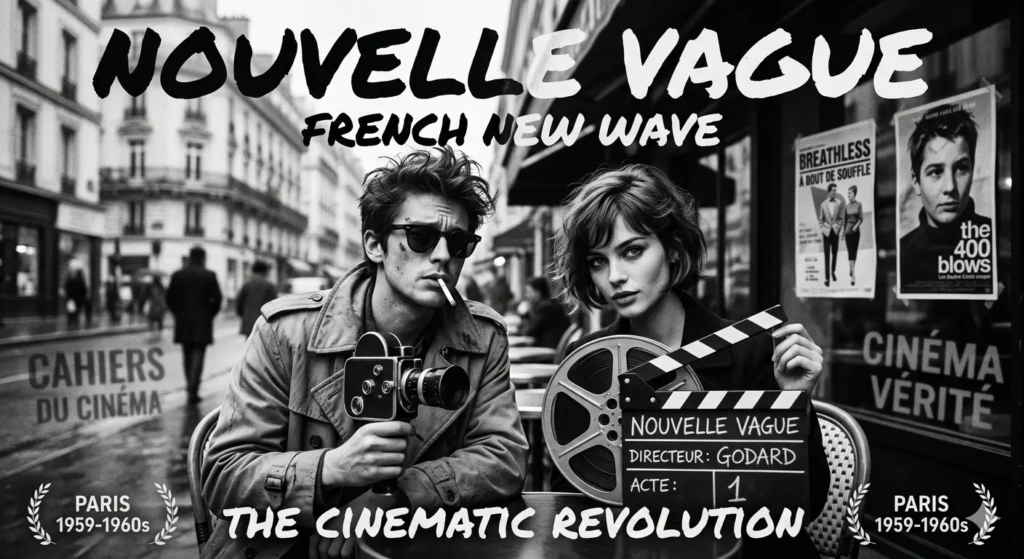
The Nouvelle Vague (pronunciation: noo·vel vayg), known to the rest of the world as the French New Wave, is arguably the most significant film movement in the history of cinema. Emerging in the late 1950s and flourishing through the 1960s, it wasn’t just a stylistic shift; it was a total rebellion.
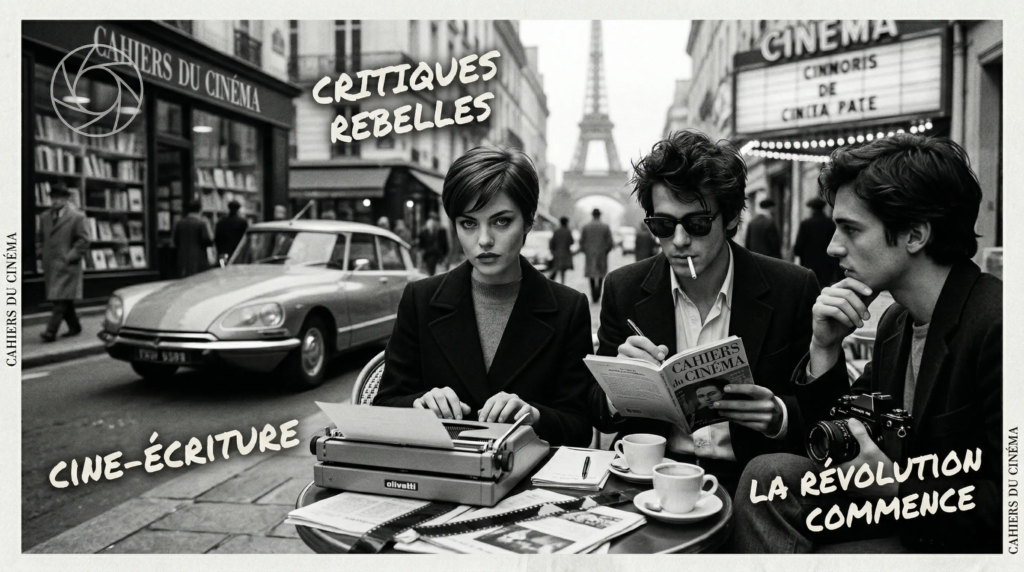
In the late 1950s, a group of young cinephiles-turned-critics at the magazine Cahiers du Cinéma grew weary of the stale, studio-bound le Cinéma de Papa (Daddy’s Cinema). They didn’t just want to watch movies; they wanted to deconstruct them, reinvent them, and prove that a director could be an artist as singular as a novelist.
They picked up lightweight cameras, took to the streets of Paris, and changed how we make and watch movies forever.
Appreciation Through Criticism and Deconstruction
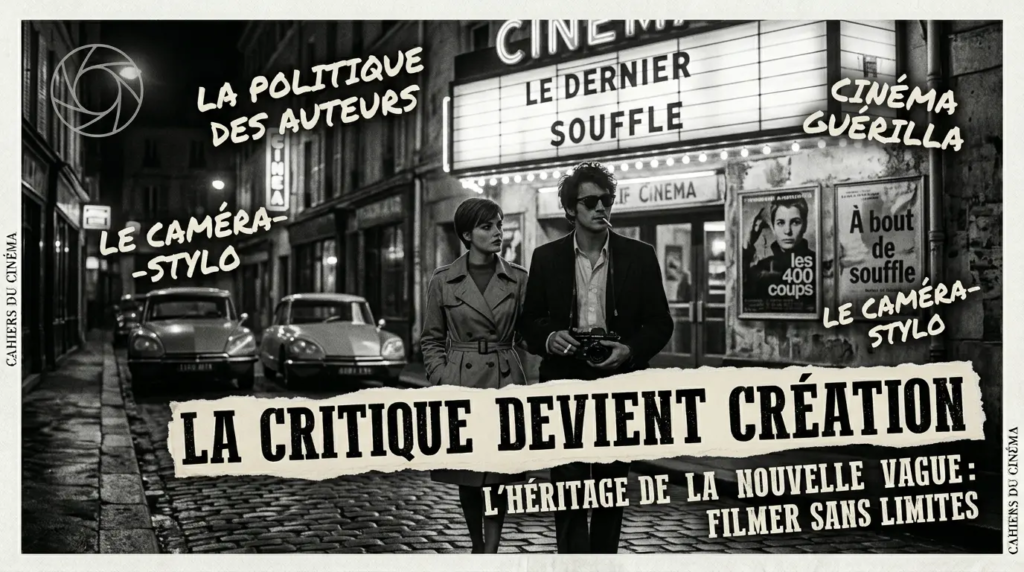
Before the directors of the New Wave made films, they watched them. Obsessively. Figures like François Truffaut, Jean-Luc Godard, Éric Rohmer, and Claude Chabrol spent their youth in the dark of the Cinémathèque Française, absorbing everything from silent classics to American B-movies.
They became critics for the influential magazine Cahiers du Cinéma, founded by film theorist André Bazin. Here, they developed a radical new way of looking at movies:
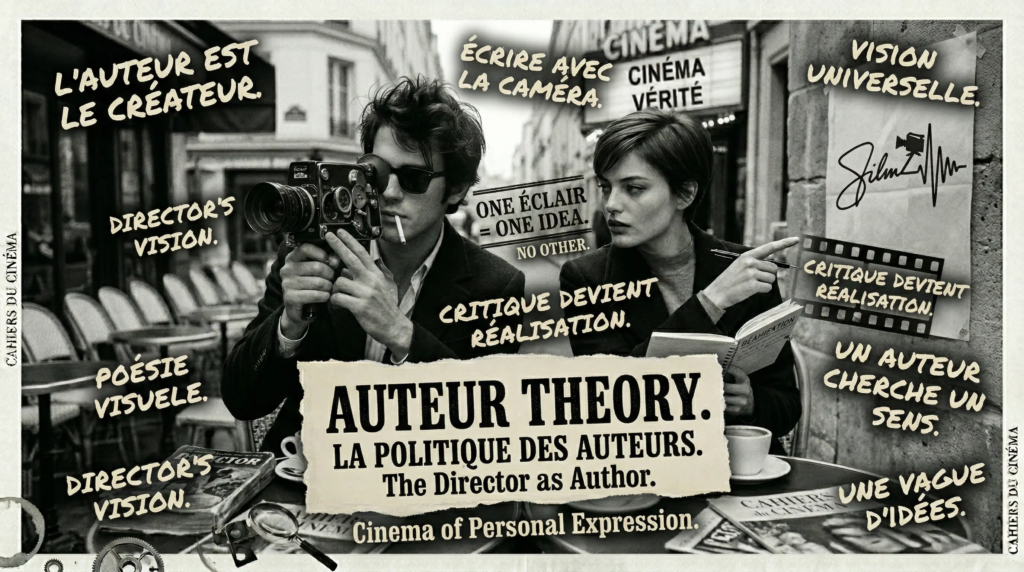
Auteur Theory (La Politique des Auteurs)
They argued that a film should reflect the director’s personal vision, just as a novel reflects its author. The director was the true ‘author’ of the film, not the screenwriter or the studio.
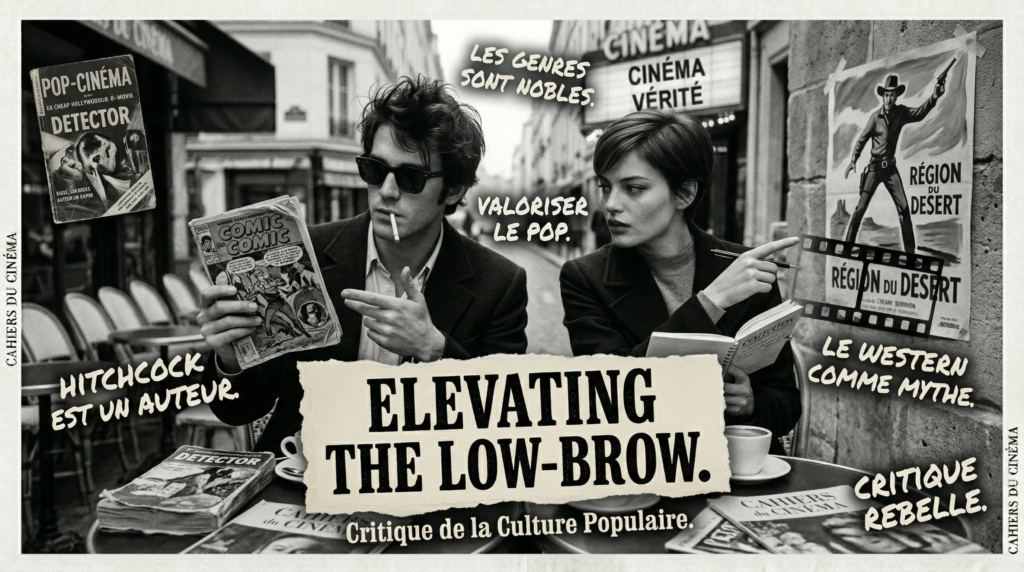
Elevating the Low-Brow
They championed American genre directors like Alfred Hitchcock, Howard Hawks, and John Ford, who were often dismissed by the French establishment as mere commercial entertainers. The Cahiers critics recognized their distinct visual signatures and thematic obsessions.
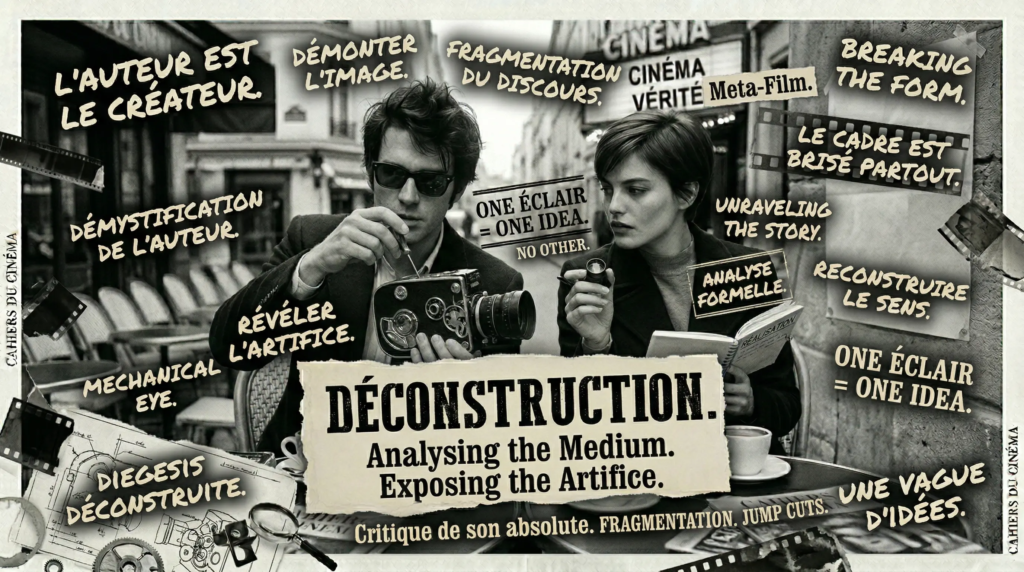
Deconstruction
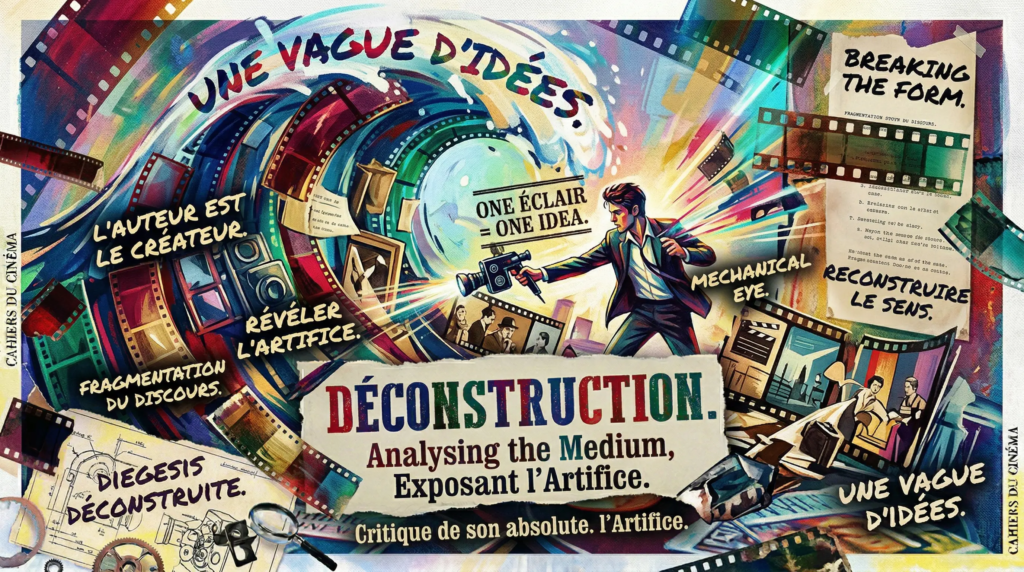
To truly appreciate cinema, they tore it apart. They analyzed editing rhythms, camera movements, and the very nature of storytelling. When they finally transitioned from writing about films to making them, they didn’t just tell stories; they made movies about movies, constantly reminding the audience that they were watching a constructed piece of art.
Breaking Conventions: The Guerrilla Toolkit
Because they were young, largely self-funded, and operating outside the traditional studio system, the New Wave directors had to improvise. Their lack of resources birthed an entirely new cinematic language:
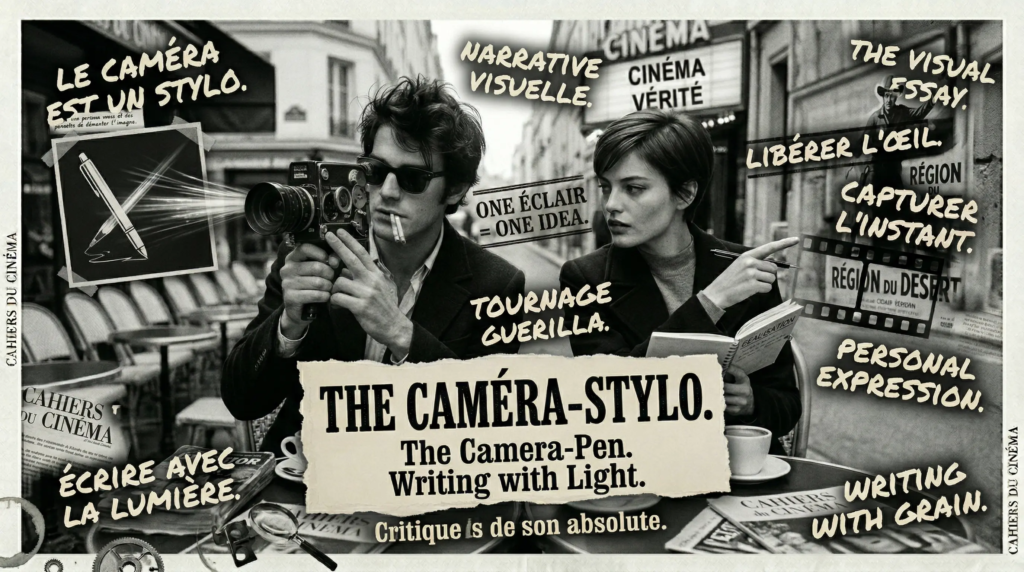
The Caméra-Stylo (Camera-Pen)
Utilizing newly developed, lightweight Éclair cameras and fast film stock, they abandoned soundstages. They shot on location in apartments, cafés, and on the bustling streets of Paris, giving their films a documentary-like immediacy.
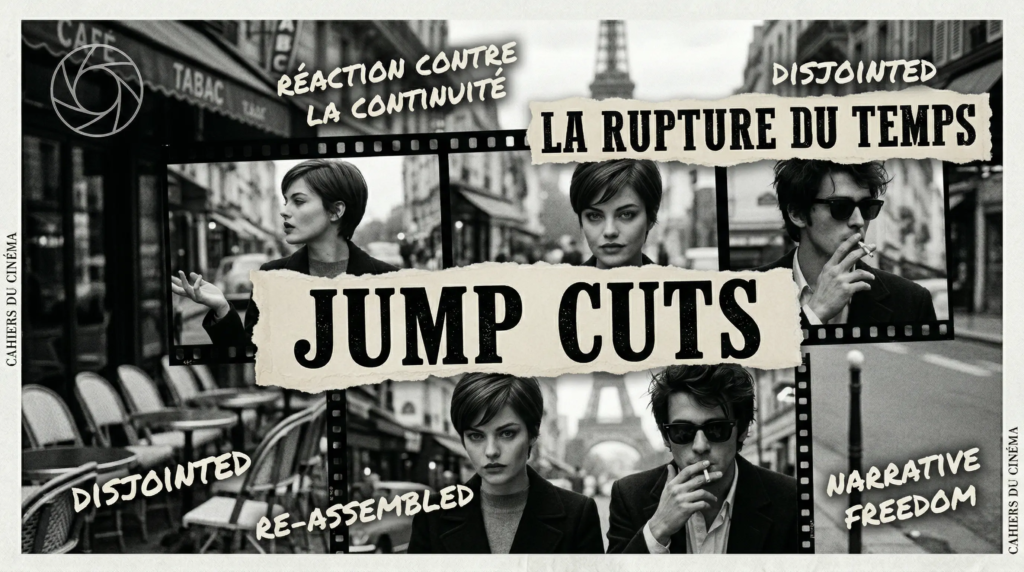
Jump Cuts
Before the New Wave, editing was supposed to be invisible, creating a seamless illusion of reality. Godard, most famously in Breathless, used jump cuts (removing frames from a single continuous shot) to jar the audience, quicken the pace, and deliberately break the illusion.
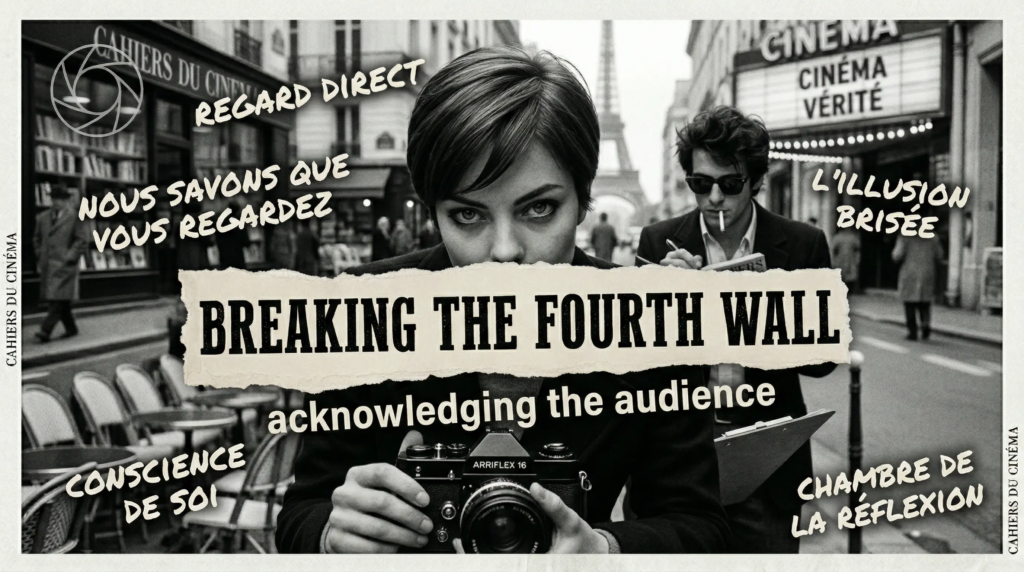
Breaking the Fourth Wall
Actors would frequently look directly into the lens and address the audience, destroying the boundary between the film and the viewer.
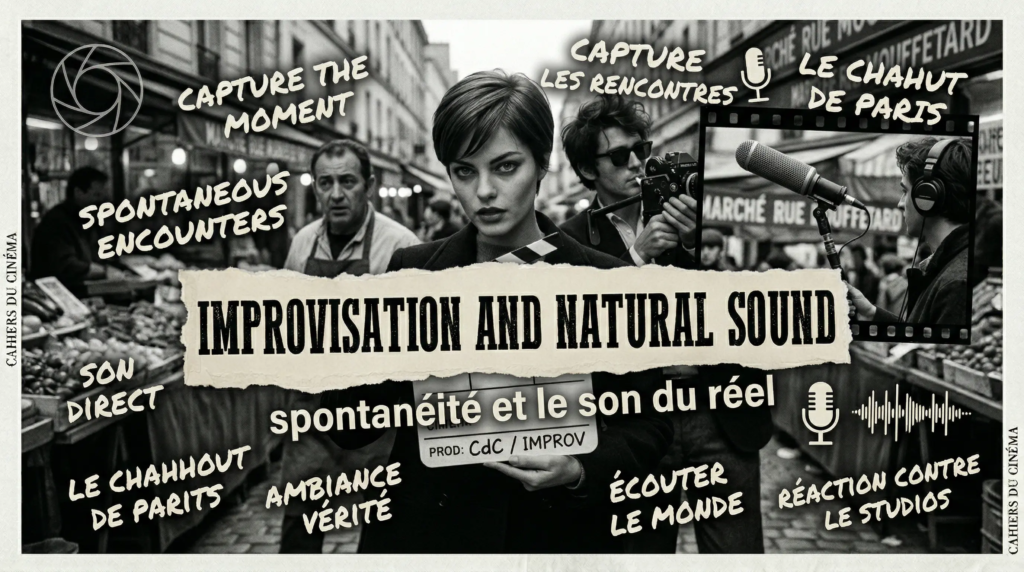
Improvisation and Natural Sound
Dialogue was often improvised on the spot, and ambient city noise was left in the mix, rejecting the sterile, over-dubbed audio of traditional cinema.
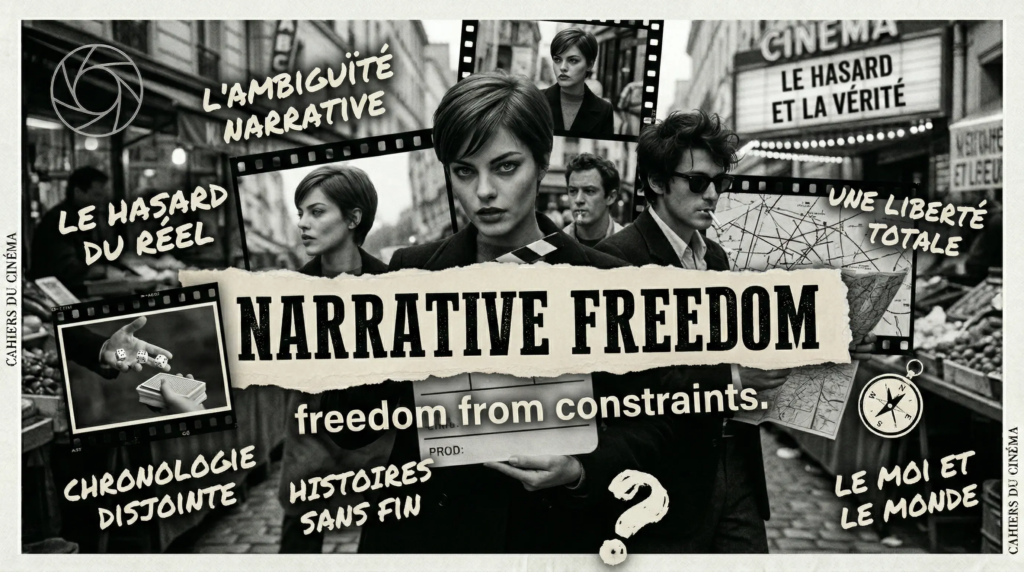
Narrative Freedom
They threw out the three-act structure. Endings were left ambiguous, protagonists were deeply flawed, and plots were often just clotheslines to hang philosophical conversations and character studies on.
Notable Directors and Their Signatures
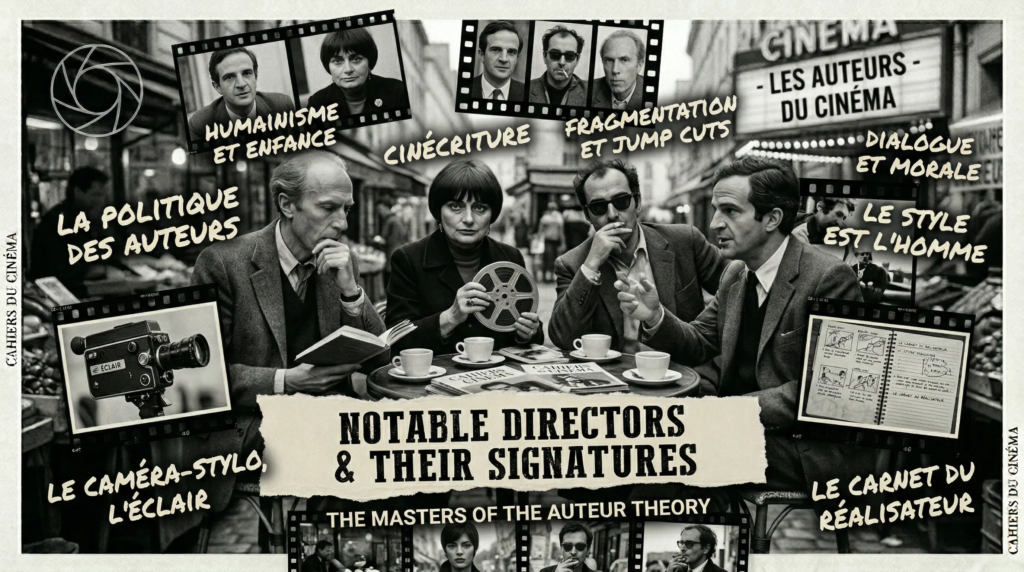
While united by a shared philosophy, the New Wave directors were fiercely individualistic in their approach.
| Director | Signature Style & Themes | Key Philosophy / Contribution |
| Jean-Luc Godard | Radical, politically charged, experimental, and hyper-stylized. Master of the jump cut and meta-cinema. | “Cinema is truth at 24 frames per second.” He viewed film as an intellectual and political weapon. |
| François Truffaut | Lyrical, deeply humanist, romantic, and semi-autobiographical. Fluid camera movements and emotional sincerity. | Focused on the struggles of childhood, the awkwardness of youth, and the tragedy of doomed romance. |
| Agnès Varda | Associated with the ‘Left Bank’ offshoot. Blended documentary realism with subjective, feminist fiction. | Practiced Cinécriture (cinematic writing), where every choice (lens, editing, sound) is as crucial as the script. |
| Éric Rohmer | Minimalist, naturalistic, and intensely dialogue-driven. | Explored complex moral dilemmas, chance, and the psychological self-deceptions of the middle class. |
| Jacques Demy | Vibrant, colorful, and musically driven. | Merged the artificial joy of the Hollywood musical with deeply grounded, fatalistic French melancholy. |
| Claude Chabrol | Suspenseful, cynical, and highly structured. | The ‘French Hitchcock’. Used thriller tropes to dissect and critique the hypocrisy of the French bourgeoisie. |
20 Must-Watch French New Wave Films
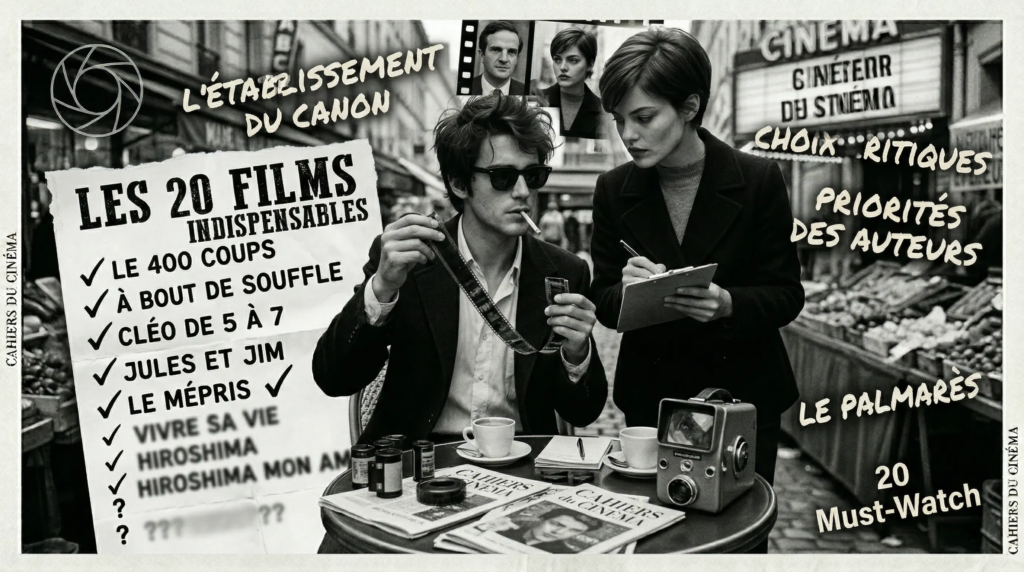
To truly understand the breadth and impact of the Nouvelle Vague, these 20 films serve as the ultimate foundational watchlist:
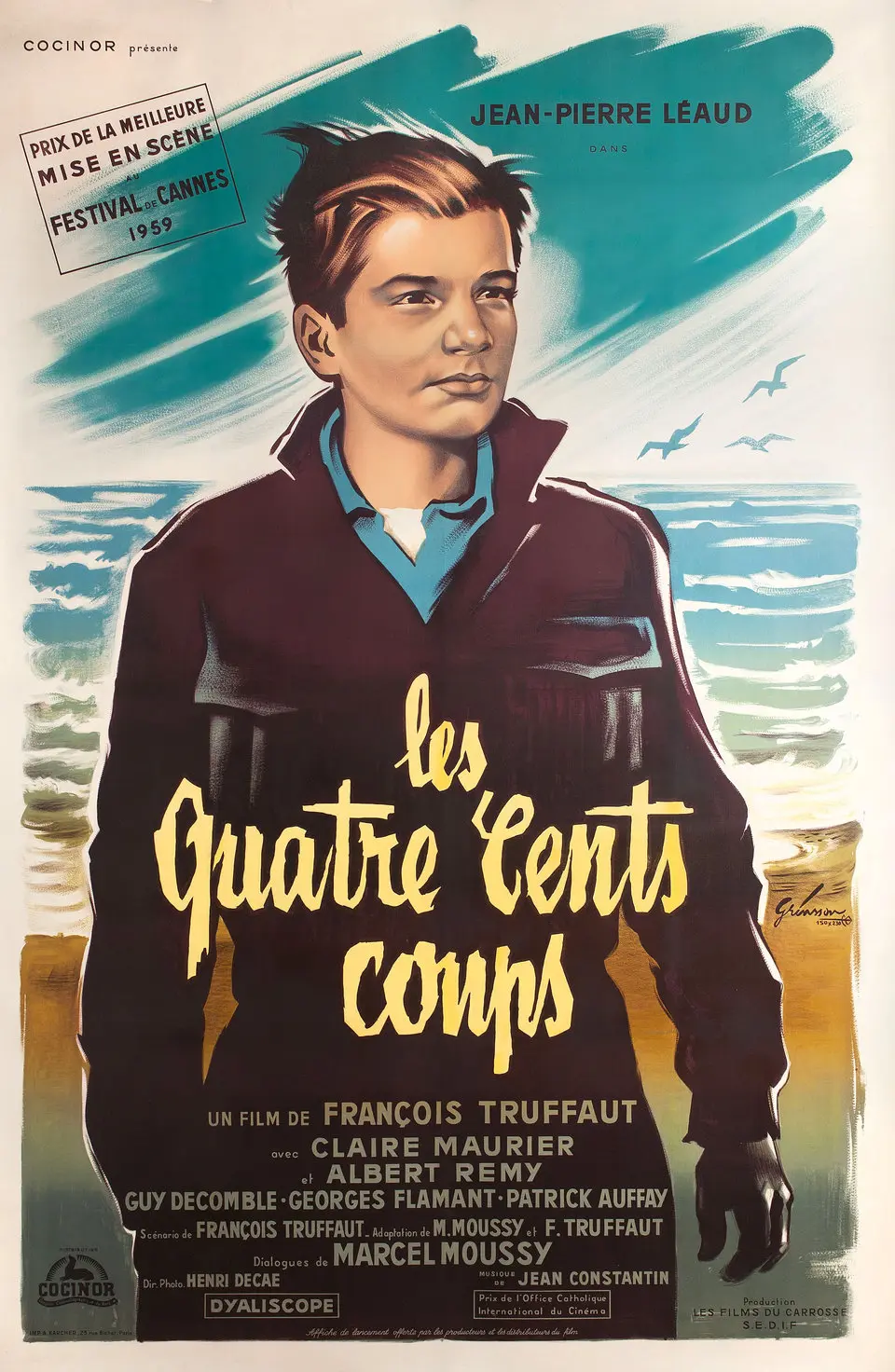
(Truffaut, 1959)
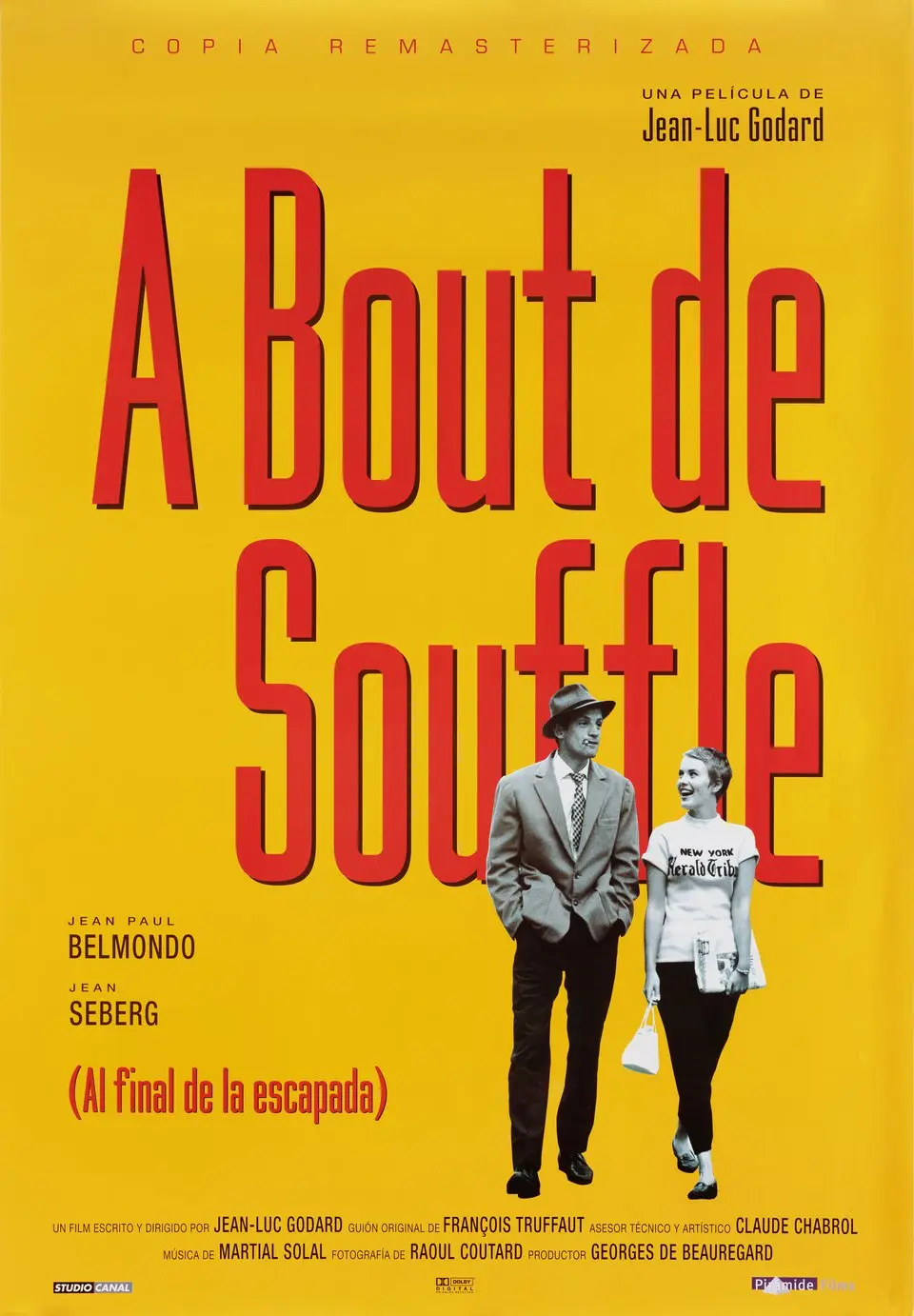
(Godard, 1960)
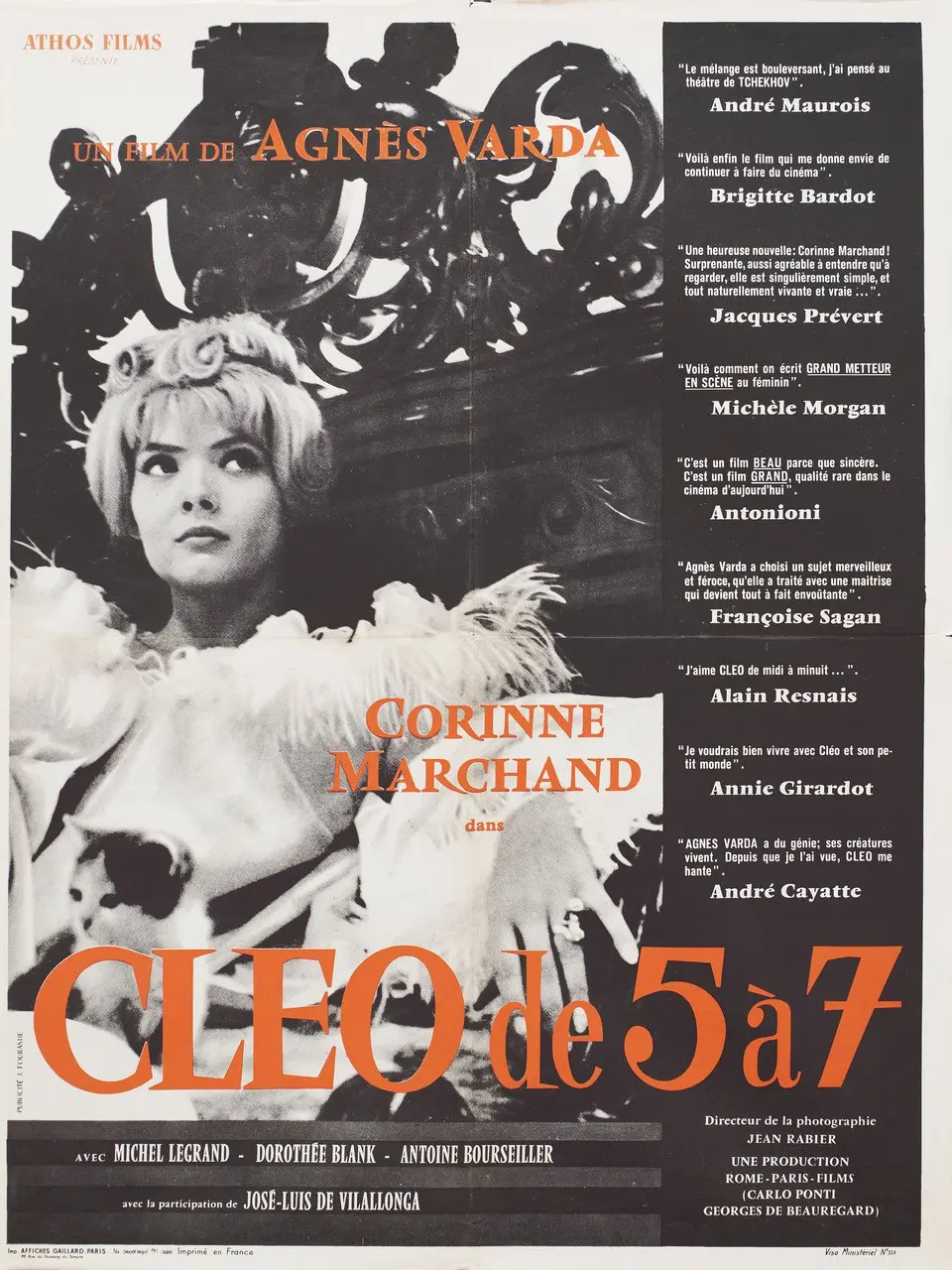
(Varda, 1962)
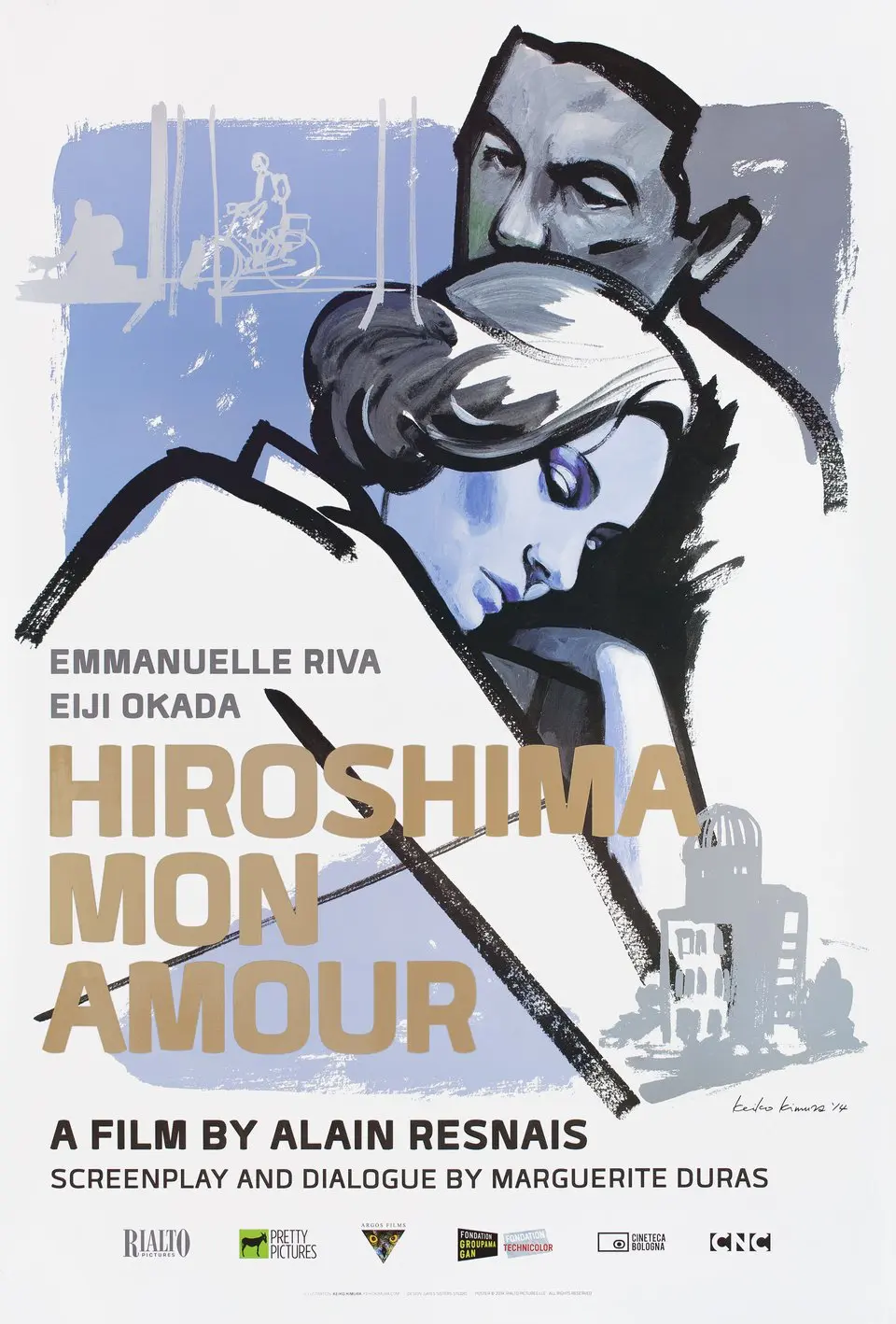
(Alain Resnais, 1959)
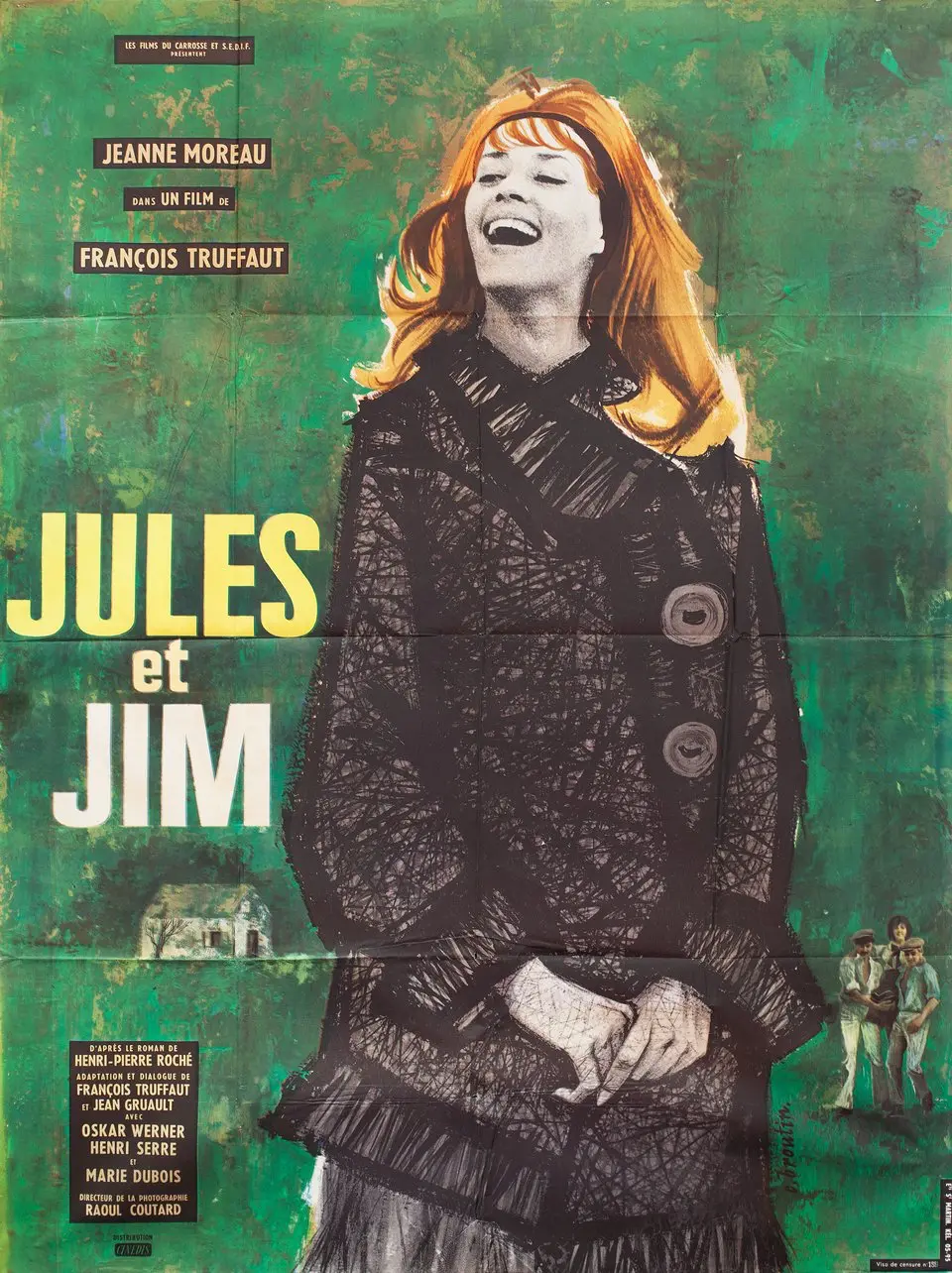
(Truffaut, 1962)
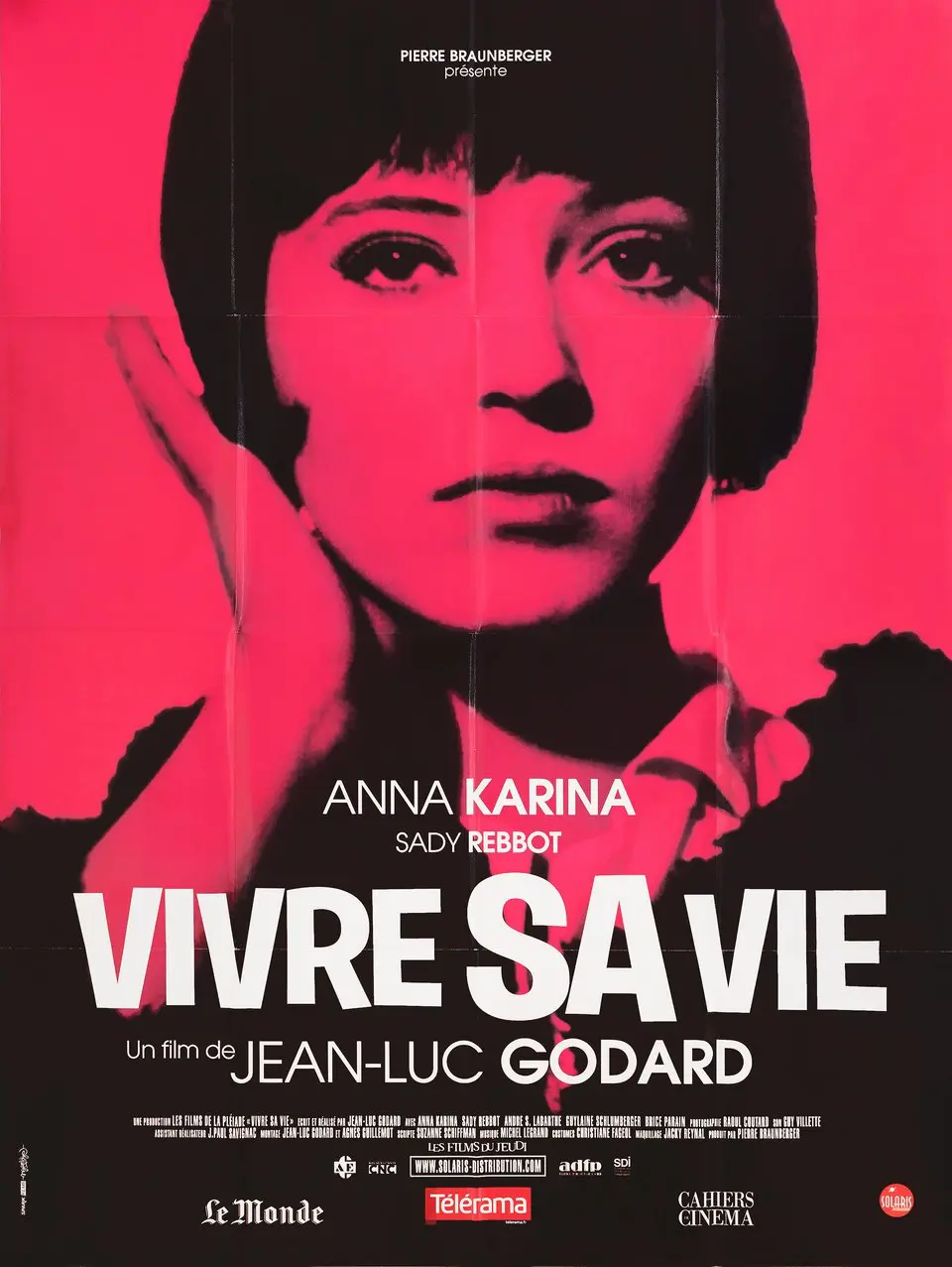
(Godard, 1962)
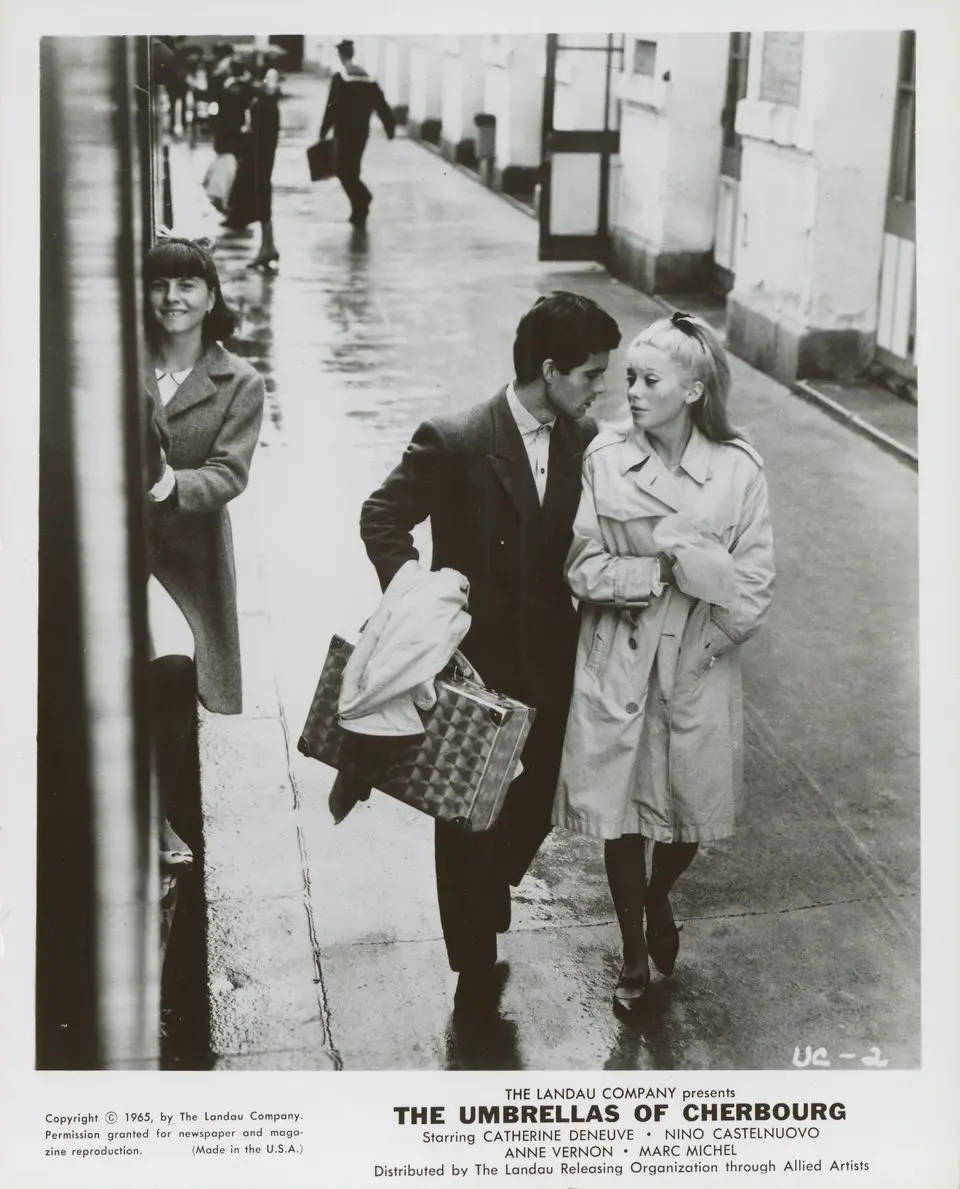
(Demy, 1964)
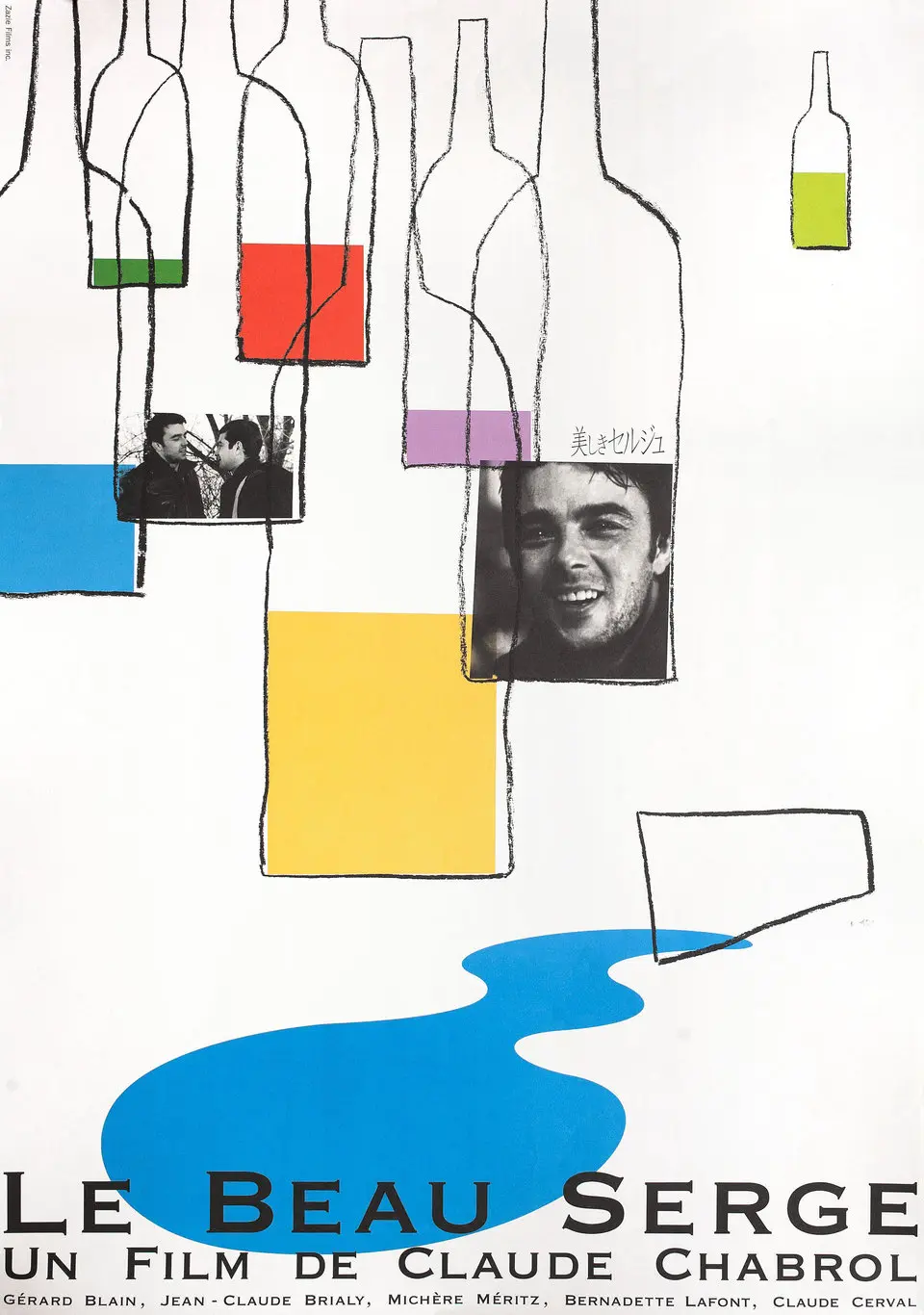
(Chabrol, 1958)
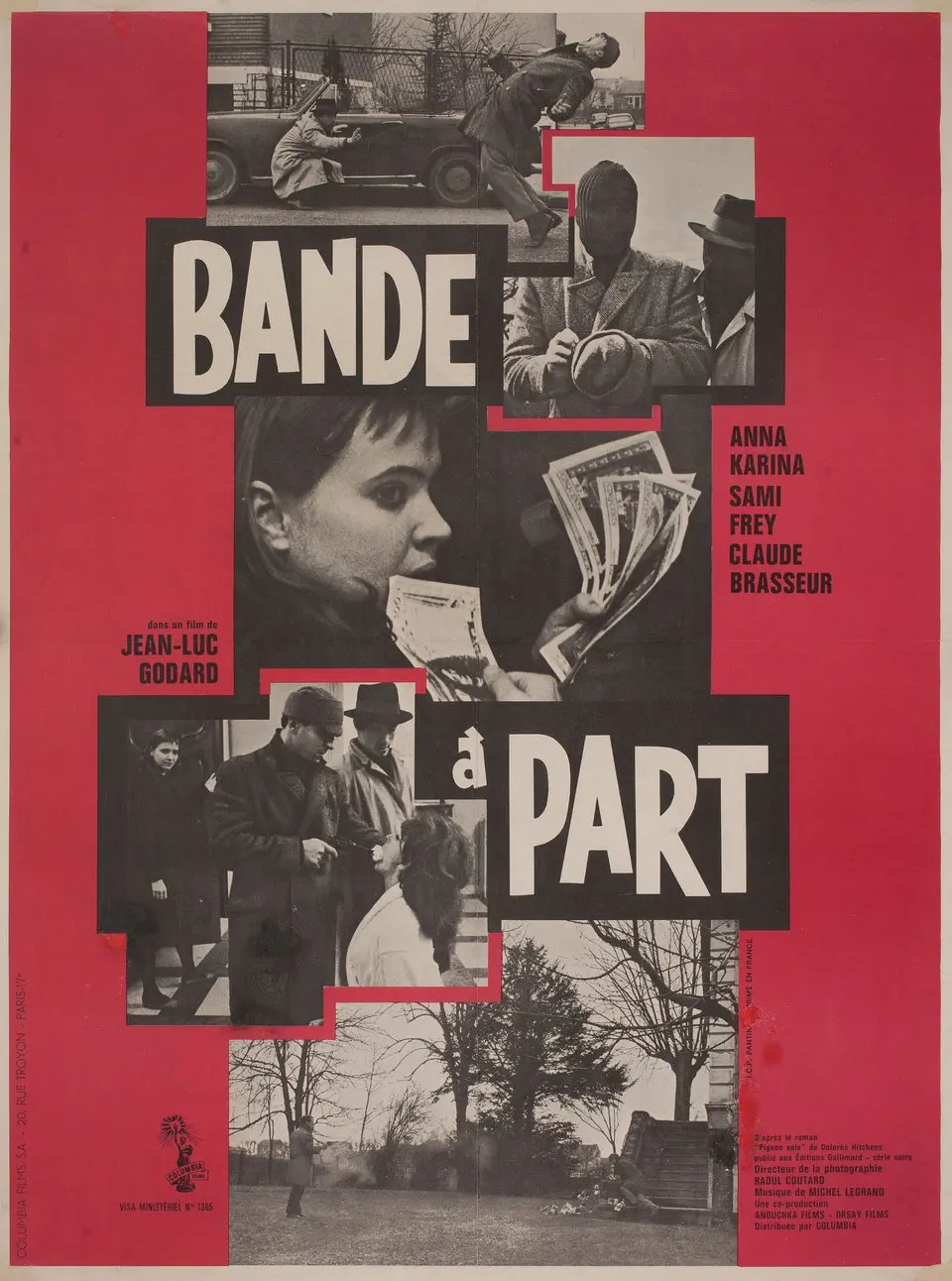
(Godard, 1964)
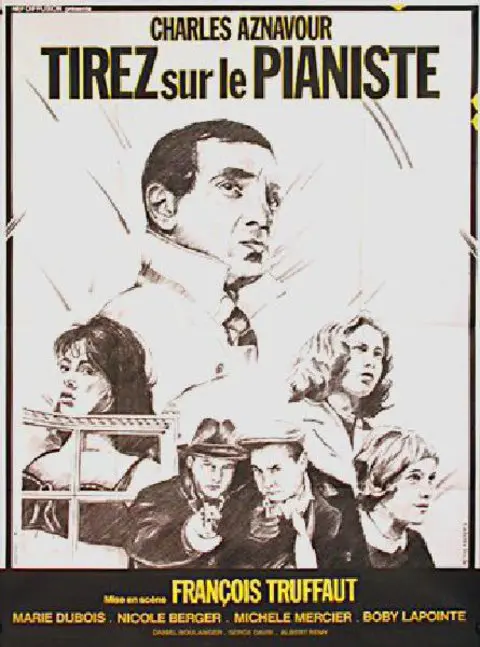
(Truffaut, 1960)
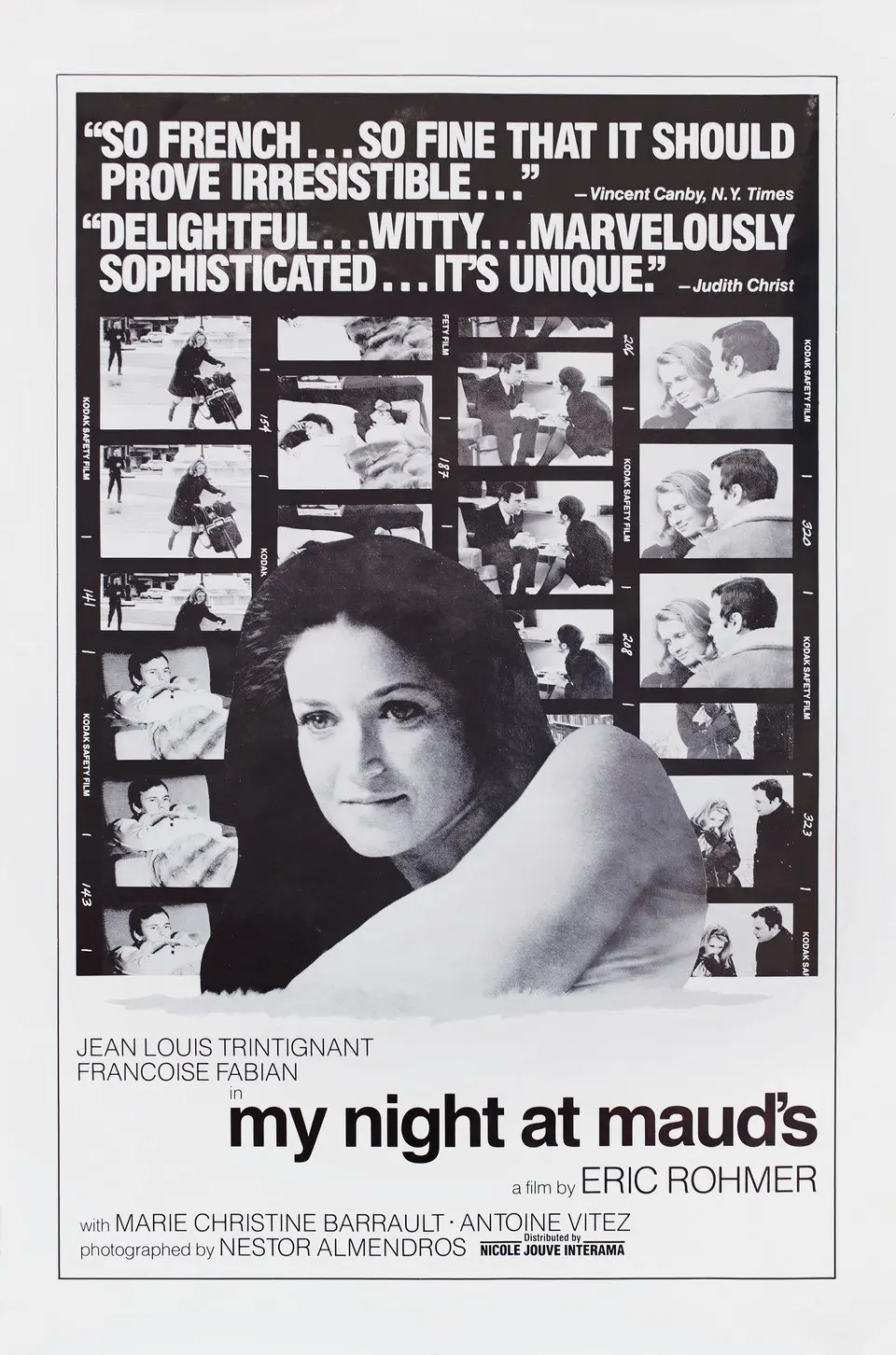
(Rohmer, 1969)
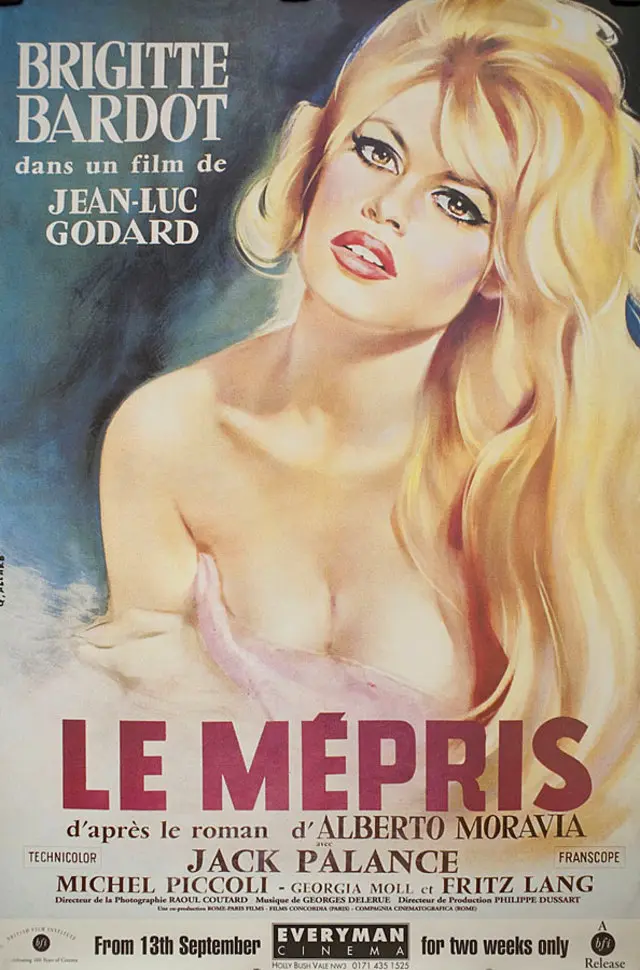
(Godard, 1963)
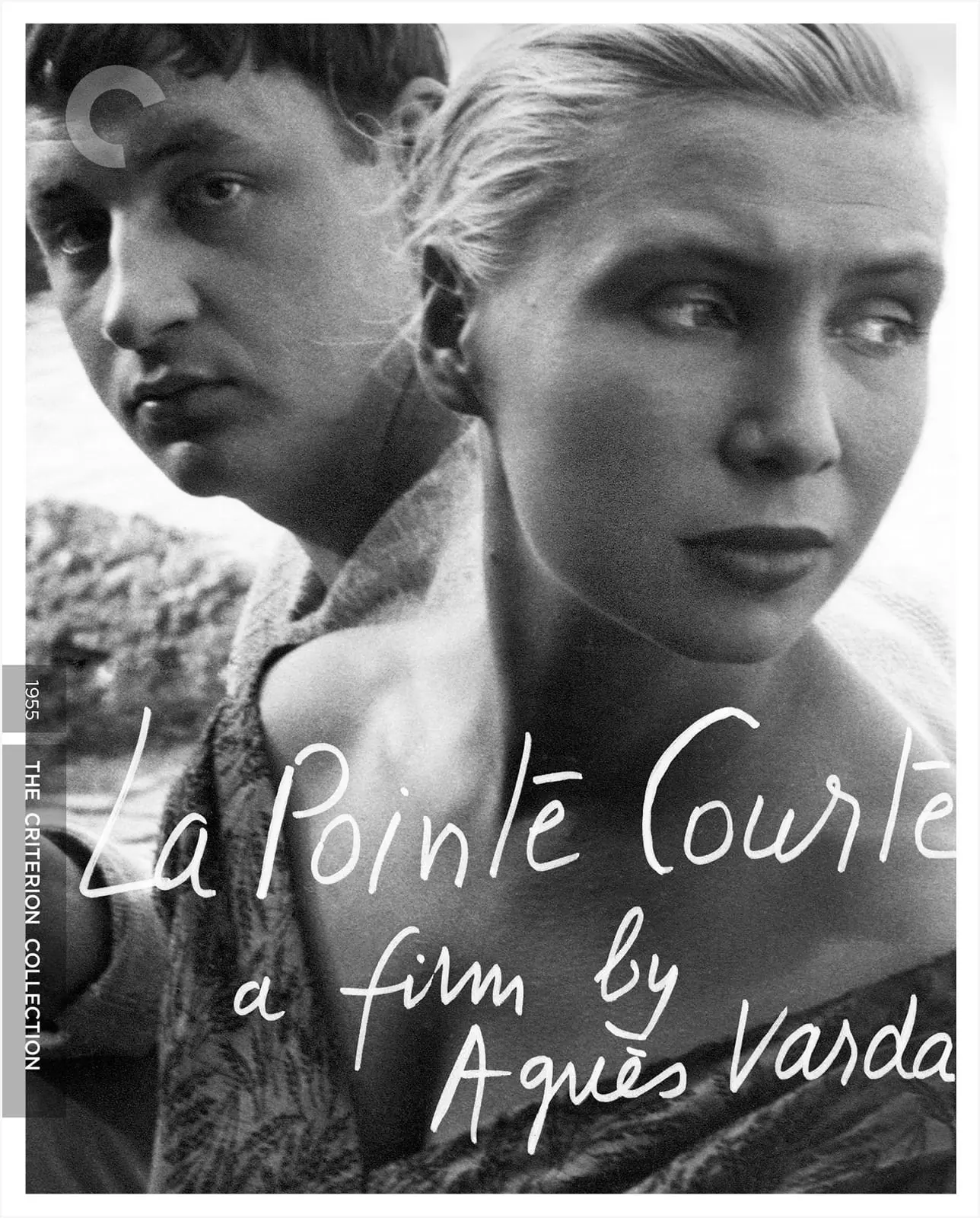
(Varda, 1955)
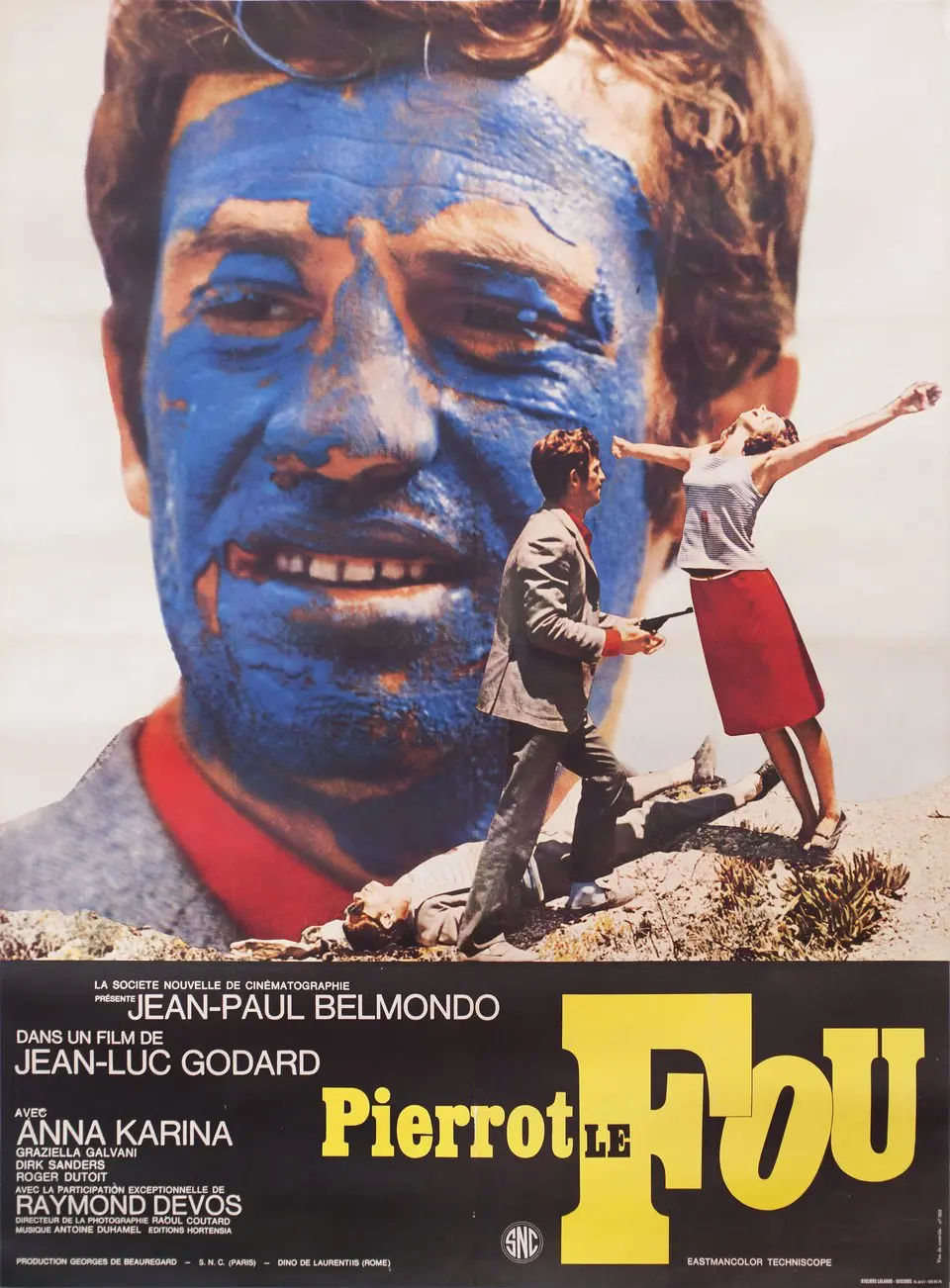
(Godard, 1965)
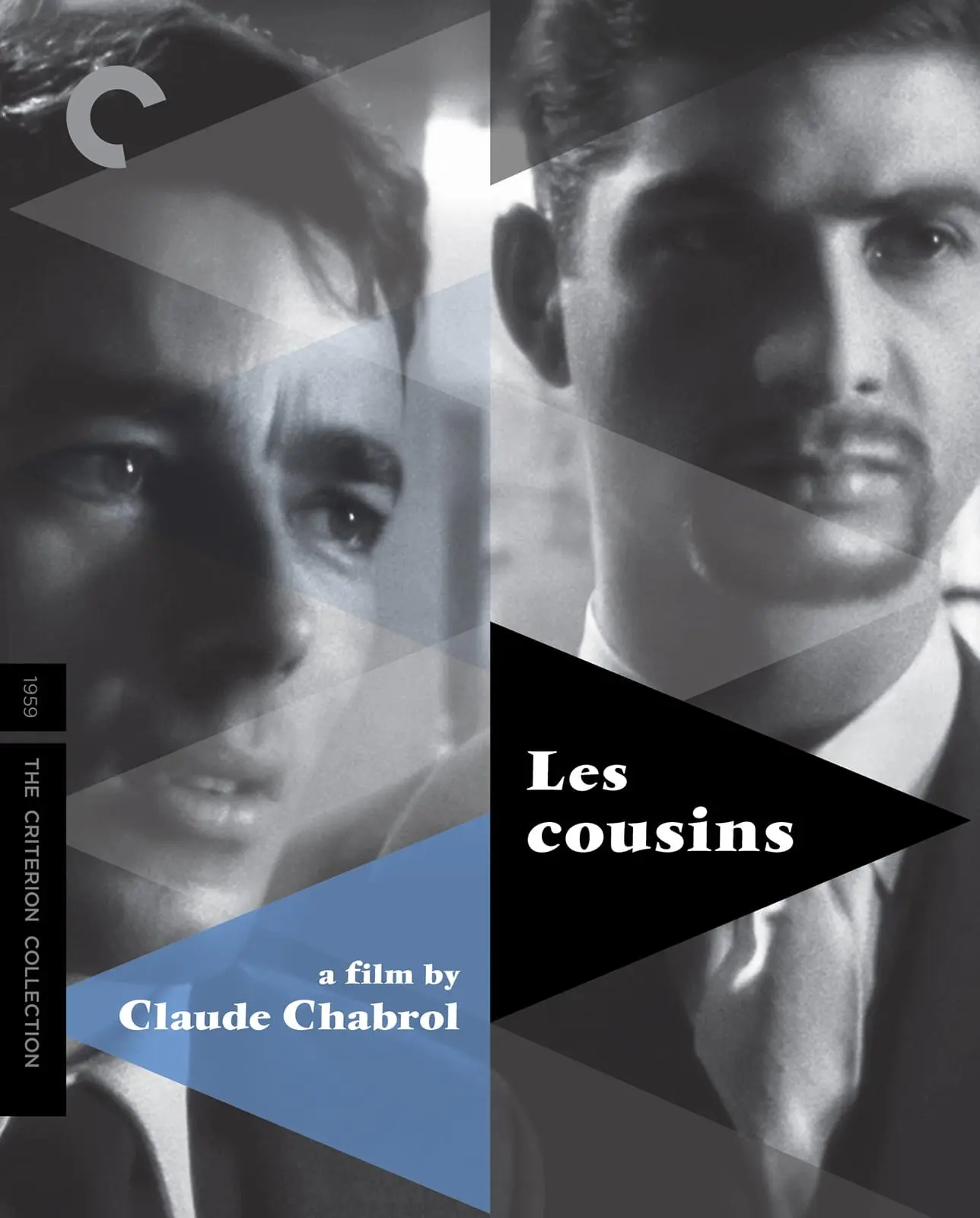
(Chabrol, 1959)
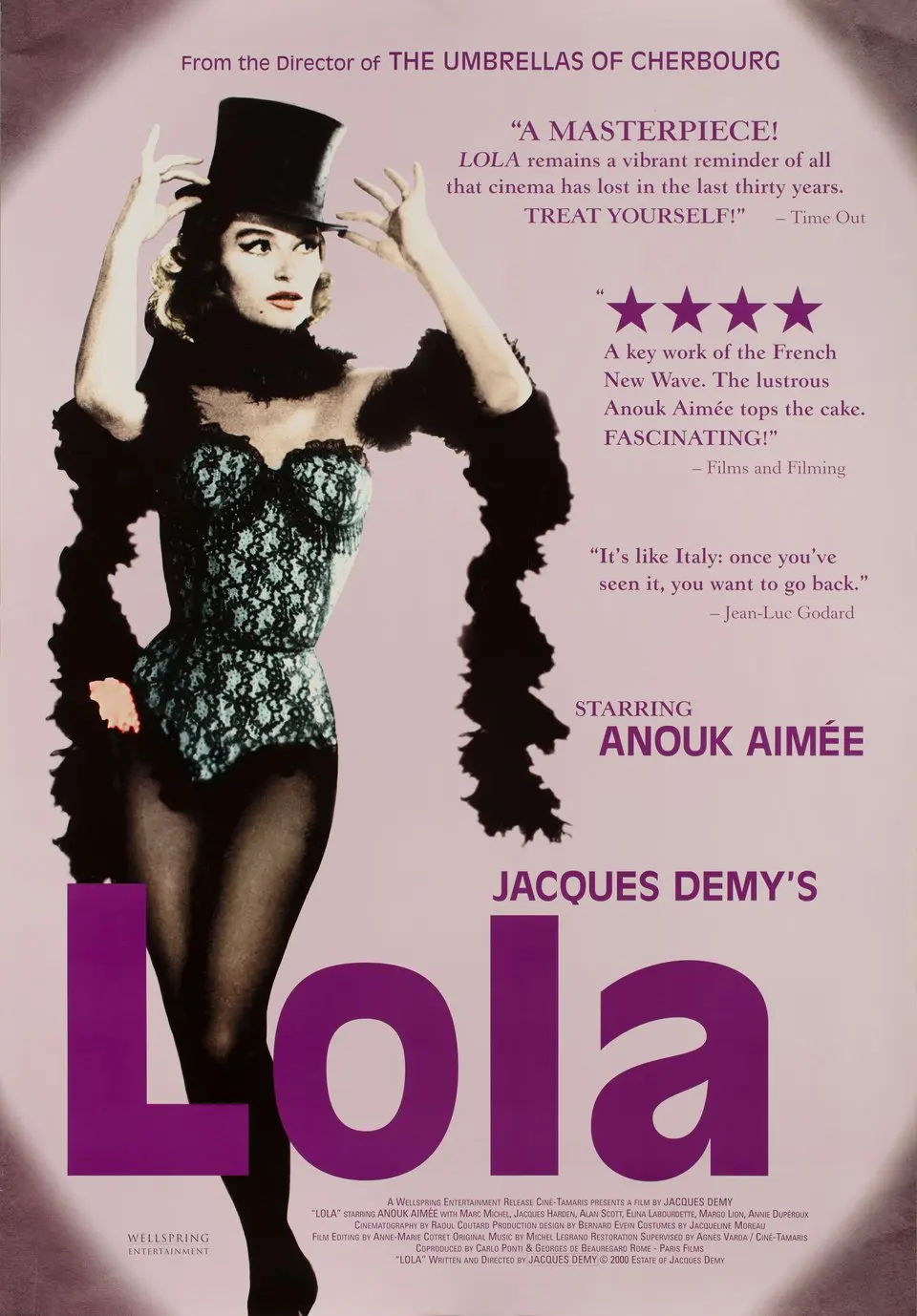
(Demy, 1961)
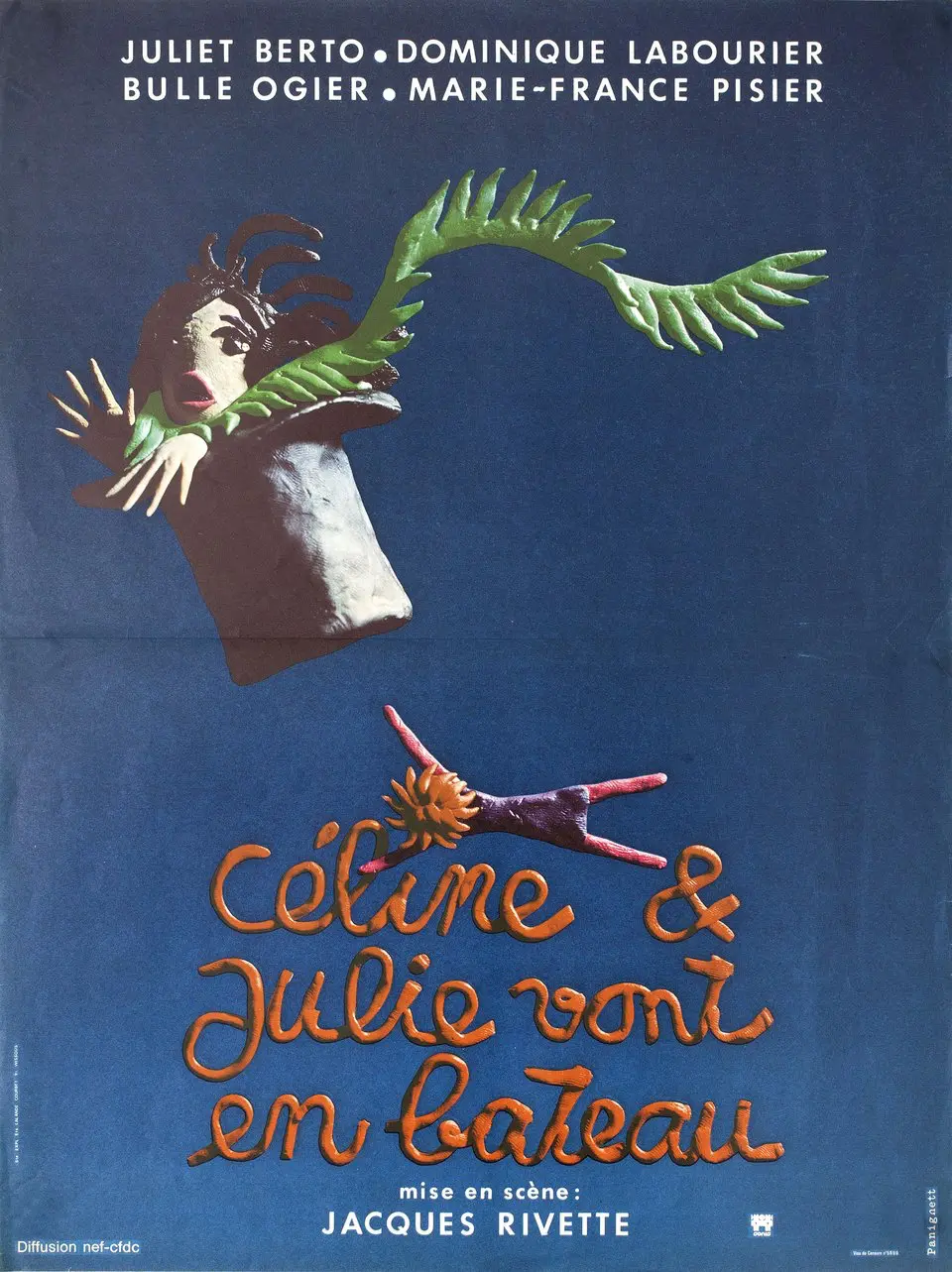
(Jacques Rivette, 1974)
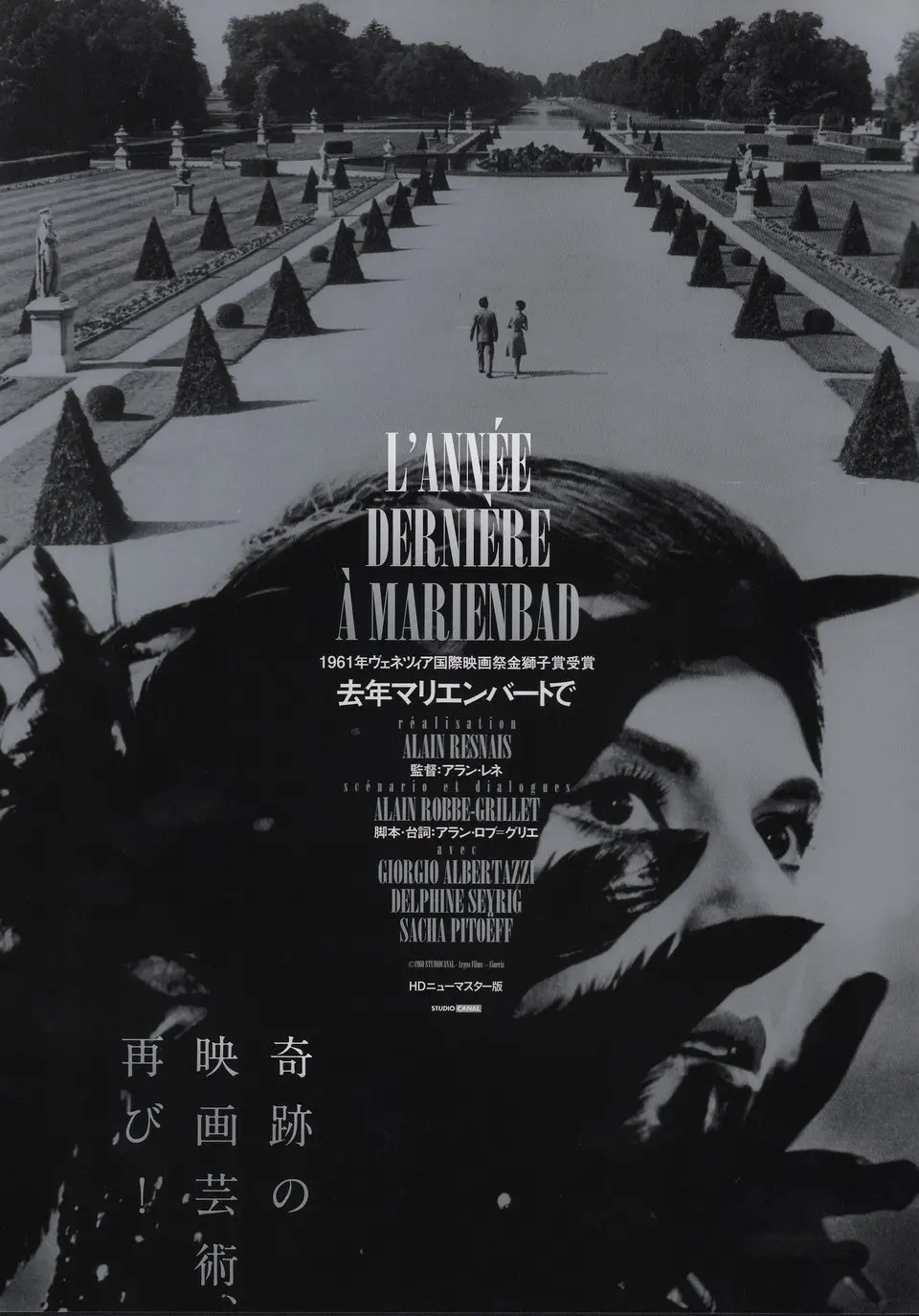
(Resnais, 1961)
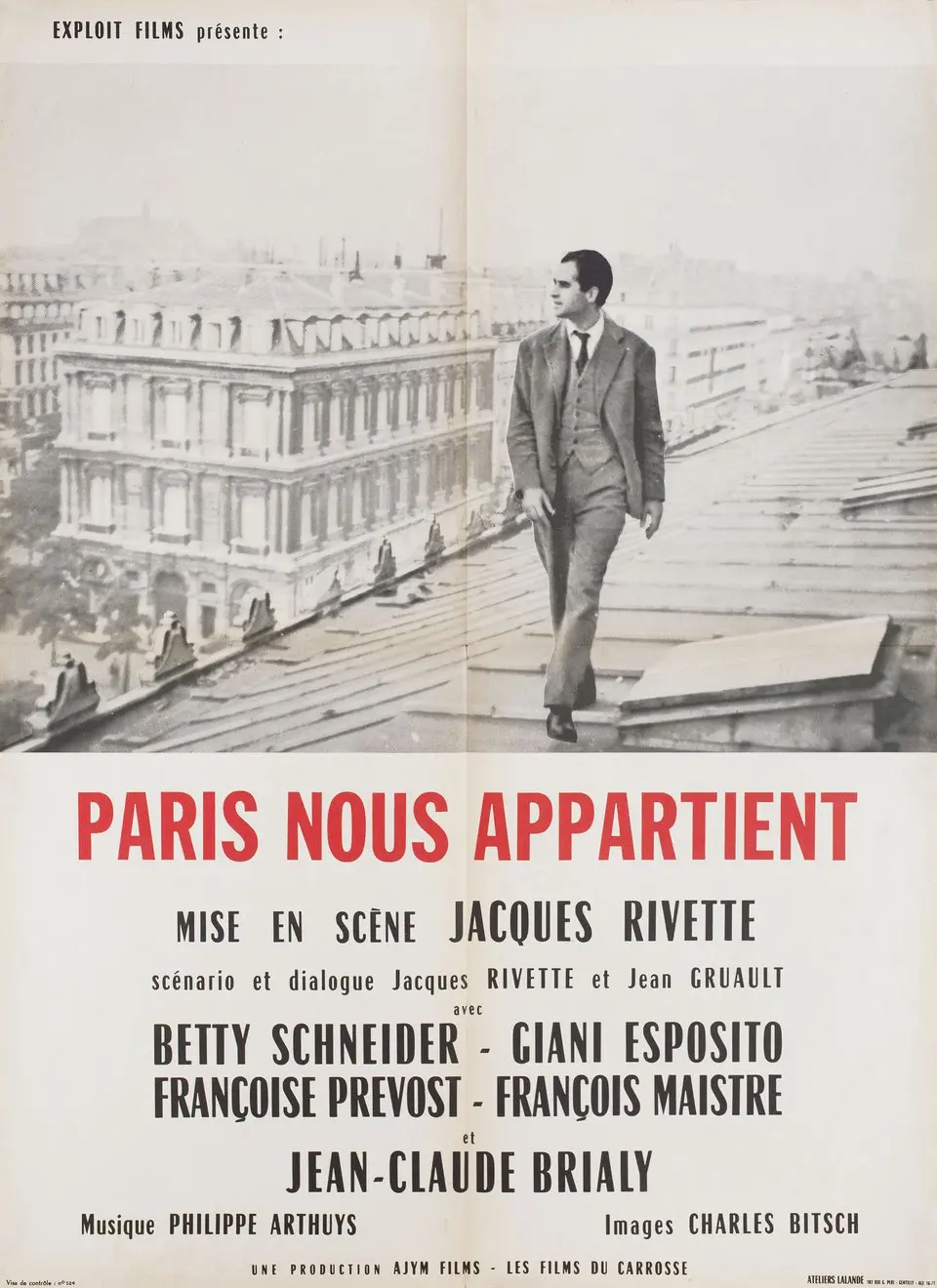
(Rivette, 1961)
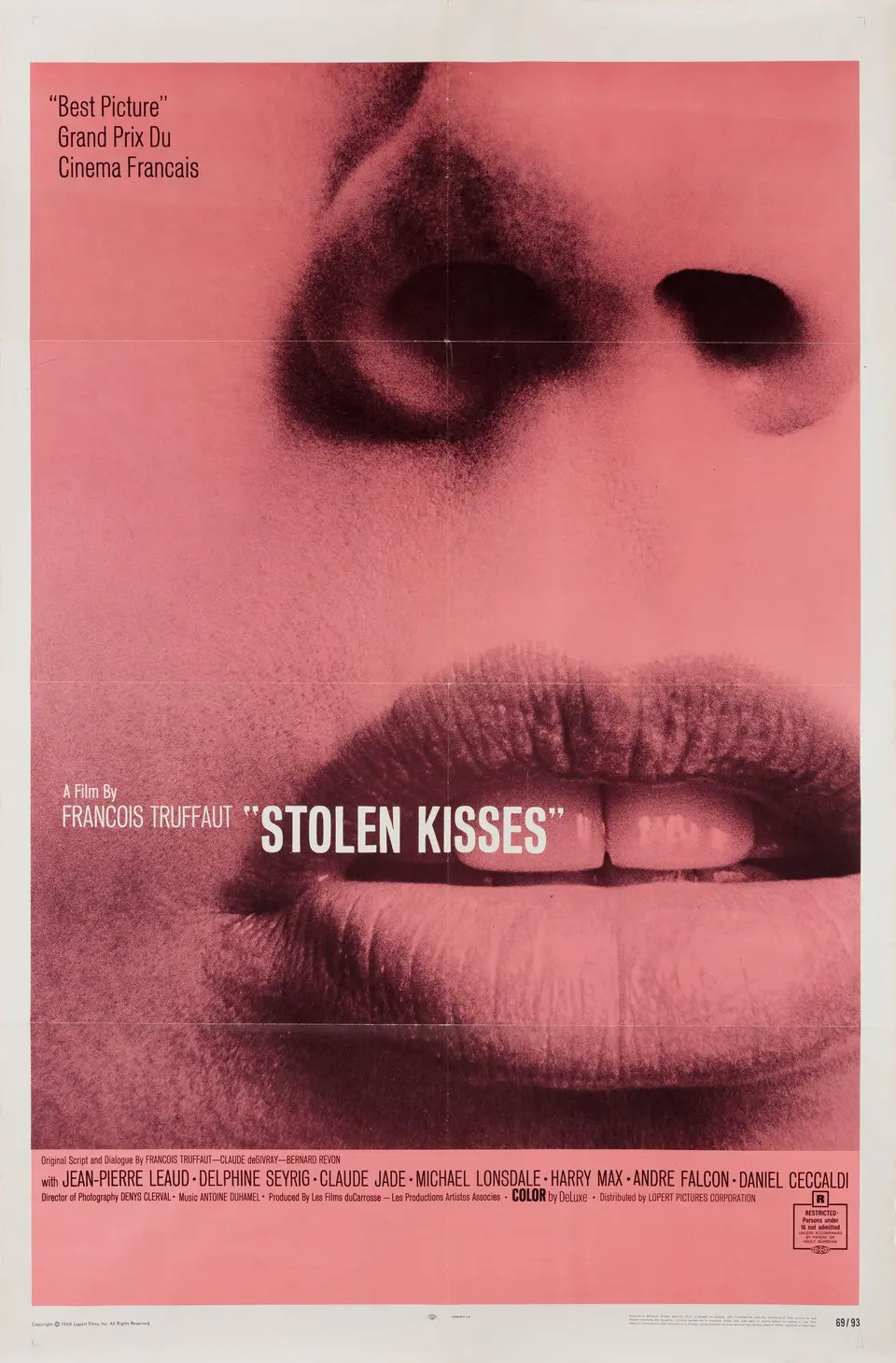
(Truffaut, 1968)
- The 400 Blows (Truffaut, 1959) – The deeply moving, semi-autobiographical debut that kickstarted the movement’s global recognition.
- Breathless (Godard, 1960) – The ultimate rule-breaker. A cool, jazz-infused, jump-cut-heavy deconstruction of the American gangster film.
- Cléo from 5 to 7 (Varda, 1962) – A real-time, existential masterwork following a pop singer waiting for biopsy results in Paris.
- Hiroshima Mon Amour (Alain Resnais, 1959) – A haunting, non-linear exploration of memory, trauma, and romance.
- Jules and Jim (Truffaut, 1962) – A dizzying, energetic, and ultimately tragic love triangle spanning decades.
- Vivre Sa Vie (Godard, 1962) – Told in 12 distinct chapters, a stark and stylized look at a young woman turning to prostitution.
- The Umbrellas of Cherbourg (Demy, 1964) – A sung-through cinematic opera awash in pastel colors and romantic heartbreak.
- Le Beau Serge (Chabrol, 1958) – Often credited as the very first feature film of the New Wave, exploring the rural/urban divide.
- Band of Outsiders (Godard, 1964) – Famous for its impromptu café dance sequence and a literal sprint through the Louvre.
- Shoot the Piano Player (Truffaut, 1960) – A playful, unpredictable blending of comedy, tragedy, and film noir.
- My Night at Maud’s (Rohmer, 1969) – A brilliant, snowy, dialogue-heavy exploration of Catholicism, Pascal’s Wager, and sexual temptation.
- Contempt (Godard, 1963) – A visually stunning, cynical look at the compromises of the filmmaking industry itself.
- La Pointe Courte (Varda, 1955) – Predating the official start of the movement, this film established the blueprint for New Wave production.
- Pierrot le Fou (Godard, 1965) – An explosion of primary colors, pop art, and anarchic violence.
- The Cousins (Chabrol, 1959) – A dark, cynical inversion of Le Beau Serge, dealing with decadence and jealousy.
- Lola (Demy, 1961) – A beautiful, widescreen black-and-white tribute to chance encounters and lost loves.
- Céline and Julie Go Boating (Jacques Rivette, 1974) – A late-wave, surreal, magical-realist epic about the nature of storytelling.
- Last Year at Marienbad (Resnais, 1961) – A dreamlike, labyrinthine puzzle of a movie that abandons traditional narrative completely.
- Paris Belongs to Us (Rivette, 1961) – A paranoid, complex look at youth and theatricality in post-war Paris.
- Stolen Kisses (Truffaut, 1968) – The charming, lighter continuation of the Antoine Doinel character introduced in The 400 Blows.
Lasting Impact on World Cinema
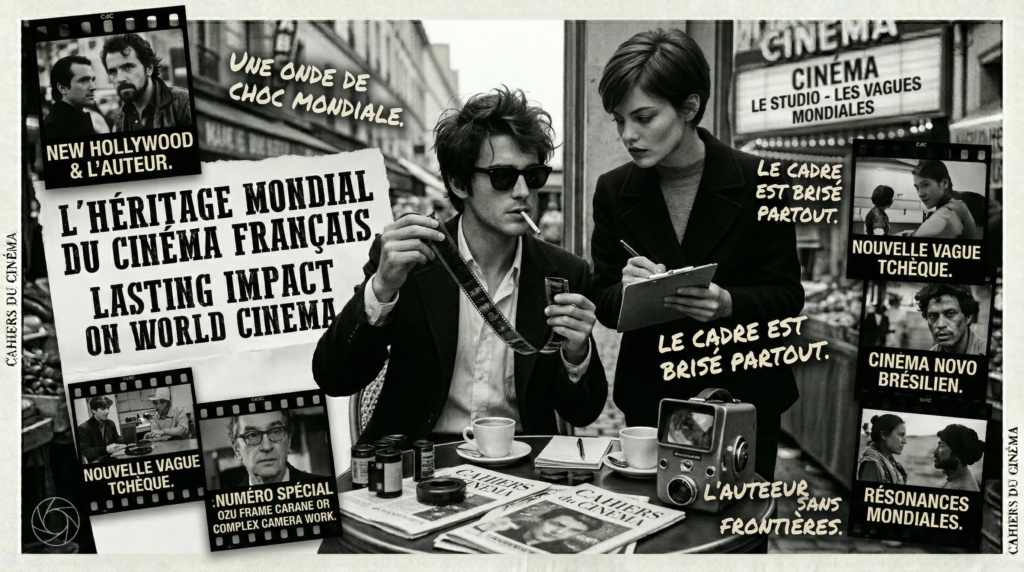
The blast radius of the Nouvelle Vague is immeasurable. It directly triggered New Hollywood in the 1970s. Directors like Martin Scorsese, Francis Ford Coppola, and Arthur Penn (whose Bonnie and Clyde was heavily influenced by Truffaut and Godard) adopted the New Wave’s moral ambiguity and kinetic energy.
It sparked parallel waves globally: the Czech New Wave, the Japanese New Wave, and the German New Cinema.
Later movements, like Lars von Trier’s Dogme 95, borrowed directly from the New Wave’s strict, self-imposed limitations.
Even contemporary auteurs like Quentin Tarantino (whose production company, A Band Apart, is named after Godard’s Bande à part) and Wes Anderson wear their New Wave influences on their sleeves.
Relevance Today: The Guerrilla and UGC Revolution
In an age where everyone has a high-quality camera in their pocket, the Nouvelle Vague’s core message remains the ultimate filmmaker’s manifesto: You don’t need a studio; you just need a vision.
Perhaps the most fascinating legacy of the French New Wave is how its ethos has perfectly mapped onto the modern digital era.
If Truffaut and Godard were born in the 2000s, they wouldn’t be fighting studios; they’d be on YouTube, Instagram and TikTok.
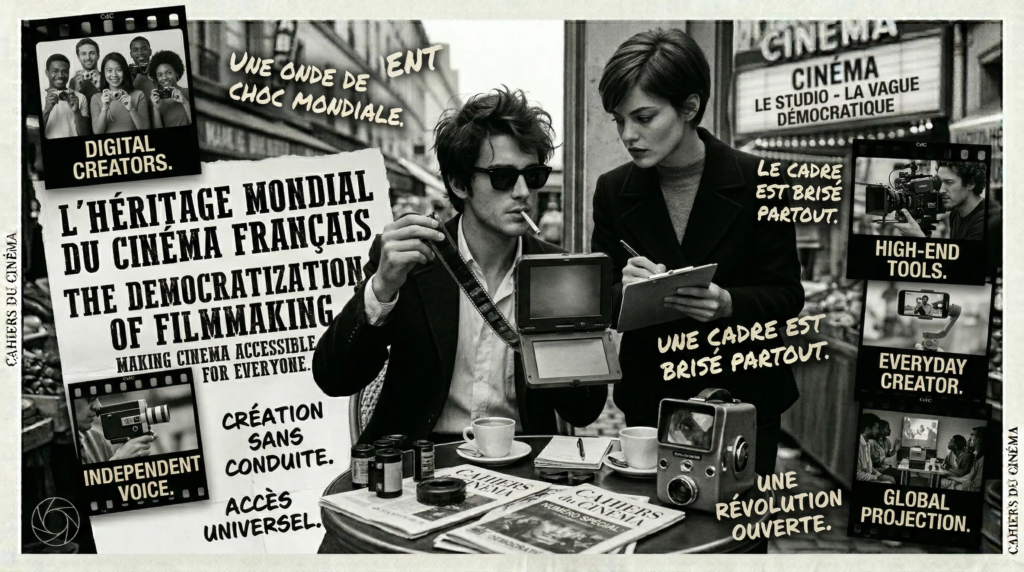
The Democratization of Filmmaking
The New Wave proved you didn’t need a million dollars to make art; you just needed a camera and an idea. Today, smartphones shoot in 4K. Independent filmmakers shooting features on iPhones (like Sean Baker’s Tangerine) are acting in pure alignment with the caméra-stylo philosophy.
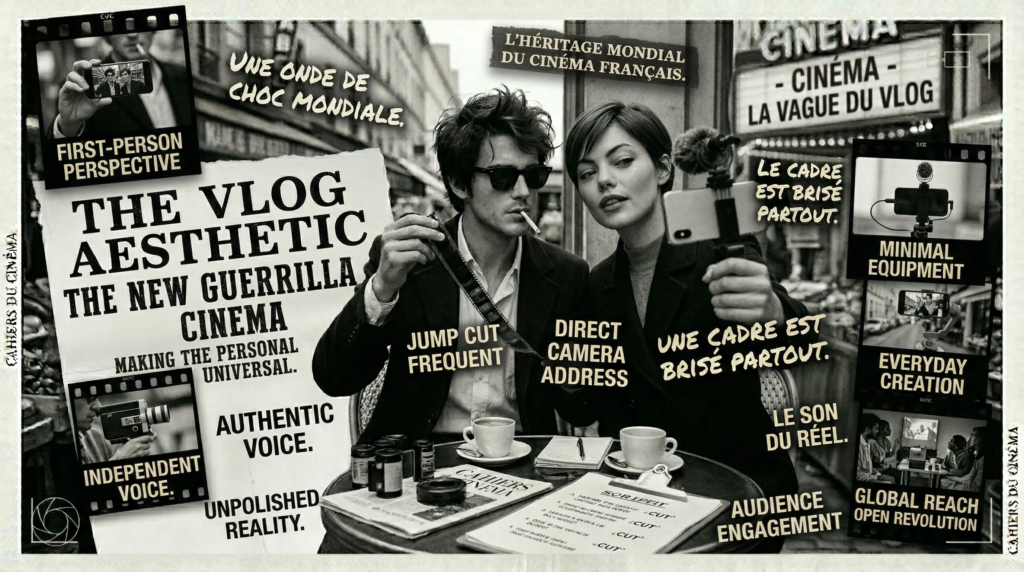
The Vlog Aesthetic
The jump cut, once a shocking avant-garde technique to disrupt time, is now the default language of the internet. YouTubers use jump cuts to remove dead air, create comedic timing, and maintain high energy.
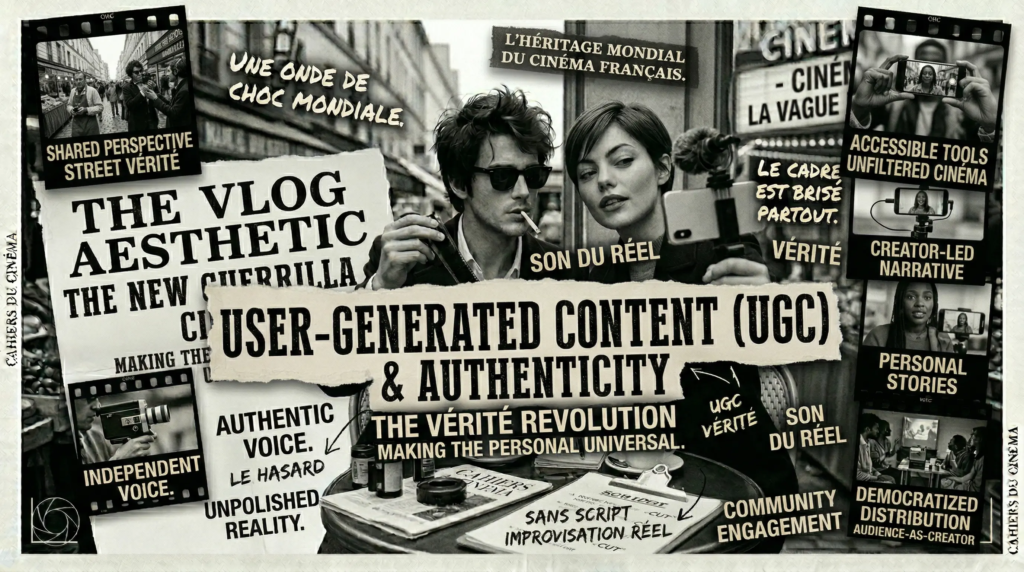
User-Generated Content (UGC) and Authenticity
The New Wave favored rough, authentic reality over polished artificiality. Today’s audiences crave the exact same thing. UGC thrives on the feeling that the creator is a real person in a real location, unburdened by corporate gloss.
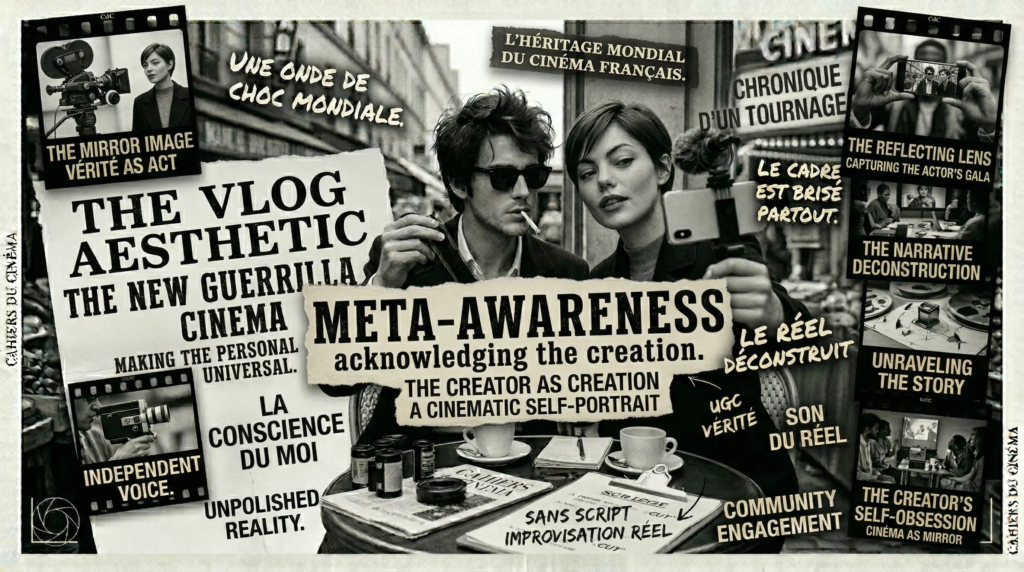
Meta-Awareness
Modern creators constantly break the fourth wall, acknowledge the camera, talk about the algorithm, and show the ‘behind the scenes’ of their content within the content itself. This self-reflexivity, reminding the viewer that they are consuming a piece of media, is pure Godard.
The French New Wave stripped cinema down to its studs to see how it stood up. In doing so, they handed the tools of creation back to the individual. Their lasting message to creators, whether they are shooting on 35mm film or a smartphone, remains the same: learn the rules, then break them beautifully.