
Bridging the ‘Field-to-Office’ Data Gap
This project is currently Work in Progress.
Project
Equip
Timeline
~2 Months
(MVP Phase – Work in Progress)
ROLE
UX Product Strategist
& Design Lead
Category: B2B SaaS / Industrial Operations
1. The Executive Summary
The Business Challenge:
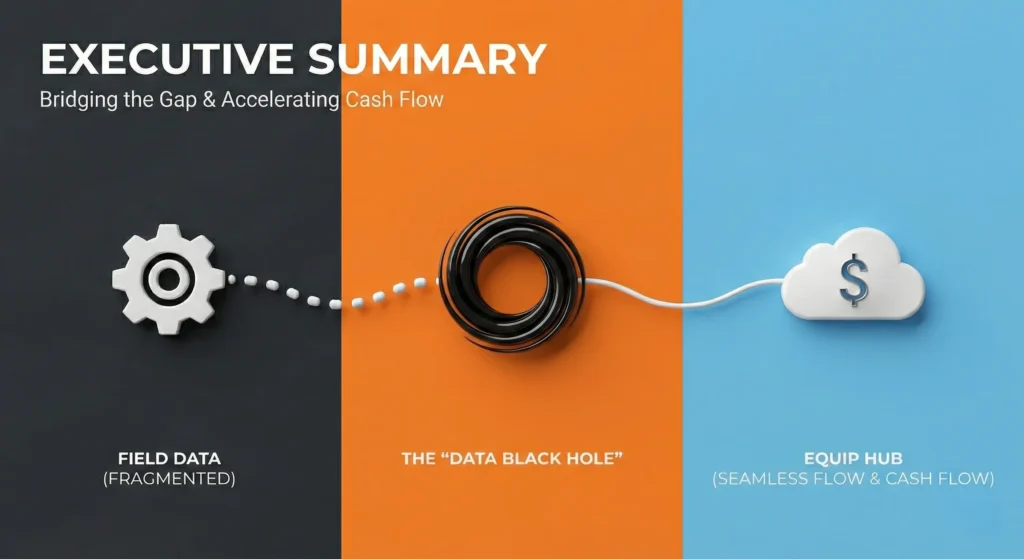
Large field-service enterprises (HVAC, Electrical, Solar) are hemorrhaging revenue due to a critical ‘data black hole’ between the field and the back office. Technicians, notoriously averse to paperwork, delay or omit critical job data. The result is lost inventory, inaccurate billing, and a crippling 14-day average delay in invoicing, severely impacting working capital.
The Strategic Vision:
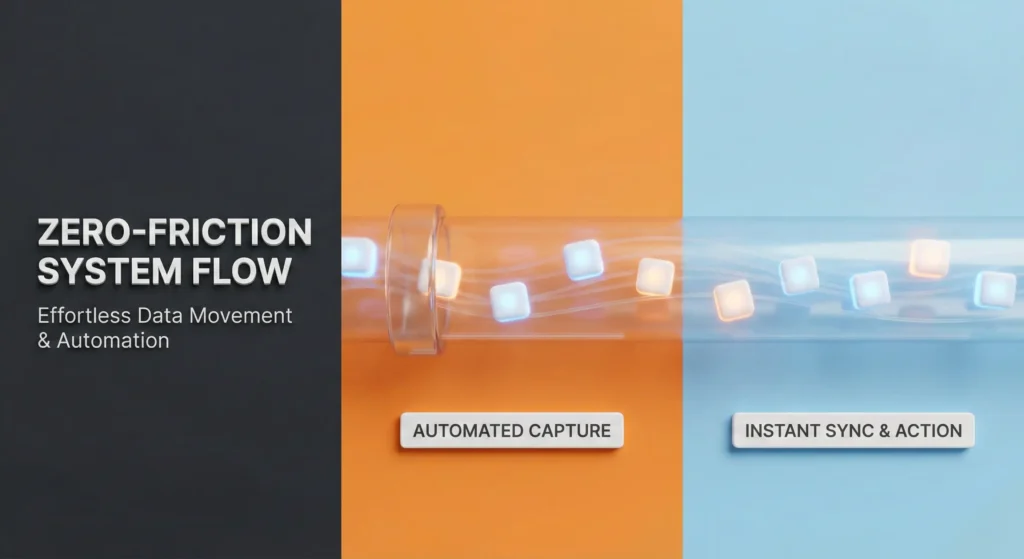
To engineer a ‘Zero-Friction’ documentation hub that captures high-fidelity data in real-time without impeding the technician’s physical workflow. The goal is not just better software; it is to accelerate organizational cash flow and improve operational margins by a target of 20%.
The Leadership Angle:
I defined the product strategy based on deep ethnographic research, leading a critical pivot from an assumed ‘Communication App’ to an ‘Automation Tool.’ I aligned executive stakeholders and engineering leadership on a technically complex ‘Offline-First’ architecture to ensure adoption in hostile field environments.
2. Discovery: Going into the ‘Gut’ of the Problem
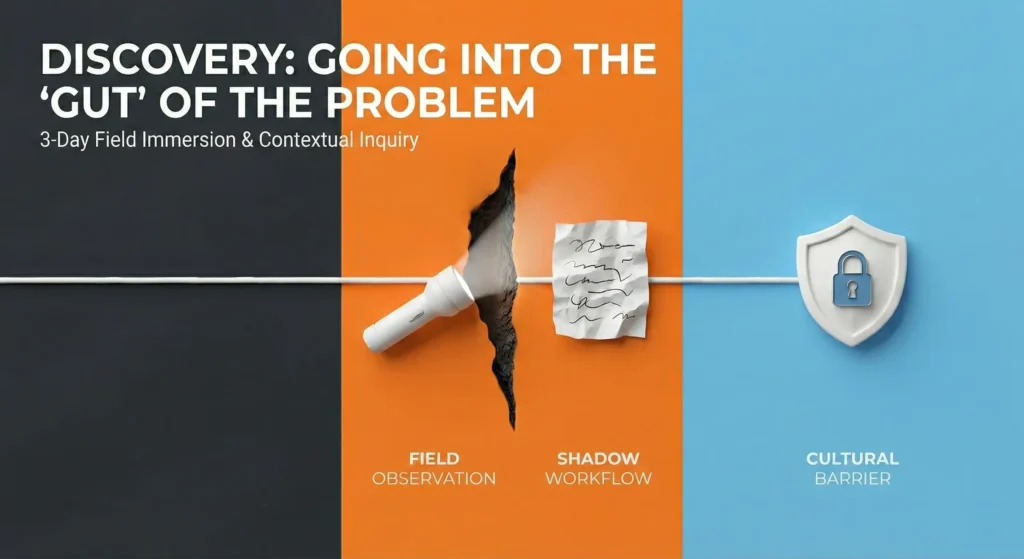
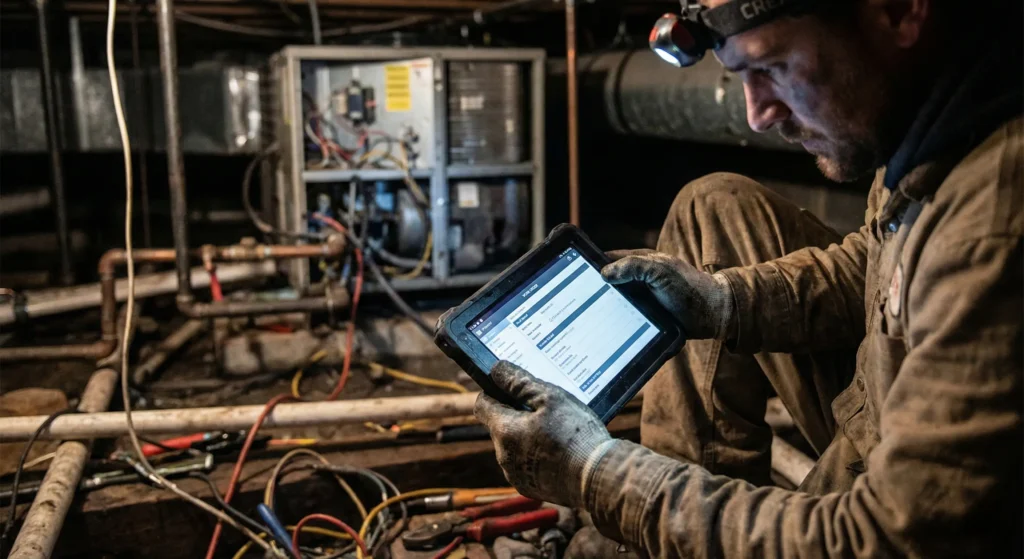
As a leader, I operate on the principle that you cannot design effective tools for deskless workers from behind a desk. I initiated and led a 3-day Contextual Inquiry, shadowing senior technicians in service vans, rooftops, and crawl spaces to define the reality on the ground.
Key Strategic Insights:
- The Environmental Constraint: Techs work with greasy hands, in direct sunlight or pitch black, often with zero cell service. Any UI requiring precise typing, complex navigation, or consistent connectivity is an automatic failure.
- The ‘Shadow’ Workflow: Techs were actively bypassing existing digital tools. They used ‘cheat sheets’ (scrap paper with scribbled serial numbers) during the day, forcing them to re-type data into clunky legacy systems at the end of a 10-hour shift, the primary friction point causing billing delays.
- The Cultural Barrier: Technicians view corporate software as ‘Digital Surveillance’. To secure adoption, the application had to provide immediate, tangible utility to the technician first, and the back office second.
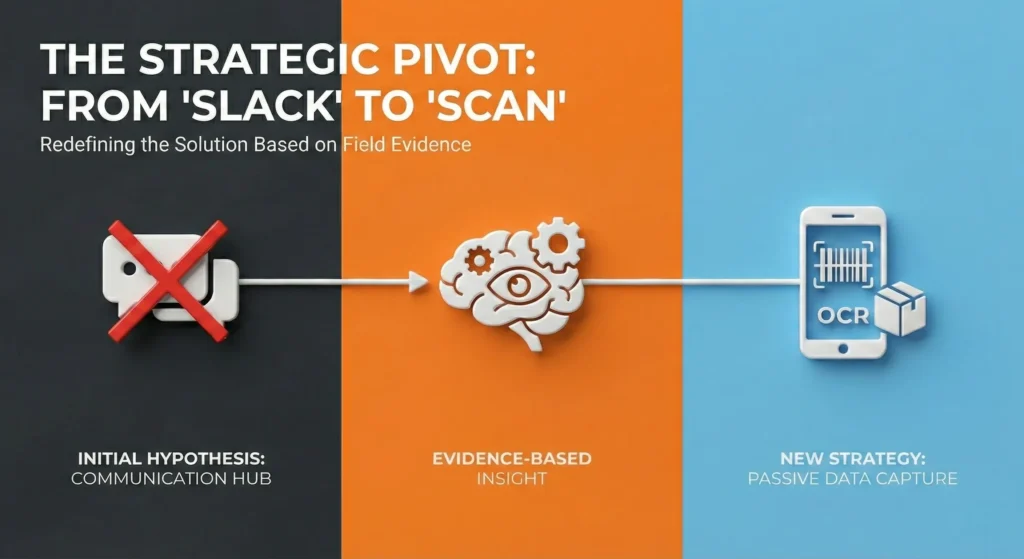
3. The Strategic Pivot: From ‘Slack’ to ‘Scan’
The Initial Hypothesis:
The product team initially hypothesized that the data gap was a collaboration failure, planning a ‘Communication Hub’ to solve issues through better messaging between techs and dispatch.
The Evidence-Based Pivot:
My field research proved that ‘more communication’ was actually a distractor. Techs didn’t want to talk about the work; they wanted to finish it. I presented this evidence to executive leadership to shift the product direction entirely.
The New Strategy:
We moved to a Passive Data Capture model. We replaced chat interfaces with an OCR-driven (Optical Character Recognition) Job Feed designed for speed and accuracy.
- Old Way: Manually type a 15-digit alphanumeric serial number in the dark.
- New Way: Snap a photo; the app extracts the data onto the clipboard and validates inventory automatically.
4. User Persona: The Skilled Pragmatist
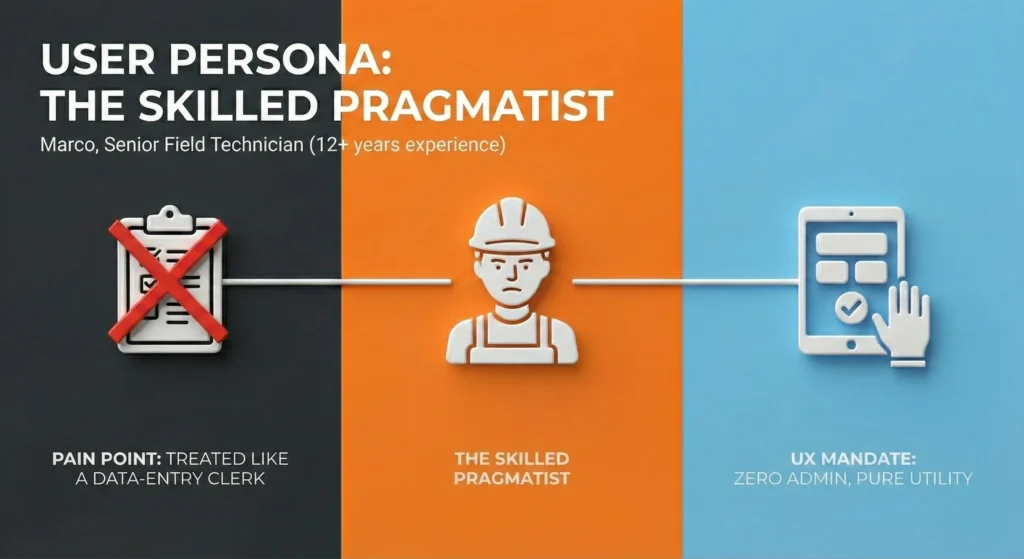
Marco, Senior Field Technician (12+ years experience)
- Goal: To execute high-skill trade work with zero administrative burden.
- Pain Point: Being treated like a data-entry clerk by software designed for office workers.
- UX Mandates:
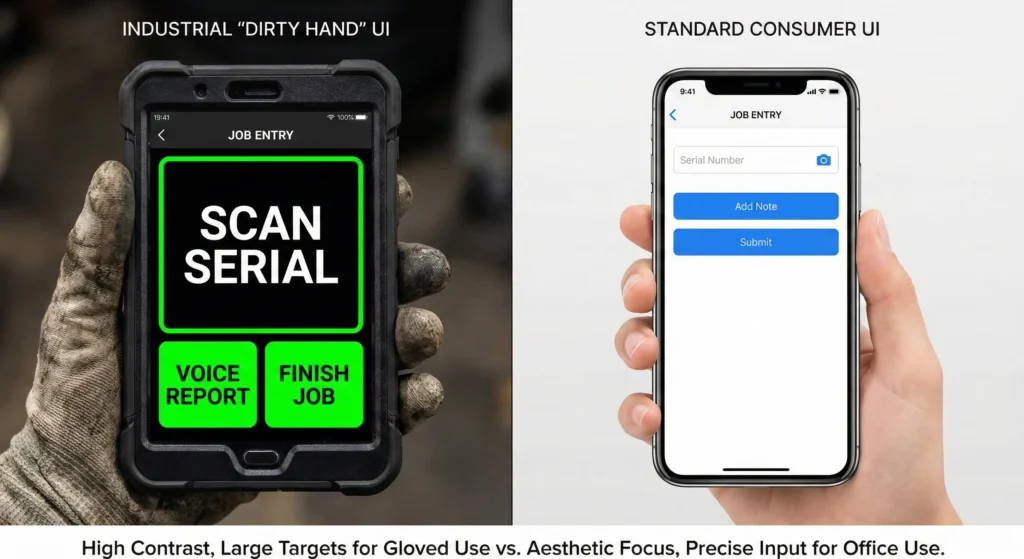
- Hyper-Legibility: High-contrast UI for sunlight/basements.
- Gloved Interaction: Massive tap targets (minimum 60px).
- Zero-Latency: ‘Local-First’ architecture so the UI never freezes, regardless of connectivity.
5. System Thinking: The Service Blueprint
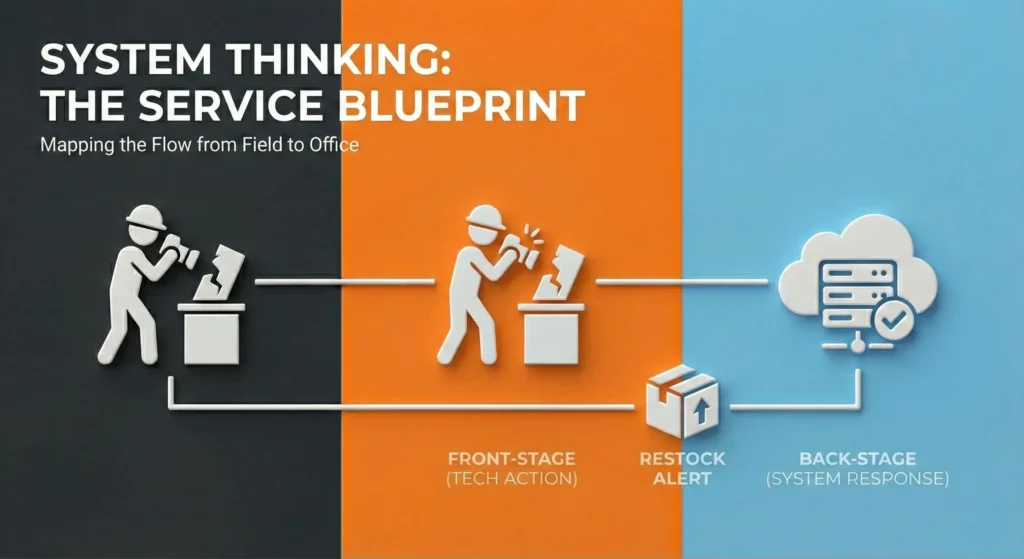
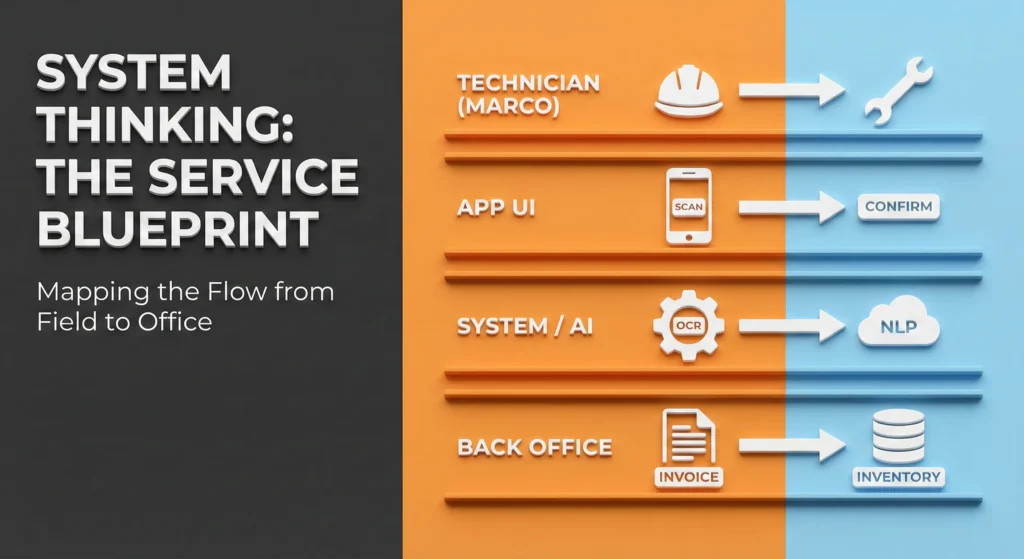
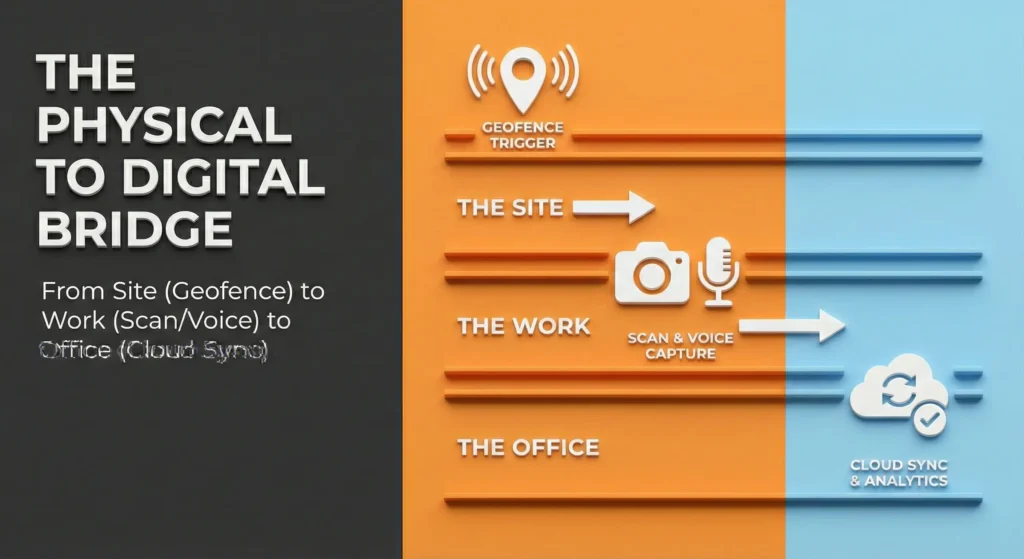
I didn’t just design application screens; I mapped the entire Service Blueprint to visualize how data flows from a ‘Broken AC Unit/ to a ‘Paid Invoice’, identifying and eliminating bottlenecks.
Strategic Impact Example:
- Front-Stage: Marco snaps a photo of a required replacement part.
- Back-Stage: The system instantly cross-references the warehouse API via OCR data.
- Business Value: If the part is missing, a ‘Restock Alert’ is triggered instantly, eliminating a typical 2-day supply chain delay and increasing first-time fix rates.
The ‘Zero-Friction’ System Flow
6. The ‘Minimum Lovable Product’ (MVP) Features
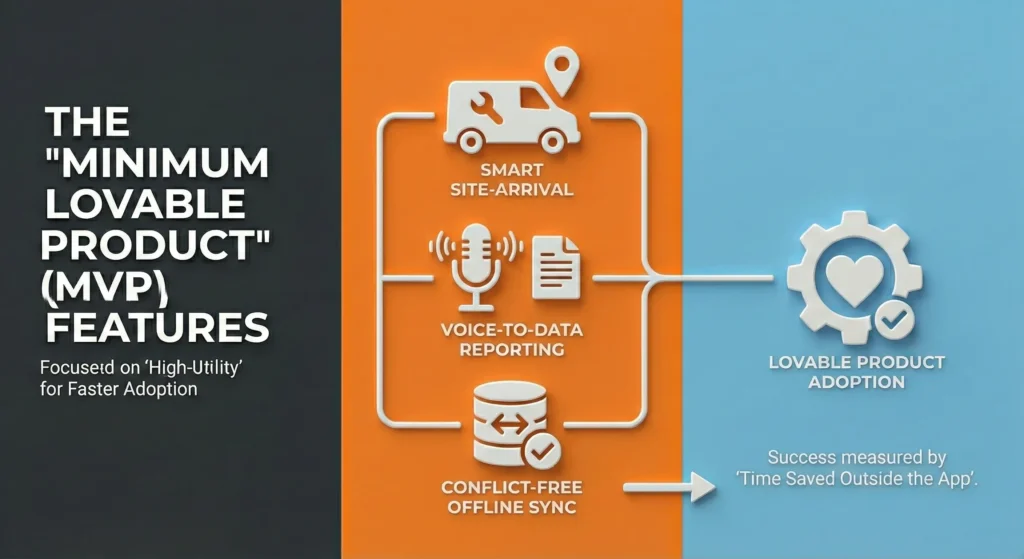
We focused on three ‘High-Utility’ features for the MVP, defining success not by engagement time, but by how quickly the tech could leave the app.
- Smart Site-Arrival: Geofencing automatically surfaces necessary site history, lockbox codes, and customer warnings the moment the van parks, eliminating menu-diving.
- Voice-to-Data Reporting: Leveraging Natural Language Processing (NLP) to bypass typing entirely. Marco dictates: “Replaced 5-ton compressor, tested for leaks with nitrogen, system holding pressure.” The app parses this into a structured, standardized service report for billing.
- Conflict-Free Offline Sync: We engineered a robust ‘Local-First'”‘ database structure that manages complex data merging when a tech regains signal, ensuring critical job data is never lost to connectivity issues.
7. Leadership & Decision-Making
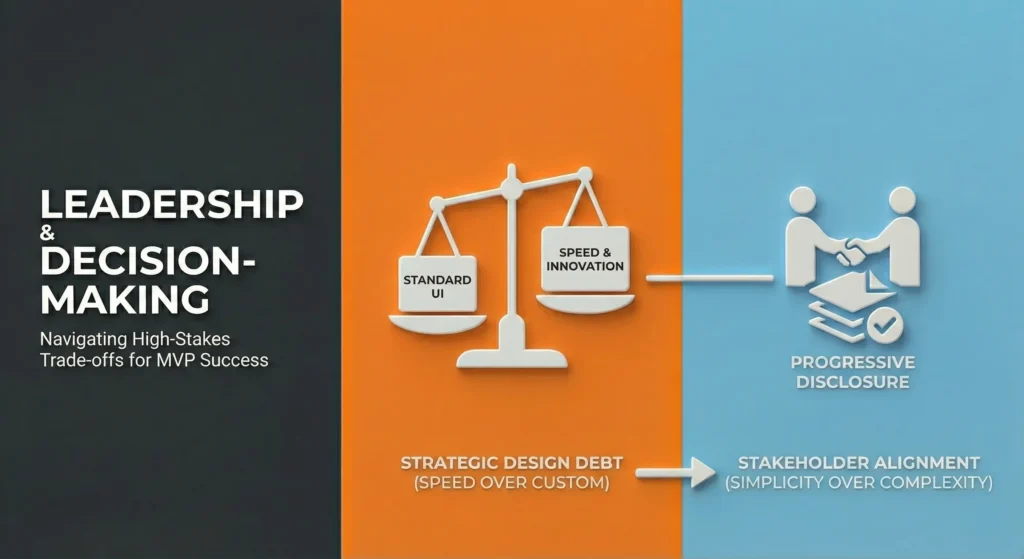
As the Design Lead, my role was to navigate high-stakes trade-offs to ensure MVP speed without sacrificing product integrity.
- Strategic Design Debt: I made the calculated decision to utilize a standard Material Design component library rather than build a custom system. This saved 3 weeks of front-end engineering time, which I redirected toward the complex, high-value NLP and OCR integrations.
- Stakeholder Mediation & Alignment: I mediated a significant conflict between the CTO (advocating for a complex, comprehensive data schema) and the Field Techs (demanding radical simplicity). I successfully advocated for a ‘Progressive Disclosure‘ strategy: the UI only demands data that is absolutely critical for generating an invoice at that specific moment, deferring everything else.
8. Strategic Roadmap: The Long Game
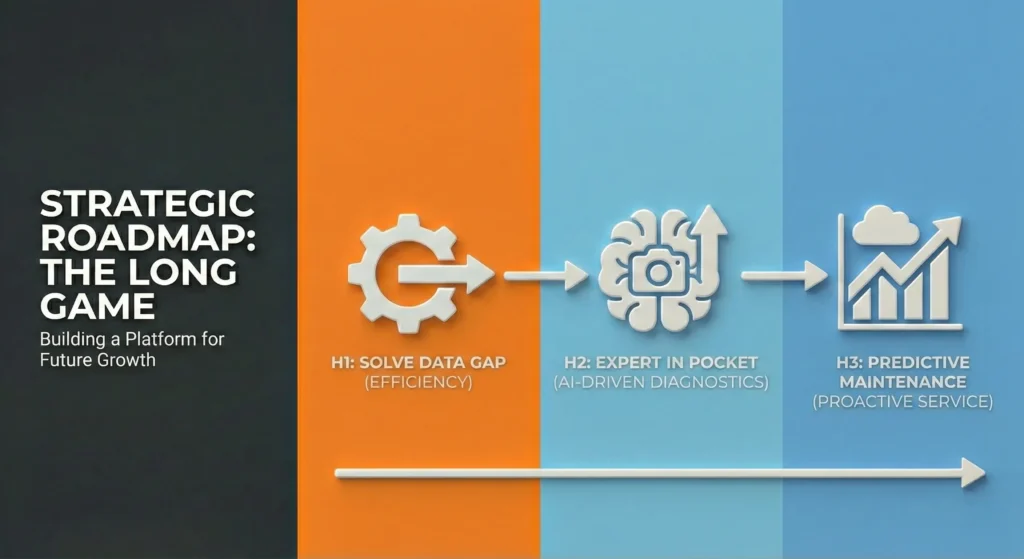
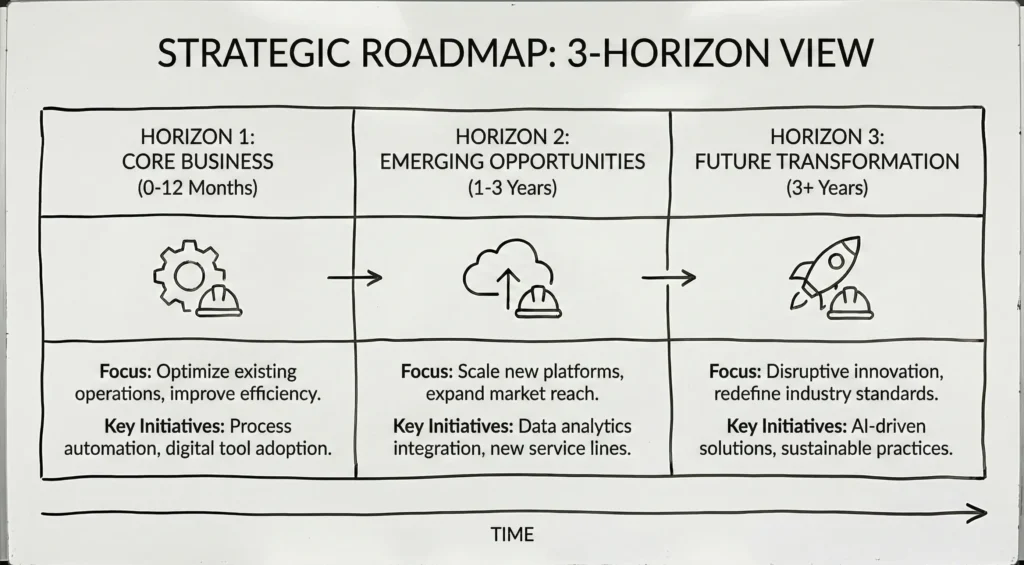
We are building a platform, not just a tool. The strategy unfolds over three horizons.
- Horizon 1 (Current – Efficiency): Solve the Data Gap. Bridge field reality with back-office requirements.
- Horizon 2 (V2 – Intelligence): ‘The Expert in the Pocket.’ AI-driven diagnostics delivering repair recommendations based on historical photographic data of similar equipment.
- Horizon 3 (V3 – Transformation): Predictive Maintenance. Shifting the business model from reactive repairs to proactive service contracts by using equipment data to predict failures before they occur.
9. Success Metrics (The ‘North Star’)
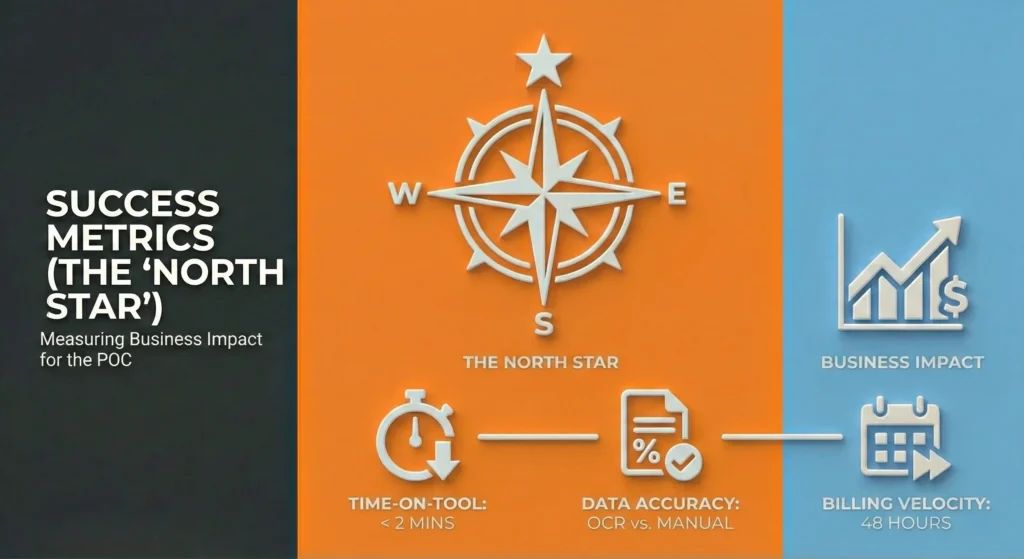
We are currently measuring the active Proof of Concept against these leading indicators for business impact:
- Time-on-Tool (Efficiency): Goal is < 2 minutes of total app interaction per completed job.
- Data Accuracy (Quality): Measuring OCR success rate against a baseline of manual entry errors.
- Billing Velocity (Cash Flow): Reduction in time from ‘Job Finished’ on-site to ‘Invoice Ready’ in the ERP. (Current baseline: 14 days; Goal: 48 hours).
10. Reflections & Learnings
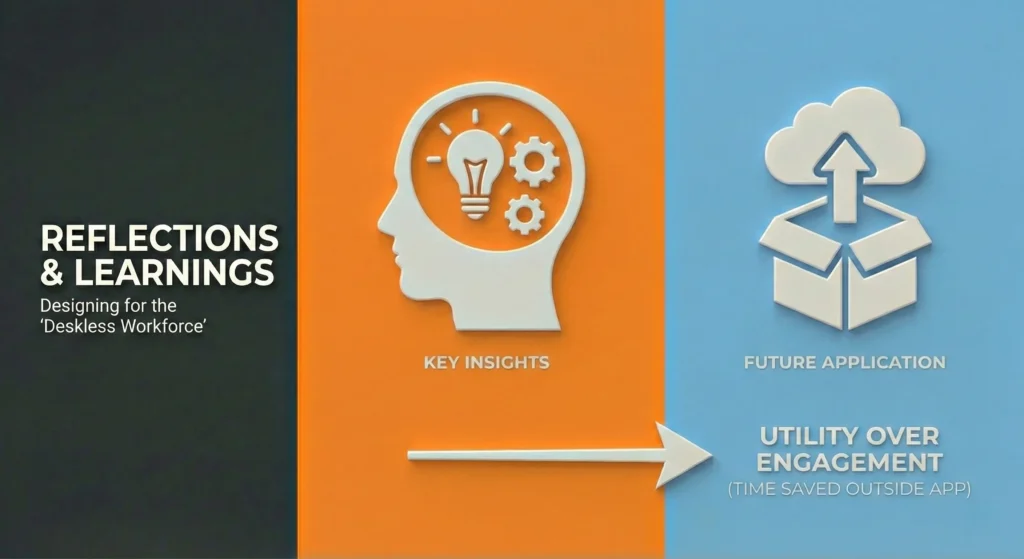
Designing for the ‘deskless workforce’ requires a radical departure from traditional B2B SaaS paradigms. Success in this sector isn’t measured by ‘Time Spent in App’ (Engagement), but by ‘Time Saved Outside the App’ (Utility).
This project reinforced my core leadership belief regarding industrial UX: The best interface is often the one that disappears and lets the user do the work they are paid to do.