
Transforming Fragile Supply Chains into Immutable Systems of Trust
Project
SPi
Year
2025
ROLE
UX Lead &
Product Strategist
Executive Summary
The Challenge
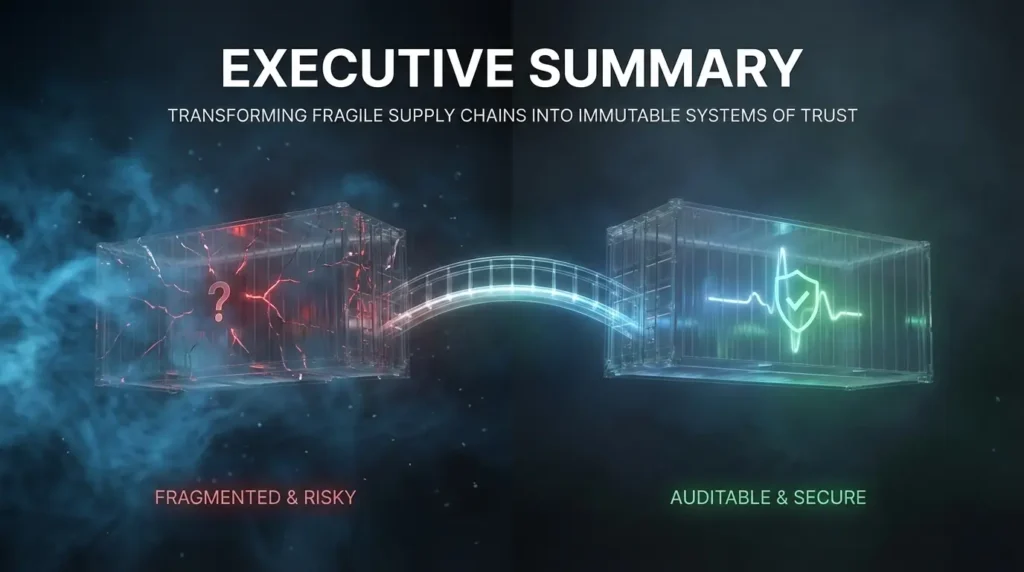
The global pharmaceutical and high-value logistics industries lose over $30B annually to spoilage and environmental excursions. Current tracking is siloed, often relying on manual paper logs or disconnected digital sensors that fail to provide a legally defensible ‘chain of custody’.
The Solution
SafePassage Inventory (SPI) is an integrated hardware/software ecosystem designed for high-stakes environments. By pivoting the product strategy from a ‘tracking tool’ to an Auditable Trust & Compliance Platform, we created a system that provides a single, immutable ‘condition trail’ for life-critical shipments.
Scope
Discovery, UX Strategy, Physical-Digital Interaction (PDX), System Architecture, and Pivot Management.
1. Discovery & The ‘Unsexy Truth’
The Research Hypothesis
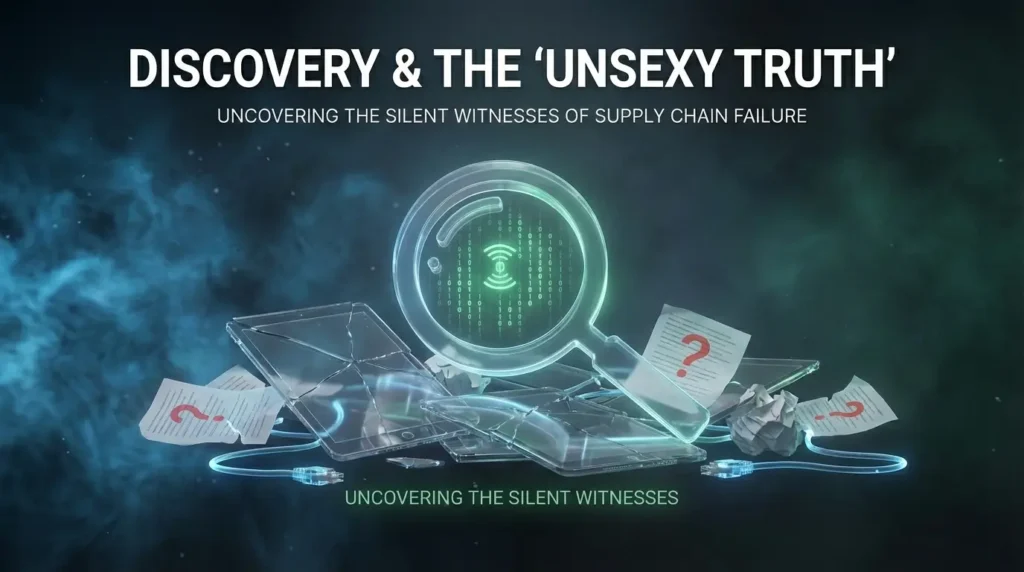
We began with a provocative question: If a single vial of gene therapy is worth more than gold, why is its safety documented on a smudged clipboard?
To uncover the ‘Silent Witnesses’ of supply chain failure, I led a cross-functional team through immersive field research, including ride-alongs with refrigerated truck drivers and interviews with Pharma Quality Control (QC) officers.
Key Insights:
- The Trust Gap: The problem wasn’t a lack of data; it was the fragmentation of data. A warehouse sensor didn’t talk to the truck sensor, creating ‘blind spots’ during handoffs.
- Adversarial Environments: Logistics is chaotic. Hardware must be ‘forklift-proof’, and software must be ‘glanceable’ amidst high-stress loading dock environments.
- The Hidden User: While drivers handle the goods, the Legal and Insurance teams are the ultimate consumers of the data. They need proof that stands up in a court of law.
2. Strategic Pivot: From ‘Where’ to ‘How’
The Leadership Insight
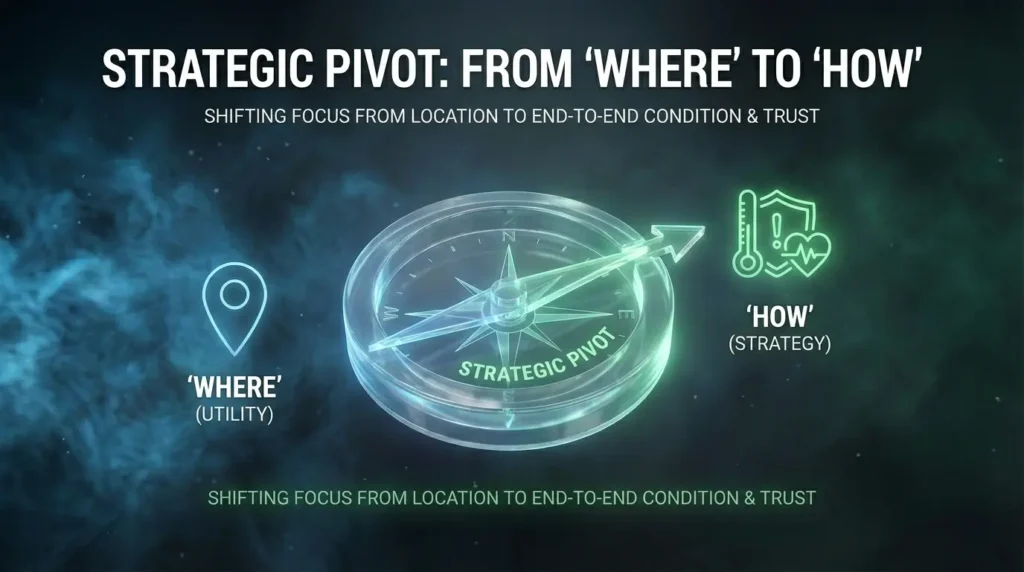
The original brief focused on ‘Feature Thinking’: Build a sensor and an app to track location.
I partnered with the team toward a Strategic Pivot. We realized the product wasn’t the hardware, it was Auditable Proof. We shifted our focus from mere GPS tracking to End-to-End Environmental Integrity.
| From: Smart Tracker (Utility) | To: Trust & Compliance Platform (Strategy) |
| Focus on “Where is my package?” | Focus on “Is my package still viable?” |
| Real-time notifications for drivers. | Immutable audit logs for insurance adjusters. |
| Consumer-grade hardware. | Hospital-grade, tamper-evident sensor arrays. |
3. User Personas & The Ecosystem
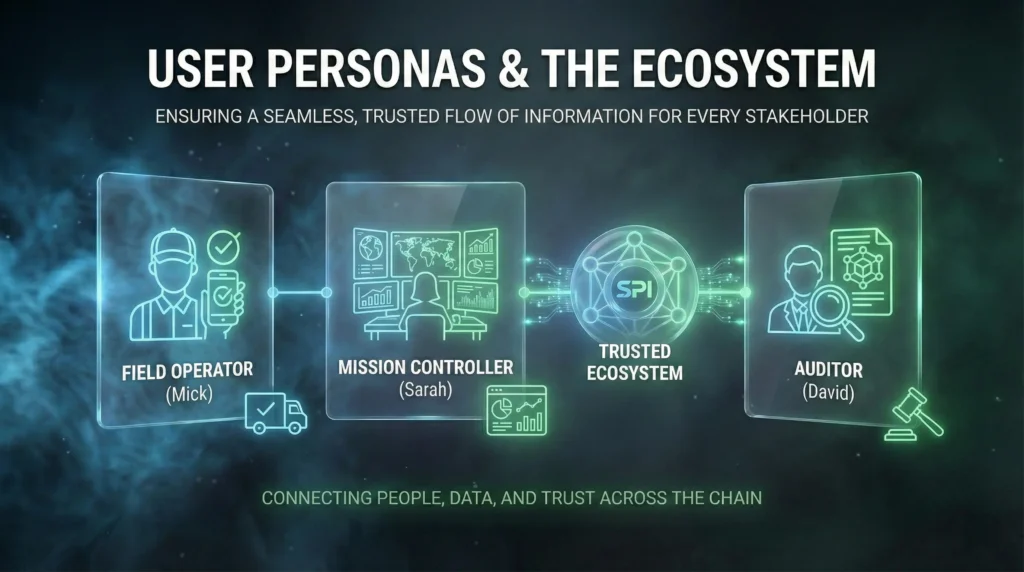
To solve this, we mapped three distinct personas to ensure the system functioned across the entire ‘Chain of Trust’.
- The Field Operator (Mick, Logistics Driver): Needs ‘Zero-Friction’ interaction. The hardware must sync automatically without him opening an app.
- The Mission Controller (Sarah, Logistics Manager): Needs the ‘Cockpit’, a high-density dashboard for managing $100M+ in active inventory.
- The Auditor (David, Legal/Compliance): Needs a ‘Single Source of Truth’, a one-click export of a shipment’s entire thermal history for regulatory filing.
4. The UX Process & System Thinking
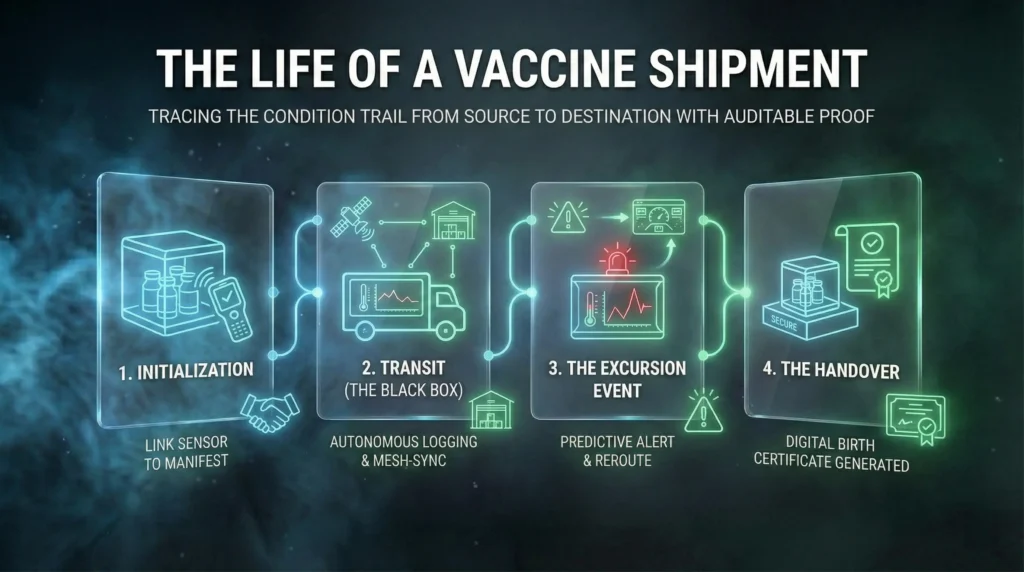
User Journey: The Life of a Vaccine Shipment
We mapped the ‘Condition Trail’ across four high-stakes phases:
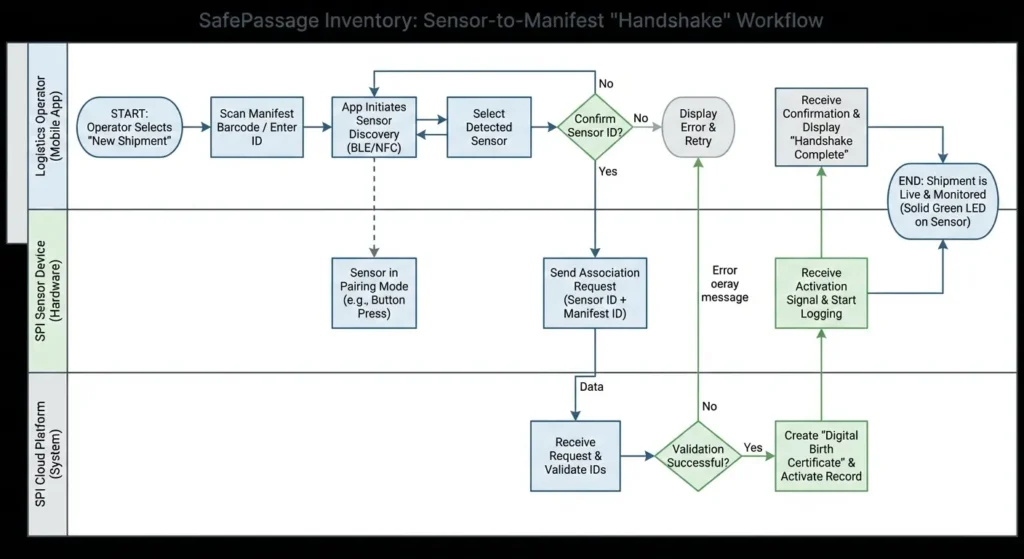
- Initialization: Linking the SPI Sensor to the manifest via a ruggedized ‘handshake’.
- Transit (The Black Box): The sensor autonomously logs temp, shock, and light, mesh-syncing with receivers in trucks and warehouses.
- The Excursion Event: A 5-degree spike triggers a predictive alert to Sarah (Mission Control), allowing her to reroute the shipment before spoilage occurs.
- The Handover: Automatic generation of a ‘Digital Birth Certificate’ for the cargo upon arrival.
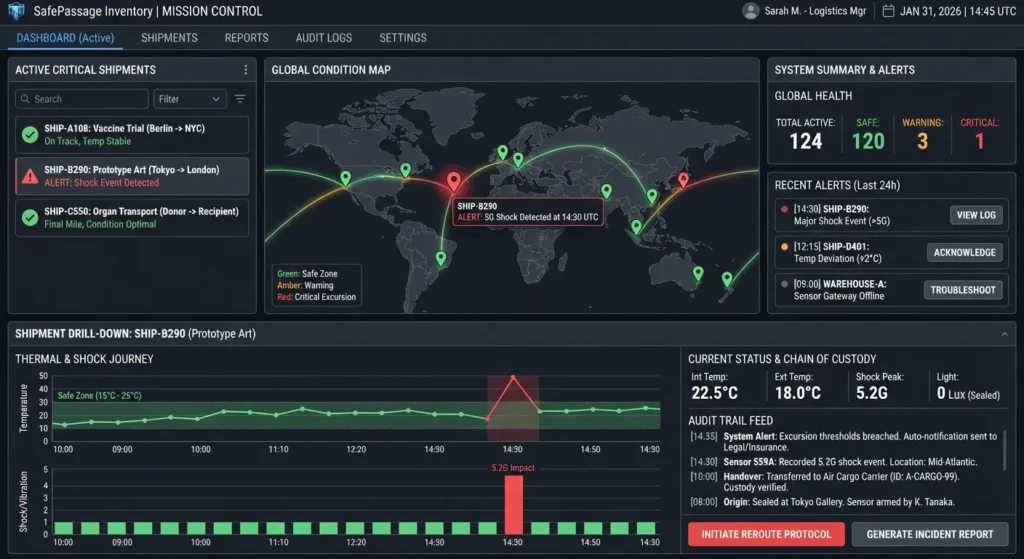
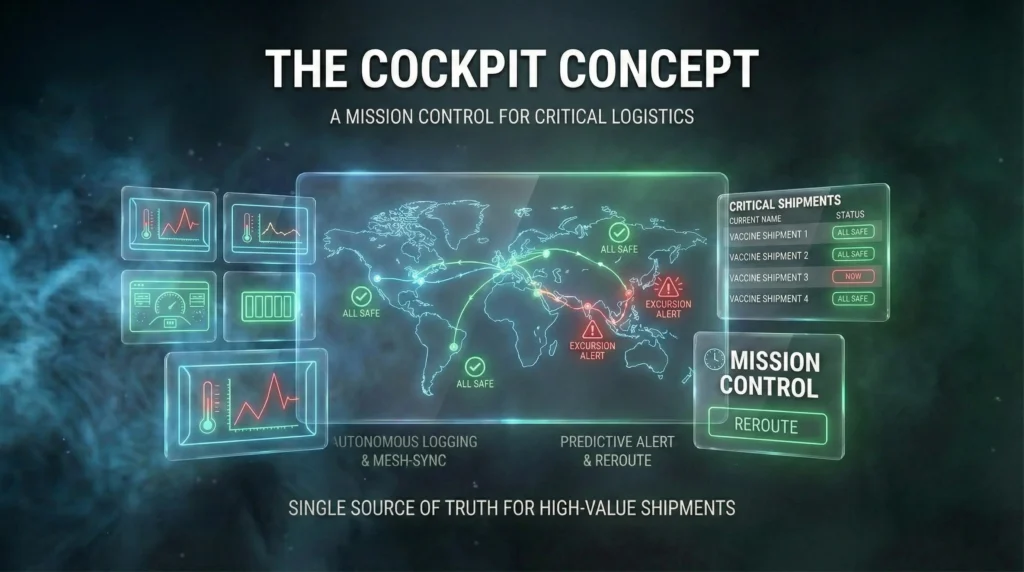
System Architecture: ‘The Cockpit’ Concept
I designed the dashboard using a Progressive Disclosure strategy:
- Level 1 (The Pulse): A global map showing ‘Green/Amber/Red’ status of all high-value shipments.
- Level 2 (The Deep Dive): 4-hour thermal maps and vibration logs for specific pallets.
- Level 3 (The Audit): Blockchain-verified logs showing exactly when a container was opened and by whom.
5. Problem Solving: Designing for Adversarial Use
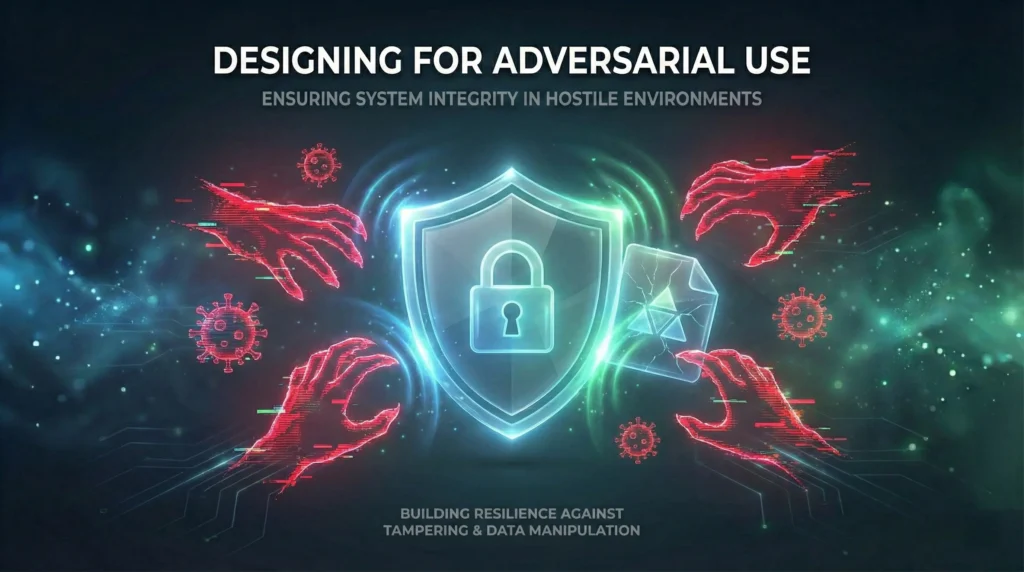
The most complex UX challenge was Systems Trust. If a sensor is destroyed or tampered with, the ‘Condition Trail’ is broken.
The Solution: We implemented a ‘Distributed Witness’ protocol. Sensors don’t just talk to the cloud; they talk to each other. If one sensor is damaged, its last 10 minutes of data are stored on the neighboring sensor. This ‘Physical UX’ design ensures that even in a crash, the data survives to prove liability.
6. Impact & Business Results
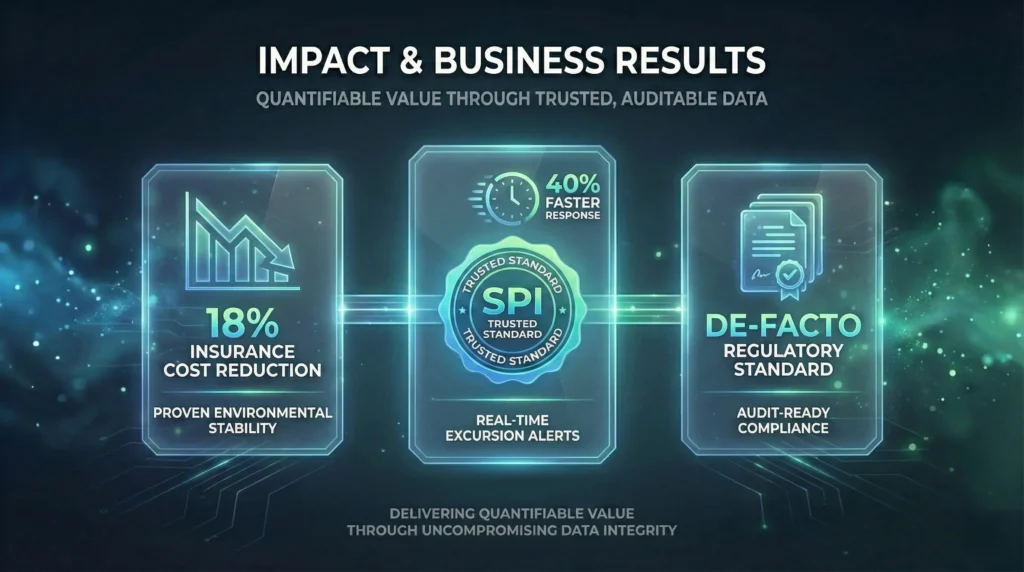
We piloted the SPI system with a global clinical trial distributor.
- Insurance Savings: By providing immutable proof of temperature stability, the pilot partner negotiated an 18% reduction in premiums for high-value inventory.
- Regulatory Speed: Audit preparation time for FDA compliance was reduced from 3 days to 15 seconds.
- Operational Resilience: The ‘Cockpit’ dashboard reduced ‘critical excursion’ response times by 40%, saving an estimated $2.4M in potential spoilage during the 90-day pilot.
7. Conclusion: The Future of Regulatory Standards
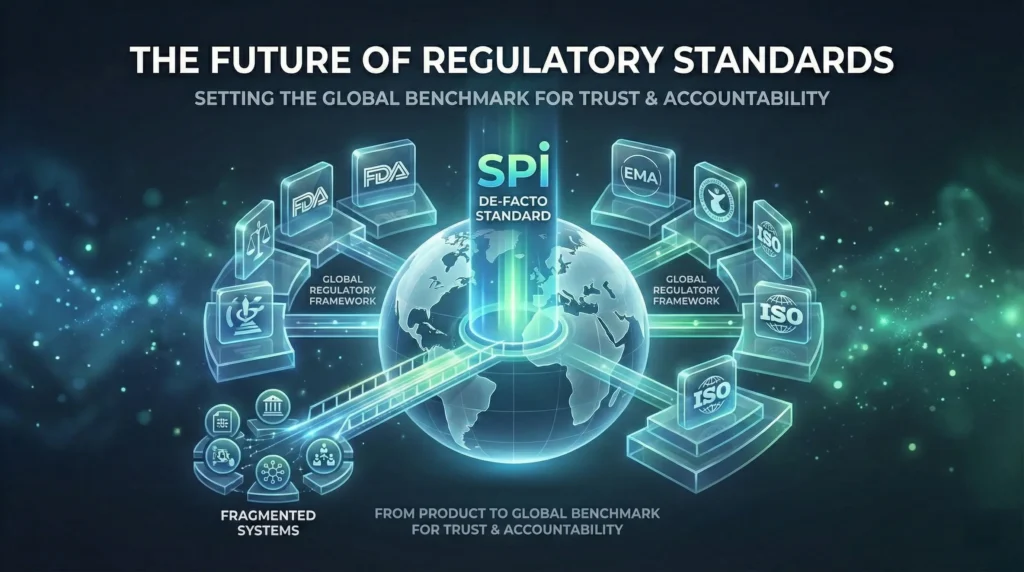
SafePassage Inventory is no longer just a tracking system; it is set to become a de-facto regulatory standard. By leading with a UX strategy focused on trust rather than features, we transformed a ‘hardware problem’ into a ‘global compliance solution’. We didn’t just design an interface; we designed a system of accountability for the world’s most sensitive cargo.